
How to Identify Bateleur Feathers
A guide to identifying Bateleur feathers by the species' unusually short, chestnut tail paired with very long black flight feathers.
Read the full Bateleur encyclopedia entry →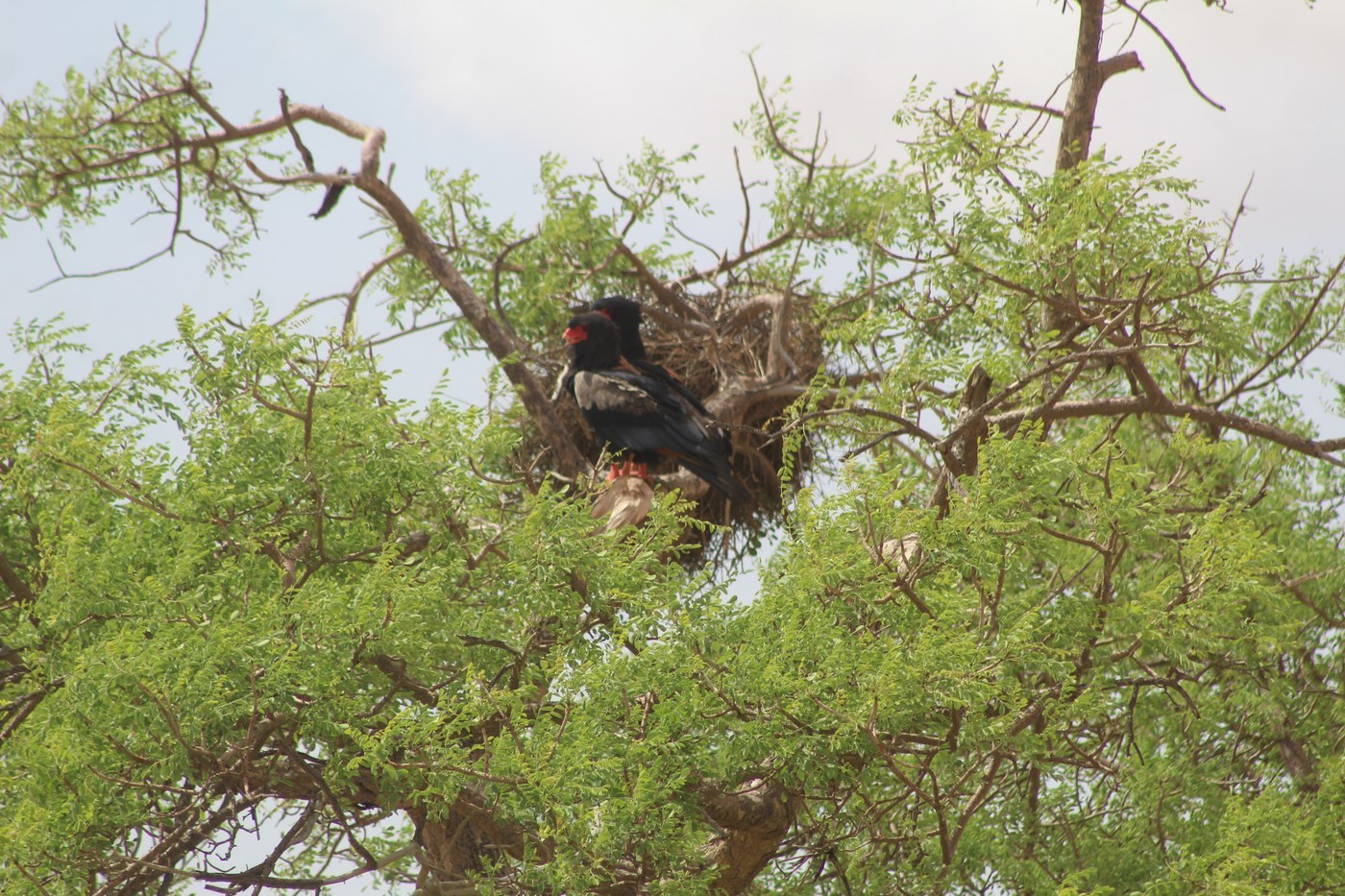
What Bateleur's Feathers Look Like
The Bateleur is an African snake-eagle famous for its rocking, tightrope-walker flight and its unusually short tail. Body contour feathers (breast, belly, back) are mostly solid black, dense and glossy. The back and lesser wing coverts show a rich chestnut-to-rufous patch, sometimes fading to a more tawny or cream tone in some individuals and in immatures. The tail is the most telling feature: Bateleur tail feathers are strikingly short relative to the bird's overall wing length - even a single tail feather will look stubby and disproportionate compared to the huge primaries, and it is colored chestnut like the back rather than black. Flight feathers are extremely long, broad, and mostly black with pale grey areas on the flight feather tips/trailing edge in adults, reflecting the species' huge wingspan relative to body size. Immature Bateleur feathers are far duller brown overall, lacking the crisp black-and-chestnut adult contrast.
Step-by-Step: Is This Feather From a Bateleur?
- Check tail feather length against flight feathers - an unusually short, stubby tail feather paired with very long flight feathers is highly diagnostic of this species.
- Look for chestnut coloring - on the back/covert feathers and especially the tail itself, not black.
- Assess body feather color - solid black on breast/belly with no barring or streaking in adults.
- Consider size - this is a large eagle with a big wingspan (up to 1.8 m), so flight feathers will be long and broad.
- Watch for immature dullness - brownish, less contrasty feathers may still be Bateleur but from a young bird.
- Confirm African range - geographic context is important since no other short-tailed eagle combines these traits.
Similar Species & How to Tell Them Apart
Other African snake-eagles (like Black-chested Snake-Eagle) have proportionally normal-length tails and pale, often white, underparts rather than solid black, immediately distinguishing them by feather shape alone. Martial Eagle, similarly huge, has heavily spotted white-and-brown underparts and a full-length tail, quite different from the Bateleur's solid black body and stub tail. Vultures sharing the chestnut-brown tones, like some Old World vulture species, lack the sharp black body plumage and instead show more uniformly brown, looser body feathers throughout.
Where & When You'll Find Them
Bateleurs inhabit open savanna and woodland across sub-Saharan Africa, ranging widely in search of carrion and small prey while soaring for hours with minimal flapping. They are largely resident with some local wandering. Molt is protracted and not tightly seasonal in most populations, proceeding gradually across the year, so feathers can be found under regularly used perch trees or nest sites at any time, with perhaps a modest increase in feather turnover following the breeding season.
Frequently asked questions
What is the single best clue for identifying a Bateleur feather?
The dramatically short tail feather relative to very long flight feathers - no other common African eagle combines these proportions.
Are immature Bateleur feathers harder to identify?
Yes, immatures are dull brown without the sharp black-and-chestnut adult pattern, so the short-tail proportion becomes the most reliable clue at that age.
Could this be a vulture feather instead?
Vulture body feathers tend to be looser and more uniformly brown, lacking the crisp solid-black breast/belly feathering of an adult Bateleur.
Why is the tail so short?
It's a distinctive adaptation of this species, contributing to its characteristic rocking, tightrope-walker flight style that gives the bird its name.
Is there a strong seasonal pattern to finding feathers?
Not particularly - molt is spread across the year, though slightly more feathers may appear after the breeding season ends.