
How to Identify Bell's Sparrow Feathers
A guide to identifying Bell's Sparrow feathers by their plain grey-brown tone, unstreaked breast, and crisp dark malar stripe.
Read the full Bell's Sparrow encyclopedia entry →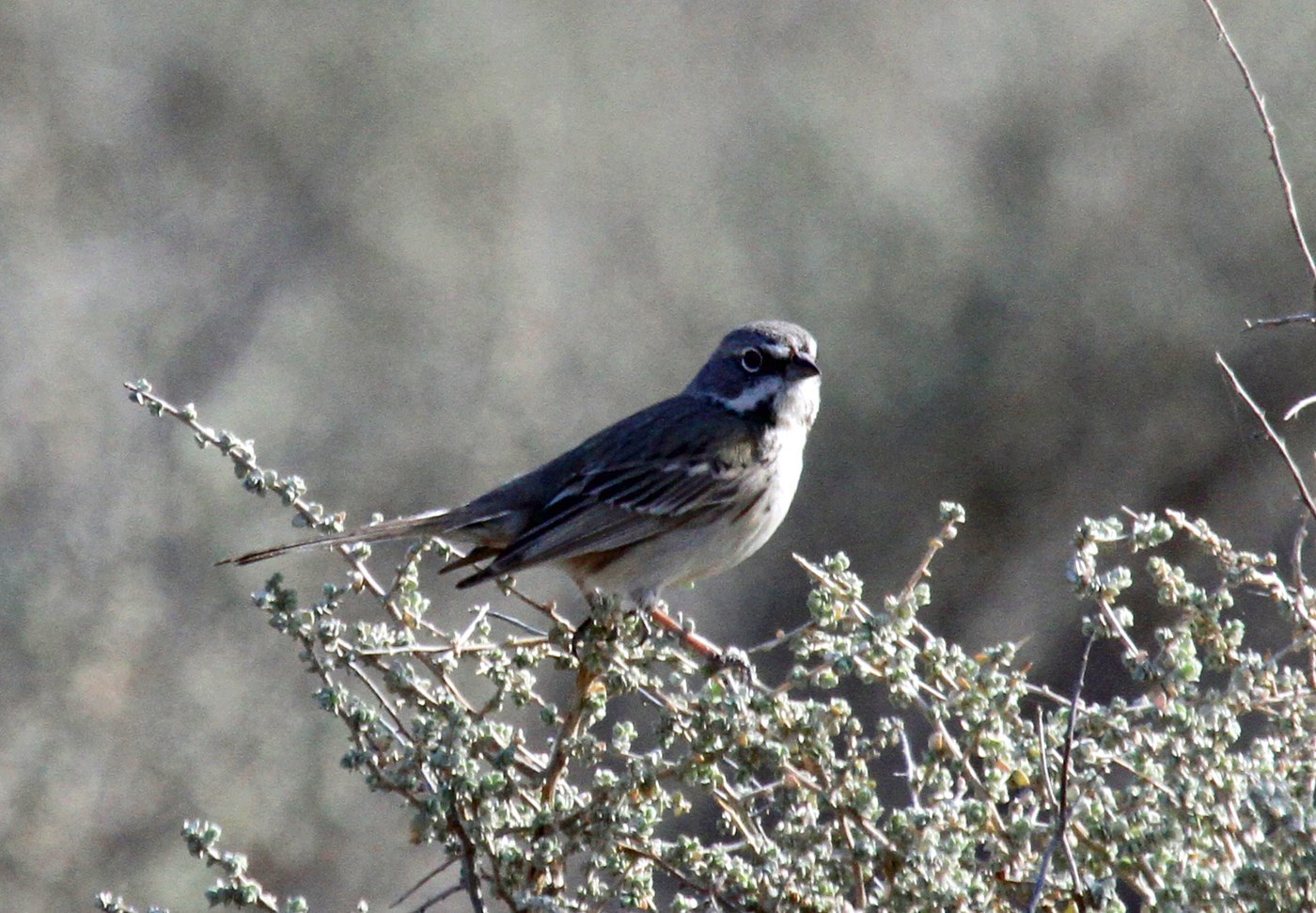
What Bell's Sparrow's Feathers Look Like
Bell's Sparrow is a bird of arid scrub in the western United States, and its feathers reflect a fairly subdued, well-camouflaged palette. Upperpart contour feathers are plain grey-brown, without bold streaking, giving a clean, uncluttered look compared to many sparrows. The face shows a distinct dark malar (moustache) stripe running down from the base of the bill, a crisp dark feather line against an otherwise plain grey-brown face. The breast is largely unstreaked or only very faintly streaked, plain grey-buff, which is a key difference from many streaky sparrows. A thin, pale eye-ring feather pattern is present around the eye. The tail is dark, generally blackish-brown, with narrow pale edges on the outer feathers, and is fairly long relative to body size, often held cocked. Overall the plumage runs plainer and greyer than most sparrows sharing its range.
Step-by-Step: Is This Feather From a Bell's Sparrow?
- Check for plain grey-brown upperparts - minimal streaking is a strong initial clue.
- Look for the dark malar stripe - a crisp dark line feather from the side of the throat/face area.
- Assess breast pattern - unstreaked or only very faintly marked, unlike bold-streaked sparrows.
- Examine tail feather color and edges - dark blackish-brown with narrow pale fringes on the outer feathers.
- Consider size - a small sparrow (about 12-13 cm), so feathers should be correspondingly small.
- Factor in habitat - arid sagebrush, saltbush, or chaparral scrub in the western US strongly supports this identification.
Similar Species & How to Tell Them Apart
Sagebrush Sparrow, its very close relative and former conspecific, is extremely similar but tends to show a slightly paler, greyer overall tone and marginally more distinct breast streaking; distinguishing single feathers between the two can be genuinely difficult and often relies on subtle differences plus range/habitat context (Bell's Sparrow favors coastal sage scrub and saltbush more than pure sagebrush). Sparrows with bold streaking, such as Savannah Sparrow, show clear dark streaks across the breast and back, quite different from Bell's Sparrow's plain, clean look. Black-throated Sparrow shows a bold black throat patch and white facial stripes, an entirely different and more strongly patterned face than Bell's Sparrow's plain grey-brown face with just the malar stripe.
Where & When You'll Find Them
Bell's Sparrow inhabits dense, arid scrub - chamise chaparral, saltbush flats, and coastal sage scrub - mainly in California and Baja California. Some populations are resident while others show modest local movements. Molt occurs mainly after breeding, in late summer, so feathers are most likely found in dense scrub habitat from mid-to-late summer onward, particularly near favored low, dense shrubs used for cover and nesting.
Frequently asked questions
What's the best single clue for Bell's Sparrow feathers?
The combination of plain, unstreaked grey-buff underparts with a crisp dark malar stripe is a strong indicator among sparrows in its arid scrub habitat.
How do I tell this apart from Sagebrush Sparrow?
It's genuinely difficult from feathers alone; Sagebrush Sparrow tends to run slightly paler and more streaked below, but habitat (saltbush/coastal scrub vs. true sagebrush) is often the more reliable clue.
Why is the lack of streaking important?
Many sparrows sharing similar habitat show bold streaking on the breast and back, so a notably plain, clean-breasted feather set points away from those species and toward Bell's Sparrow.
Could this be a Black-throated Sparrow feather?
Check the face pattern - Black-throated Sparrow has a bold black throat and white facial stripes, very different from Bell's Sparrow's plainer face.
When are feathers most findable?
Late summer through fall in dense arid scrub habitat, after the local breeding season concludes.