
How to Identify Black-tailed Godwit Feathers
A guide to the bold white wing-stripe and solid black tail band that name and identify this large Eurasian shorebird.
Read the full Black-tailed Godwit encyclopedia entry →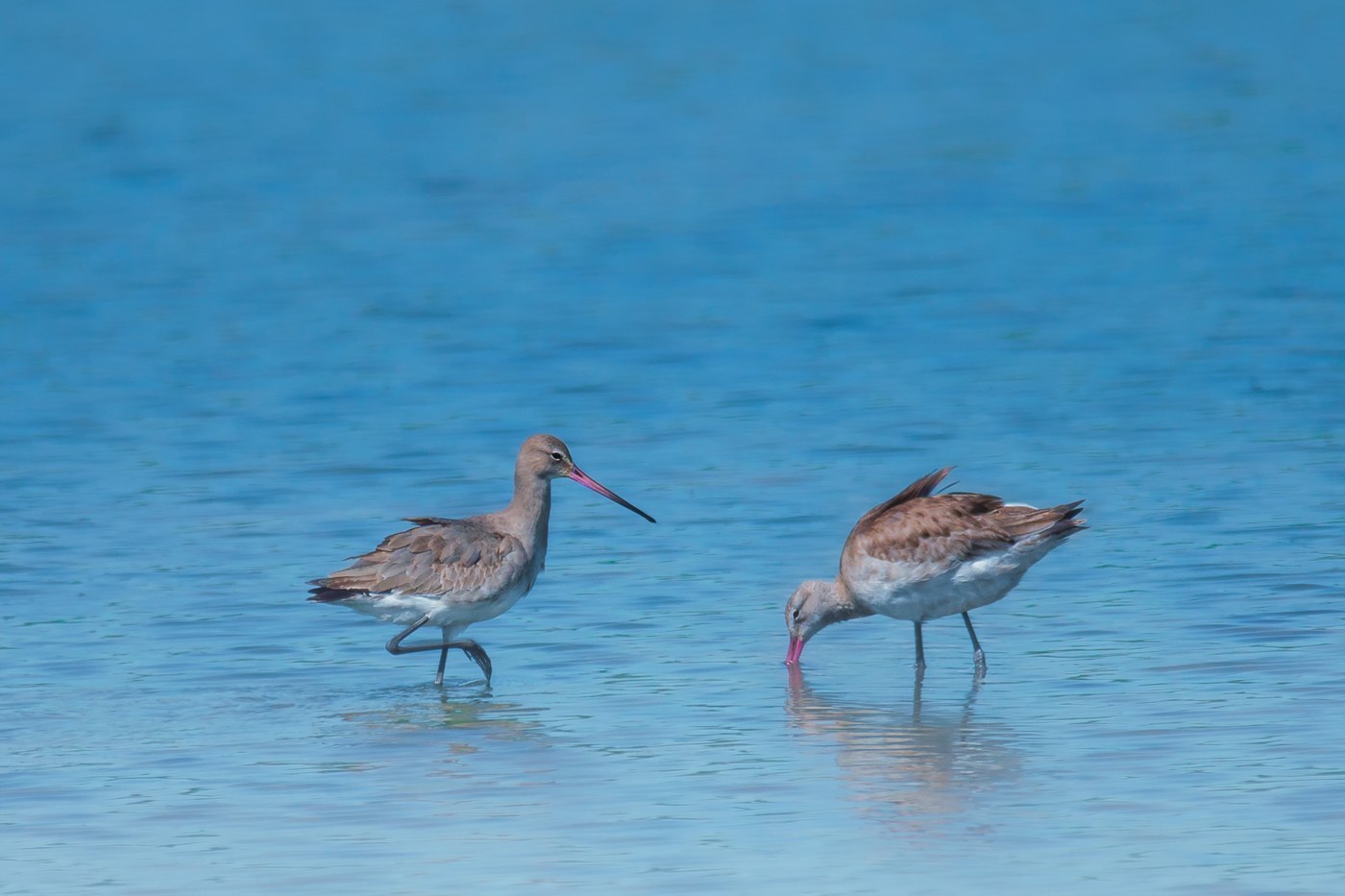
What Black-tailed Godwit Feathers Look Like
The tail is the single most useful feather on this bird: Black-tailed Godwit tail feathers are white at the base and solidly black across the terminal third or so, a clean two-part pattern that gives the species its name. Flight feathers show a bold white wing-stripe running across the primaries and secondaries, visible as a broad white band on an otherwise brownish-gray flight feather. Breeding-plumage body feathers are rich chestnut-orange on the head, neck, and breast with dark barring on the flanks, while non-breeding body feathers are plain grayish-brown. Feathers are fairly large, matching a large, long-legged, long-billed shorebird — flight feathers can reach 15-18 cm.
Step-by-Step: Is This Feather From a Black-tailed Godwit?
- Check the tail pattern first. White at the base with a solid black band at the tip is the name-defining feature and the fastest way to confirm this species.
- Look for a bold white wing-stripe. A broad, clean white band crossing an otherwise brownish flight feather supports the identification.
- Assess body color. Rich chestnut-orange feathers with dark flank barring indicate breeding plumage; plain grayish-brown indicates non-breeding or juvenile plumage.
- Measure it. Larger flight feathers (15-18 cm) fit a large godwit rather than a smaller sandpiper.
- Rule out mottled tails. If the tail feather is mottled or barred brown-and-white rather than solidly black-tipped, look at a different species (see below).
Similar Species & How to Tell Them Apart
Bar-tailed Godwit has a tail that's barred or mottled brown-and-white rather than a solid black band, and it lacks the bold, clean white wing-stripe of Black-tailed Godwit, so both the tail and wing pattern separate the two species clearly. Marbled Godwit, found in North America, is warm cinnamon-buff overall with a barred tail, never showing the solid black tail band. Willet has a bold black-and-white wing flash pattern too, but its overall pattern is more of a broad black-and-white contrast across the whole wing rather than the cleaner single white stripe of a godwit.
Where & When You'll Find Them
Black-tailed Godwits breed in wet grasslands and marshes across Europe and Asia and winter in estuaries and wetlands of Africa and South Asia. Molt happens mainly during migration stopovers and on the wintering grounds, so feathers are especially likely to be found at coastal mudflats and estuaries during the non-breeding months (fall through winter), when large numbers gather to feed and rest.
Frequently asked questions
What does the black-tipped, white-based tail feather tell me?
That pattern — white at the base, solid black at the tip — is the name-defining feature of Black-tailed Godwit and the fastest way to confirm the species.
How is this different from a Bar-tailed Godwit feather?
Bar-tailed Godwit has a tail that's barred or mottled brown-and-white, not a clean solid black band, and it lacks the bold white wing-stripe of Black-tailed Godwit.
What about Marbled Godwit?
Marbled Godwit is warm cinnamon-buff overall with a barred tail, never showing the solid black terminal band seen in this species.
Why is the body feather orange in some finds and gray-brown in others?
Chestnut-orange feathers indicate breeding plumage, while plain grayish-brown feathers indicate non-breeding or juvenile plumage.
When are feathers most commonly found?
During fall and winter at coastal mudflats and estuaries, where large numbers gather on the wintering grounds and during migration stopovers.