
How to Identify Blue Crane Feathers
A guide to identifying the pale blue-gray body plumage and long, drooping black wing plumes of South Africa's national bird, distinguishing them from other cranes and herons.
Read the full Blue Crane encyclopedia entry →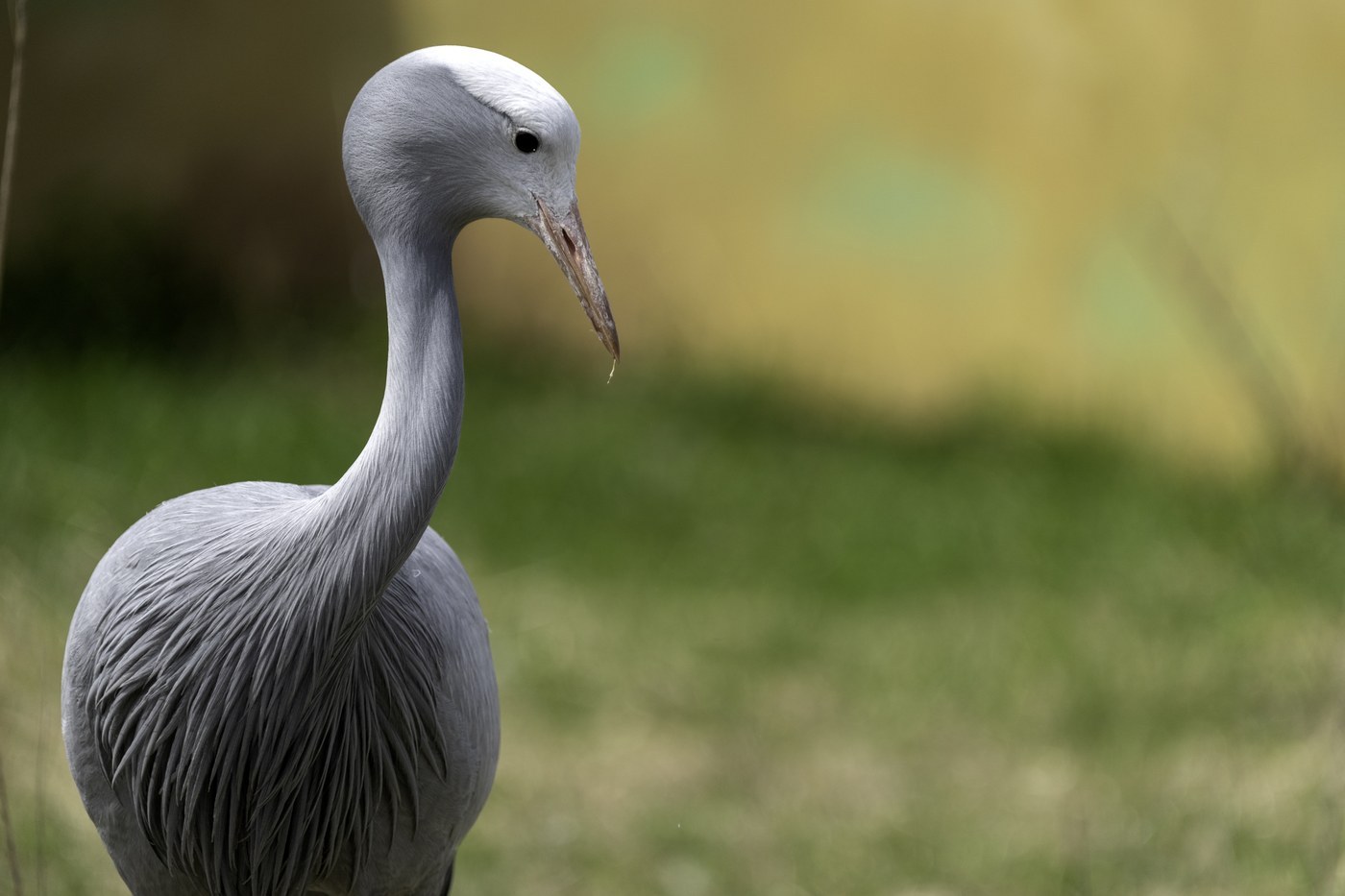
What Blue Crane's Feathers Look Like
The Blue Crane is a tall, elegant crane, and its feathers reflect both its soft coloring and its unusual plume structure. Body and neck feathers are a pale, powdery blue-gray, fine-textured and slightly downy at the base, with a smooth, unbarred, unstreaked appearance. The most diagnostic feathers are the elongated inner secondary/tertial plumes, which in life trail down behind the bird almost to the ground — these are long, drooping, blackish to dark slate-gray, with loose, somewhat frayed-looking vanes rather than a tight, solid edge, giving them a wispy, "hanging" quality unlike stiff flight feathers. Primary flight feathers are dark gray to blackish, broad and strong, contrasting with the pale body. The head feathering is short and dense, pale gray, without the bare red skin patches typical of many other crane species. Down feathers at the base of body plumes are notably soft and fluffy, consistent with a bird from cool upland grassland.
Step-by-Step: Is This Feather From a Blue Crane?
- Check overall tone first. Pale, powdery blue-gray body color with no barring is unusual and distinctive among grassland birds this size.
- Look for long, wispy, dark plumes with loose or frayed-looking edges — these are the elongated tertials unique to the crane's train-like display feathers.
- Compare size. Blue Crane feathers are large (cranes are tall birds) but the plumage is notably softer and less coarse than a heron's.
- Rule out bare-skin clues. Since only intact birds show the facial skin, focus on the pale gray, unmarked head feathering as a secondary confirmation.
- Consider habitat: pale blue-gray crane feathers found in open upland grassland or wetland-adjacent farmland strongly favor this species over other regional waterbirds.
Similar Species & How to Tell Them Apart
Grey Crowned Crane, which shares parts of the range, has a much more boldly patterned plumage with a golden crest, white wing patches, and chestnut in the wings — nothing like the uniform pale blue-gray of Blue Crane. Herons and egrets in the same grasslands (e.g., Grey Heron) have similarly gray tones but lack the elongated, wispy tertial train and instead show more pointed, straight-edged plumes concentrated on the back and breast, not trailing to near ground length. The combination of overall pale blue-gray body color with dark, loosely webbed trailing plumes is essentially unique to Blue Crane within its range.
Where & When You'll Find Them
Blue Crane is largely endemic to South Africa (with a small population in Namibia), favoring open grassland, karoo scrub, and agricultural fields, often near wetlands used for roosting. Feathers are most commonly found in grazed pastures, cultivated fields, and around shallow pans where flocks forage and roost. Molt is generally post-breeding, so late summer into autumn (in the Southern Hemisphere, roughly February through May) is the best window for finding dropped body feathers and worn plumes, particularly near traditional roosting wetlands and foraging fields.
Frequently asked questions
What is the most distinctive feather feature of a Blue Crane?
The long, drooping, dark slate-gray tertial plumes with loose, frayed-looking vanes that trail behind the bird — quite different from a normal stiff flight feather.
What color are the body feathers?
A pale, powdery blue-gray, smooth and unmarked, without barring or streaking.
How do I tell Blue Crane feathers from Grey Crowned Crane feathers?
Grey Crowned Crane shows bold patterning with white wing patches, chestnut coloring, and a golden crest — all absent in the plain, uniform blue-gray Blue Crane.
Where in the world is this species found?
It is largely endemic to South Africa's grasslands and karoo, with a small population in Namibia.
When is the best time to find shed feathers?
After the breeding season, roughly February through May in the Southern Hemisphere, near foraging fields and roosting wetlands.