
How to Identify Brown-headed Nuthatch Feathers
A guide to the tiny blue-gray feathers and pale brown cap of the Brown-headed Nuthatch, a pine-forest specialist of the southeastern US.
Read the full Brown-headed Nuthatch encyclopedia entry →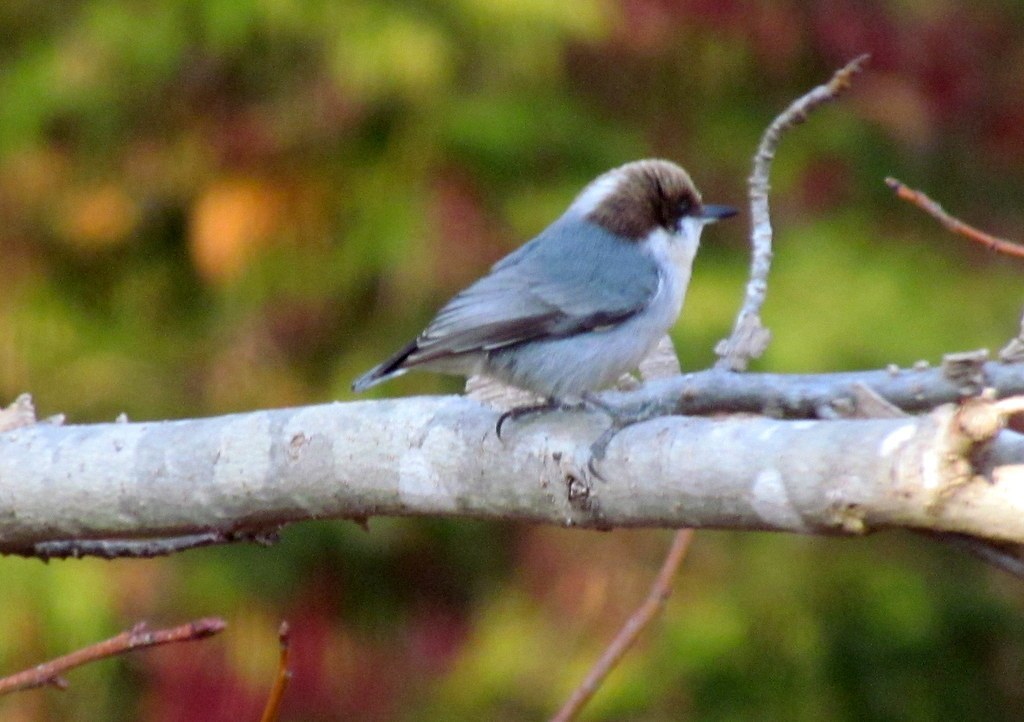
What Brown-headed Nuthatch Feathers Look Like
At about 11 cm, this is one of the smallest nuthatches, and nearly every feather it sheds is correspondingly tiny.
- Cap feathers: pale brown-gray, extending onto the nape — notably paler and browner than the black or gray caps of other North American nuthatches.
- Back and wing feathers: soft blue-gray, small, roughly 1-1.5 cm on the back.
- Flight feathers: blue-gray, about 4-5 cm.
- Tail feathers: short, square-ish, blue-gray, about 3.5-4 cm, with white spots near the tip on the outer feathers.
- Underparts: whitish with a buffy wash on the flanks.
- Nape: a small white spot feather.
Step-by-Step: Is This Feather From a Brown-headed Nuthatch?
- Check the size first. Flight feathers under 5 cm and a blue-gray color point toward a small nuthatch.
- Look at cap color if a head feather is present. Pale brown-gray, not black or solid gray, is diagnostic for this species among US nuthatches.
- Check for a buffy flank wash on underpart feathers.
- Look for small white spots near the tip of the outer tail feathers.
- Factor in habitat. Mature pine forest, especially longleaf pine, in the southeastern US strongly supports this ID.
Similar Species & How to Tell Them Apart
- White-breasted Nuthatch: larger, with a solid black cap and a clean white face, unlike the smaller, pale brown-capped Brown-headed Nuthatch.
- Red-breasted Nuthatch: larger, with a bold black eye-stripe and rusty underparts, quite different from Brown-headed Nuthatch's plain buffy wash.
- Pygmy Nuthatch: very similar in size and a comparably brownish-gray cap, but its range in the western US doesn't overlap with Brown-headed Nuthatch's southeastern pine forests, so geography is usually the deciding factor.
- Tufted Titmouse: superficially similar gray tones but noticeably larger, with a small crest and a plain gray (not brown) cap.
Because this species roosts communally in tree cavities, especially in cooler months, small clusters of feathers can sometimes be found together near a shared roost hole, unlike the more scattered single-feather finds typical of most small songbirds. Listen for the species' distinctive squeaky, rubber-duck-like call while searching pine stands — a calling flock nearby is a good sign that any small blue-gray feather in the area is worth a closer look.
Where & When You'll Find Them
Brown-headed Nuthatches are non-migratory residents of mature pine forests, especially longleaf pine, across the southeastern United States. They're cooperative breeders, often nesting in dead pine snags, sometimes with helper birds assisting a breeding pair. Post-breeding molt runs roughly June through August, and feathers are most often found in pine woodland leaf litter and bark crevices near nest snags and communal roost cavities.
Frequently asked questions
What cap color separates this species from other US nuthatches?
A pale brown-gray cap, distinct from the solid black cap of White-breasted Nuthatch or the black eye-stripe of Red-breasted Nuthatch.
How can I tell this apart from Pygmy Nuthatch?
The two look quite similar, so range is the best clue — Pygmy Nuthatch is a western species, while Brown-headed Nuthatch is restricted to the southeastern US.
What size feathers should I expect?
Very small — flight feathers around 4-5 cm, among the smallest of any North American nuthatch.
Is there a distinguishing mark on the tail?
Small white spots near the tip of the outer tail feathers.
Where should I look for feathers?
In the leaf litter and bark crevices of mature pine forests, especially longleaf pine, in the southeastern US, often near dead pine snags used for nesting.