
How to Identify Caique Feathers
How to identify the color-blocked feathers of these small South American parrots, known for their pure white bellies and bold head colors.
Read the full Caique encyclopedia entry →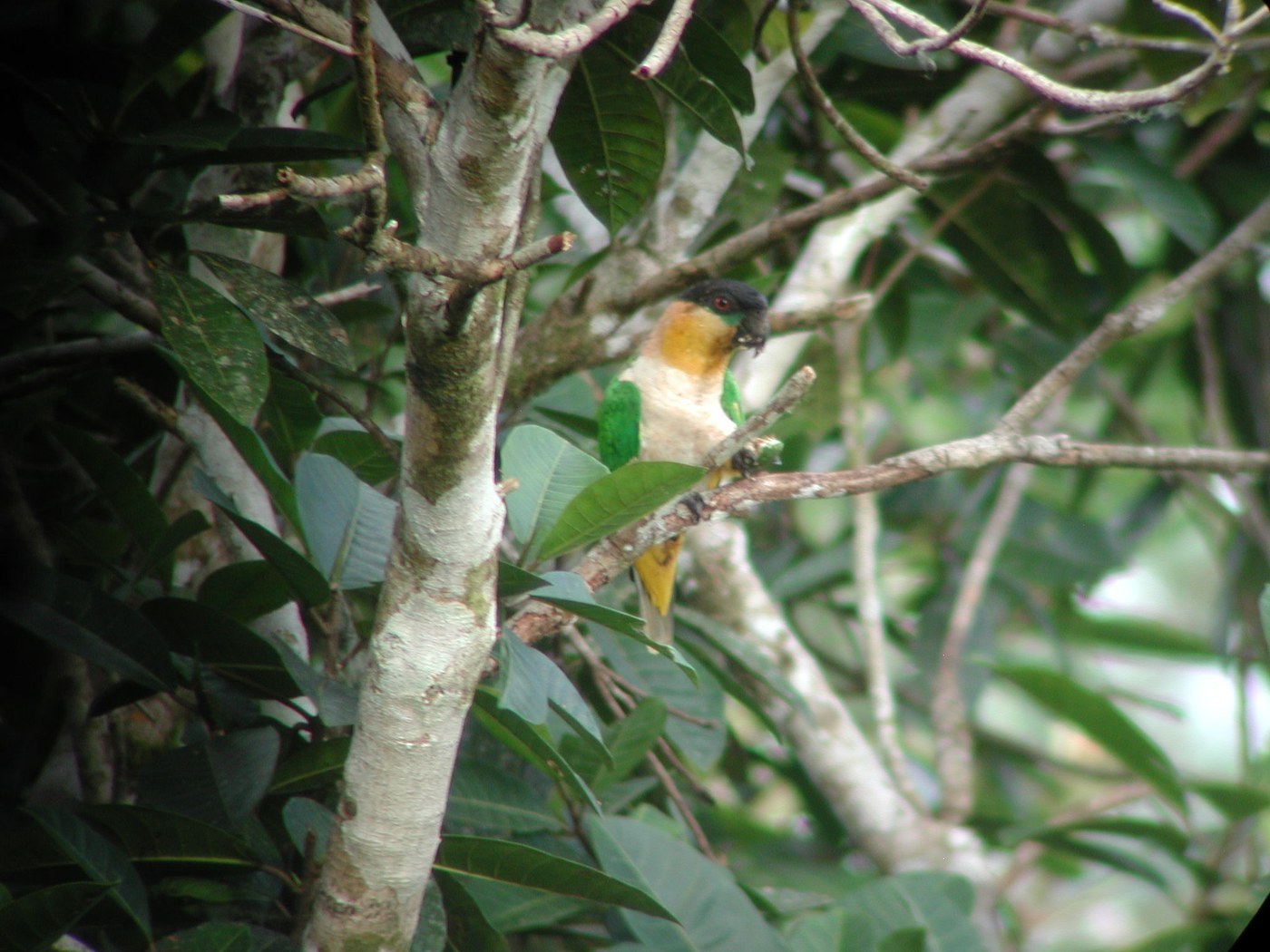
What Caique's Feathers Look Like
Caiques (genus Pionites), including the Black-headed Caique and White-bellied Caique commonly seen in aviculture, are small South American parrots known for bold, clean-edged color blocking rather than the blended patterns seen in many parrots. The most distinctive feature is a pure white to pale cream belly and lower breast — an unusual, almost gull-like white patch rarely seen on other parrots. This contrasts sharply with a bright orange-yellow face, cheeks, and thighs, and either a black cap (Black-headed Caique) or a more golden-yellow-orange crown (White-bellied Caique).
Back, wing, and mantle feathers are a rich grass-green, typical of many South American parrots, providing camouflage in canopy foliage. Flight feathers are green with darker blue-green tips on the primaries, and the tail is relatively short compared to many parrots, green with slightly darker tips. Overall feather texture is dense and somewhat glossy, and the sharp boundaries between color zones (white belly to orange thigh to black or yellow head) remain crisp rather than gradually blended, a distinguishing structural trait of this genus.
Step-by-Step: Is This Feather From a Caique?
- Check for pure white belly feathers. A clean white or pale cream body feather, especially if paired with bright orange nearby, is highly distinctive since few parrots show true white underparts.
- Look for sharp color boundaries. Crisp transitions between colors (rather than streaked or blended patterns) fit this genus's block-colored plumage style.
- Examine head feather color. A solid black cap suggests Black-headed Caique, while golden-yellow-orange suggests White-bellied Caique.
- Assess thigh and cheek feathers. Bright orange-yellow feathers in these areas support a caique identification.
- Note back and wing color. Rich grass-green feathers, typical of many parrots, should accompany the distinctive white/orange body pattern.
- Consider context. Caiques are popular pets, so feathers found in urban or suburban settings outside South America likely come from an escaped or aviary bird rather than a wild population.
Similar Species & How to Tell Them Apart
Lovebirds (Agapornis species) can show some colorful head patches but lack the pure white belly entirely, typically showing green or solid-colored underparts instead. Conures (Aratinga and related genera) show more variable, often more blended coloring without the sharply blocked white-belly pattern. Other South American parrots in the same range, like Pionus parrots, are larger, chunkier, and show duller, more uniform coloring without the bright orange-and-white contrast. The combination of a genuinely white belly with bold orange cheeks/thighs and green wings is essentially unique to caiques among commonly encountered parrots.
Where & When You'll Find Them
In the wild, caiques inhabit the canopy and edges of Amazonian rainforest across northern and central South America, typically in small, active flocks that forage on fruit and seeds high in the trees. Because they are also widely kept as pets due to their playful, energetic personalities, feathers are commonly found far outside their native range near homes, aviaries, and parks where escaped or free-flying pet birds are present. Wild birds likely molt on a schedule tied to the tropical wet/dry season cycle rather than temperate seasons, while captive birds may molt somewhat continuously depending on housing and diet conditions.
Frequently asked questions
What's the single most distinctive feature of caique feathers?
A genuinely pure white to pale cream belly feather is highly unusual among parrots and is the strongest identifying clue for this genus.
How do I tell Black-headed from White-bellied Caique?
Check the crown color: a solid black cap indicates Black-headed Caique, while a golden yellow-orange crown indicates White-bellied Caique.
Could a lovebird feather be mistaken for a caique's?
Unlikely once the belly is checked — lovebirds lack the true white belly patch and instead show green or other solid-colored underparts.
Why might I find a caique feather far from South America?
Caiques are popular pet parrots, so feathers often come from escaped or free-flying captive birds near homes, aviaries, or parks well outside their native range.
Is there a clear molting season for wild caiques?
Wild birds likely molt in relation to the tropical wet and dry season cycle rather than a fixed temperate calendar, while captive birds can molt more continuously.