
How to Identify Cape Petrel Feathers
How to identify the unmistakable black-and-white checkerboard feathers of the Cape Petrel, a pied seabird of the Southern Ocean.
Read the full Cape Petrel encyclopedia entry →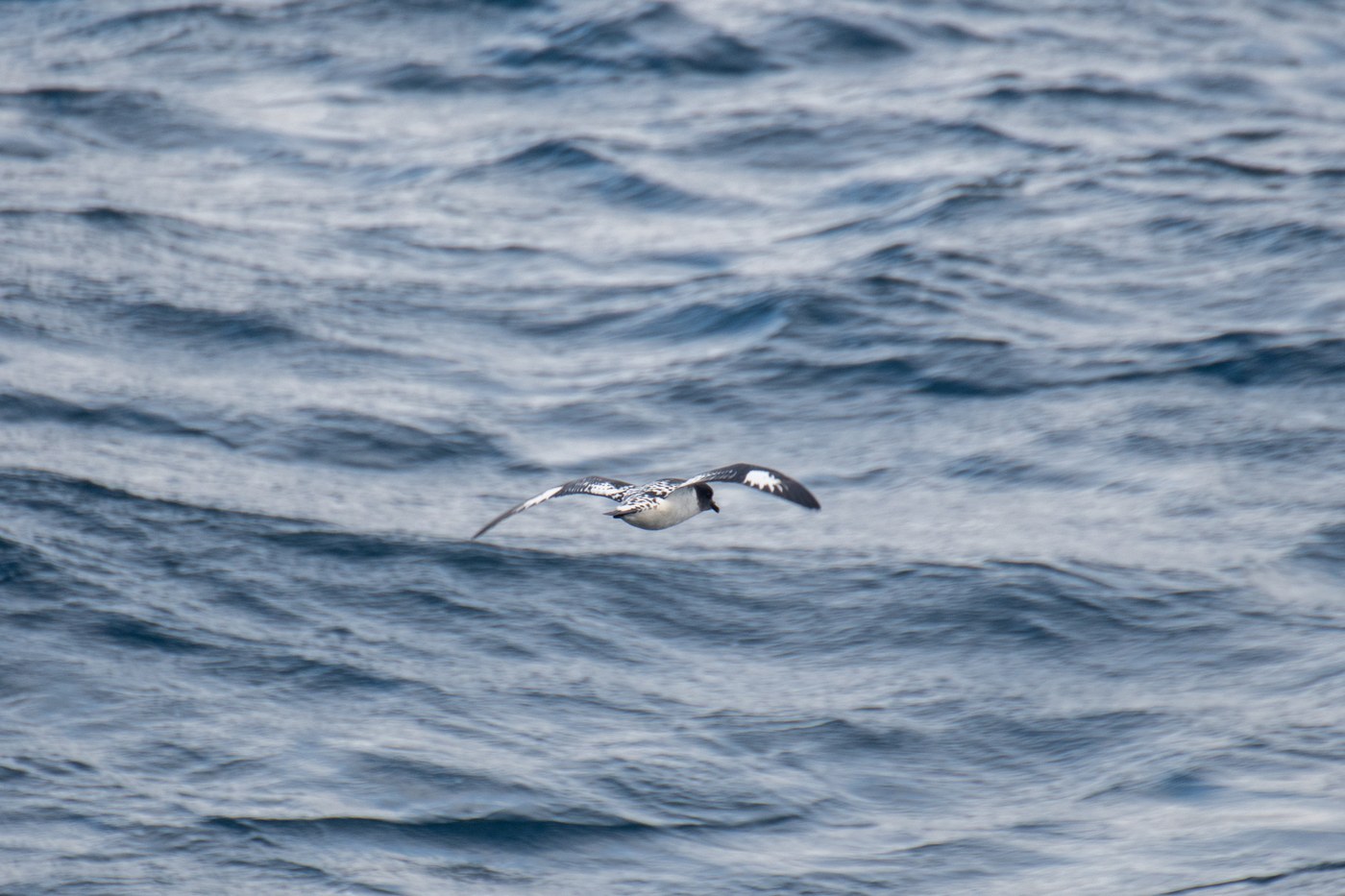
What Cape Petrel Feathers Look Like
Cape Petrels are one of the easiest seabirds to identify from feathers alone thanks to their striking black-and-white checkerboard pattern. Upperwing covert and back feathers show alternating black and white blocks in a mottled, tessellated arrangement unlike almost any other seabird — a single covert feather can show two or three distinct black-and-white segments along its length. The head is solid blackish-brown, giving way to the checkered pattern starting at the neck and mantle. Flight feathers (primaries) are mostly blackish, while the tail is white with a clean, bold black terminal band across the tip. Underparts are clean white, contrasting sharply with the patterned upperside.
Step-by-Step: Is This Feather From a Cape Petrel?
- Check for checkering. A feather with alternating black-and-white blocks along its length is essentially unique to this species among common seabirds.
- Look at the tail pattern. White tail feathers with a bold black band near the tip support Cape Petrel.
- Confirm the head is solid dark. Head feathers should be uniform blackish-brown with no checkering, unlike the back and wing feathers.
- Check underparts. Clean white belly and breast feathers contrast against the patterned back.
- Rule out gradual mottling. Cape Petrel's pattern is bold and blocky, not the fine subtle mottling seen in some other seabirds.
- Consider the coastline. Feathers washing ashore on southern hemisphere coasts, especially after storms, strongly support this pelagic species.
Similar Species & How to Tell Them Apart
Few seabirds share the Cape Petrel's bold checkerboard pattern, making confusion unlikely once a patterned feather is found — most black-and-white seabirds show clean divisions between solid black and solid white zones (like a gannet or tern) rather than an intricate blocky mosaic. Some smaller storm-petrels and prions show pale rump patches or grayish upperwing panels, but none replicate the tessellated, tile-like arrangement of alternating black and white blocks seen on a Cape Petrel's back and covert feathers. The unique mottled block pattern, rather than any single measurement, is what confirms this species, and it holds up even on a single isolated feather rather than requiring a full plumage view.
Where & When You'll Find Them
Cape Petrels breed on subantarctic and Antarctic islands and range widely across the Southern Ocean, regularly reaching the coasts of South Africa, South America, Australia, and New Zealand, especially during austral winter when they follow cold, productive currents closer to shore. Feathers most often wash up on southern hemisphere beaches after strong storms or wrecks, with the highest likelihood in the austral autumn and winter (roughly April-September), when birds disperse widely from breeding colonies and post-breeding molt is underway.
Frequently asked questions
What makes Cape Petrel feathers so easy to identify?
Their bold black-and-white checkerboard pattern on the back and upperwing coverts, which is essentially unique among seabirds.
What does the Cape Petrel's tail look like?
White with a bold, clean black band near the tip, contrasting with the checkered back.
Are there any look-alikes for Cape Petrel feathers?
Very few — most black-and-white seabirds show clean solid-color divisions rather than the intricate blocky mosaic Cape Petrels display.
Where do Cape Petrel feathers typically wash ashore?
On southern hemisphere coasts including South Africa, South America, Australia, and New Zealand, especially after storms.
When are Cape Petrel feathers most likely to be found?
Austral autumn and winter, roughly April through September, when birds disperse widely and undergo post-breeding molt.