
How to Identify Capped Heron Feathers
A guide to the pale powder-blue body feathers and black-capped head plumes that identify the Capped Heron, a wetland bird of tropical South America.
Read the full Capped Heron encyclopedia entry →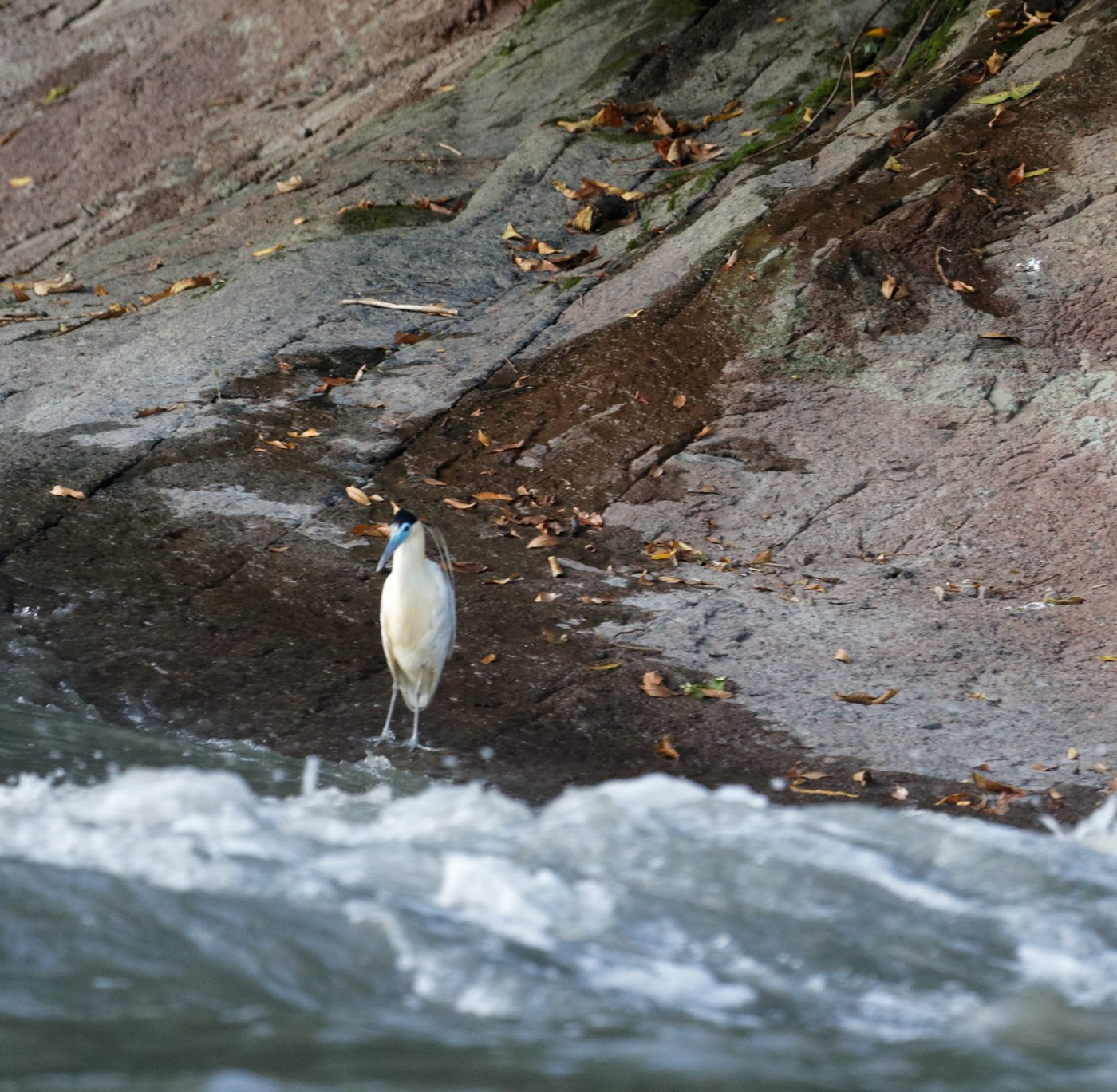
What Capped Heron Feathers Look Like
Capped Herons stand out among herons for their unusually pale coloring: body feathers are a soft powder-blue to whitish-buff, quite unlike the grays, browns, or whites of most heron relatives. The crown is covered in a solid black cap, from which several elongated, fine white plumes trail backward — these plume feathers are distinctly narrow and wispy compared to the broader body feathers. Neck feathers are pale buff, blending smoothly into the pale blue-gray of the back and wings. Flight feathers are a soft pale gray, lacking the darker flight feathers common in many other heron species, giving the whole bird an unusually uniform, pale appearance in flight.
Step-by-Step: Is This Feather From a Capped Heron?
- Check overall paleness. Body feathers should read as pale powder-blue or whitish-buff, notably paler than most herons' feathers.
- Look for the black cap. A feather that is solid black, especially if elongated and plume-like, likely comes from the crown.
- Inspect the plumes. Fine, narrow, wispy white feathers trailing from a black base suggest the head's ornamental plumes.
- Check flight feathers. These should be soft pale gray rather than dark or blackish, unlike many darker-winged herons.
- Rule out all-white herons. A feather with any blue-gray or buff wash is not a Snowy Egret or Great Egret, which are purely white.
- Consider the habitat. Feathers found near quiet freshwater edges in tropical South America support this species over temperate herons.
Similar Species & How to Tell Them Apart
Snowy Egret is entirely white with no blue-gray wash and no black cap, making it easy to rule out once feather color is checked. Adult Little Blue Heron is a slaty blue-gray overall but lacks the Capped Heron's black cap and trailing white plumes, and its juveniles are all white rather than pale buff-blue — neither age class matches the Capped Heron's specific combination of pale body plus black-capped head with plumes. Other tropical herons and egrets in the same wetlands tend to run either darker slate-gray or purely white, so the Capped Heron's unusual pastel powder-blue tone is itself a useful flag once other species have been ruled out.
Where & When You'll Find Them
Capped Herons inhabit quiet freshwater wetlands, rivers, and lagoons of tropical South America, including the Amazon basin and Pantanal, favoring still or slow-moving water with overhanging vegetation where they hunt fish and amphibians from low perches. Feather-drop timing tracks the regional wet-and-dry season breeding cycle rather than a fixed calendar molt, so feathers can appear near freshwater edges at various points in the year depending on local rainfall patterns and nesting activity.
Frequently asked questions
What's the most distinctive feature of a Capped Heron feather?
The combination of unusually pale powder-blue to whitish-buff body feathers with a solid black cap and fine trailing white plumes from the crown.
How do I rule out a Snowy Egret?
Snowy Egret is entirely white with no blue-gray wash and no black cap — any hint of pale blue or buff rules it out in favor of Capped Heron.
How is Capped Heron different from an adult Little Blue Heron?
Little Blue Heron is slaty blue-gray overall but lacks the black cap and trailing white plumes that Capped Heron shows on the head.
Where do Capped Herons live?
Quiet freshwater wetlands, rivers, and lagoons of tropical South America, including the Amazon basin and Pantanal.
When do Capped Herons molt?
Timing tracks the regional wet-and-dry season breeding cycle rather than a fixed calendar, so feathers can appear at varying times depending on local rainfall and nesting.