
How to Identify Carrion Crow Feathers
How to identify the entirely black, glossy feathers of the Carrion Crow, a widespread Old World corvid, and separate it from its close relatives.
Read the full Carrion Crow encyclopedia entry →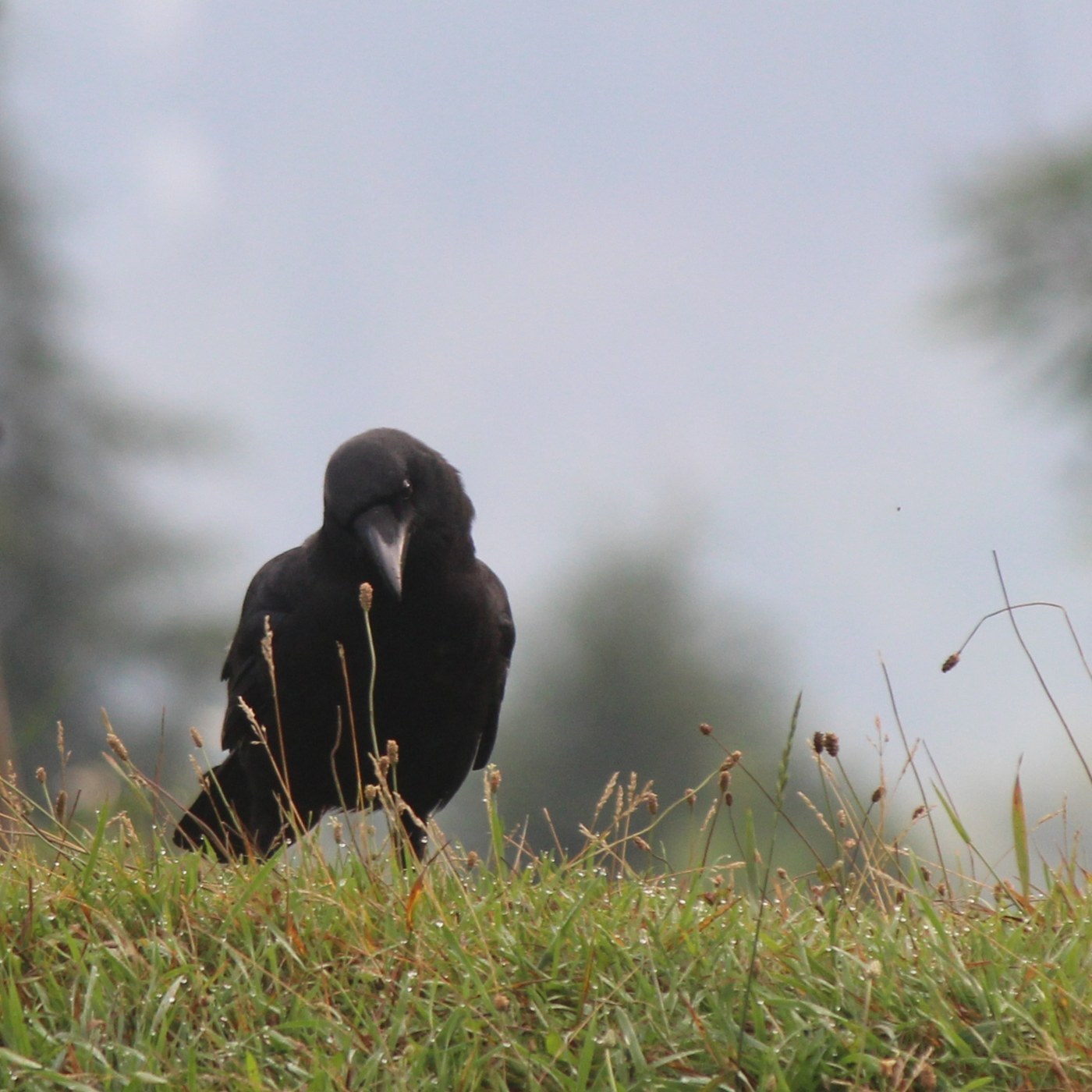
What Carrion Crow Feathers Look Like
Carrion Crows are entirely black with a robust, glossy plumage — flight feathers and back feathers show a distinct green-to-purple iridescent sheen in good light, while smaller body feathers appear more matte black. Flight feathers are broad and somewhat rounded at the tip, typical of a strong-flying, adaptable corvid rather than a soaring specialist. There is no white, gray, or pale patch anywhere on this species, and the throat/neck feathers lack any shaggy or elongated structure. Tail feathers are black, moderately long, and rounded rather than deeply wedge-shaped.
Step-by-Step: Is This Feather From a Carrion Crow?
- Confirm solid black. Any feather with white, gray, or pale patches rules out Carrion Crow.
- Check for gloss. A green-purple iridescent sheen on flight or back feathers fits this species.
- Inspect tail shape. Moderately long and rounded, not deeply wedge-shaped like a raven's.
- Check throat feathers. Carrion Crow lacks the shaggy, elongated throat feathers seen in ravens.
- Compare size. Mid-sized among European/Asian corvids — bulkier than a jackdaw, smaller than a raven.
- Consider habitat. Feathers found in farmland, woodland edge, or urban parks across Europe and East Asia fit this common, adaptable species.
Similar Species & How to Tell Them Apart
Rook overlaps extensively in range but shows a bare, grayish-white patch of skin at the base of the bill (not feathered) and notably loose, shaggy thigh feathers that create a "baggy trousers" look — a Carrion Crow's leg feathers stay neat and close to the body by comparison. Hooded Crow, a close relative found in overlapping and adjacent range, shows a gray body with only the head, wings, and tail black, making it easy to eliminate since Carrion Crow is uniformly black throughout. Common Raven is considerably larger with a deeply wedge-shaped tail and shaggy, elongated throat feathers, both features absent in Carrion Crow. Smaller corvids such as the Jackdaw show a pale grayish nape or pale eye, further points that a solid, unbroken black feather set with no pale zones rules out.
Where & When You'll Find Them
Carrion Crows are widespread across Europe and East Asia, common in farmland, woodland edges, and urban and suburban areas, with some populations resident and others partially migratory, moving short distances in response to harsh winter weather. Feathers can be found in these varied habitats throughout the year, with the largest numbers typically appearing after the post-breeding molt from June through September, when adults replace worn flight and body feathers following the nesting season.
Frequently asked questions
How do I rule out a Rook when I find an all-black corvid feather?
A Rook feather set is usually accompanied by evidence of a bare grayish-white patch at the bill base and loose, shaggy thigh feathers — Carrion Crow's leg feathering stays neat by comparison, though this is easier to judge on a whole bird than a single feather.
What color gloss should I expect on Carrion Crow feathers?
A green-to-purple iridescent sheen on the flight feathers and back, visible in good light.
How is Carrion Crow different from Hooded Crow?
Hooded Crow shows a gray body with only the head, wings, and tail black, while Carrion Crow is uniformly black throughout.
How do I tell a Carrion Crow feather from a Common Raven feather?
Raven feathers come from a much larger bird with a deeply wedge-shaped tail and shaggy throat feathers, both absent in Carrion Crow.
When do Carrion Crows molt?
After breeding, roughly June through September.
Carrion Crow identified by the community
Recent Carrion Crow feathers identified with Feather Identifier.


