
How to Identify Chinese Grosbeak Feathers
Identify a Chinese Grosbeak feather using its glossy black hood, bold white primary flash, and warm cinnamon-buff underparts unique among East Asian finches.
Read the full Chinese Grosbeak encyclopedia entry →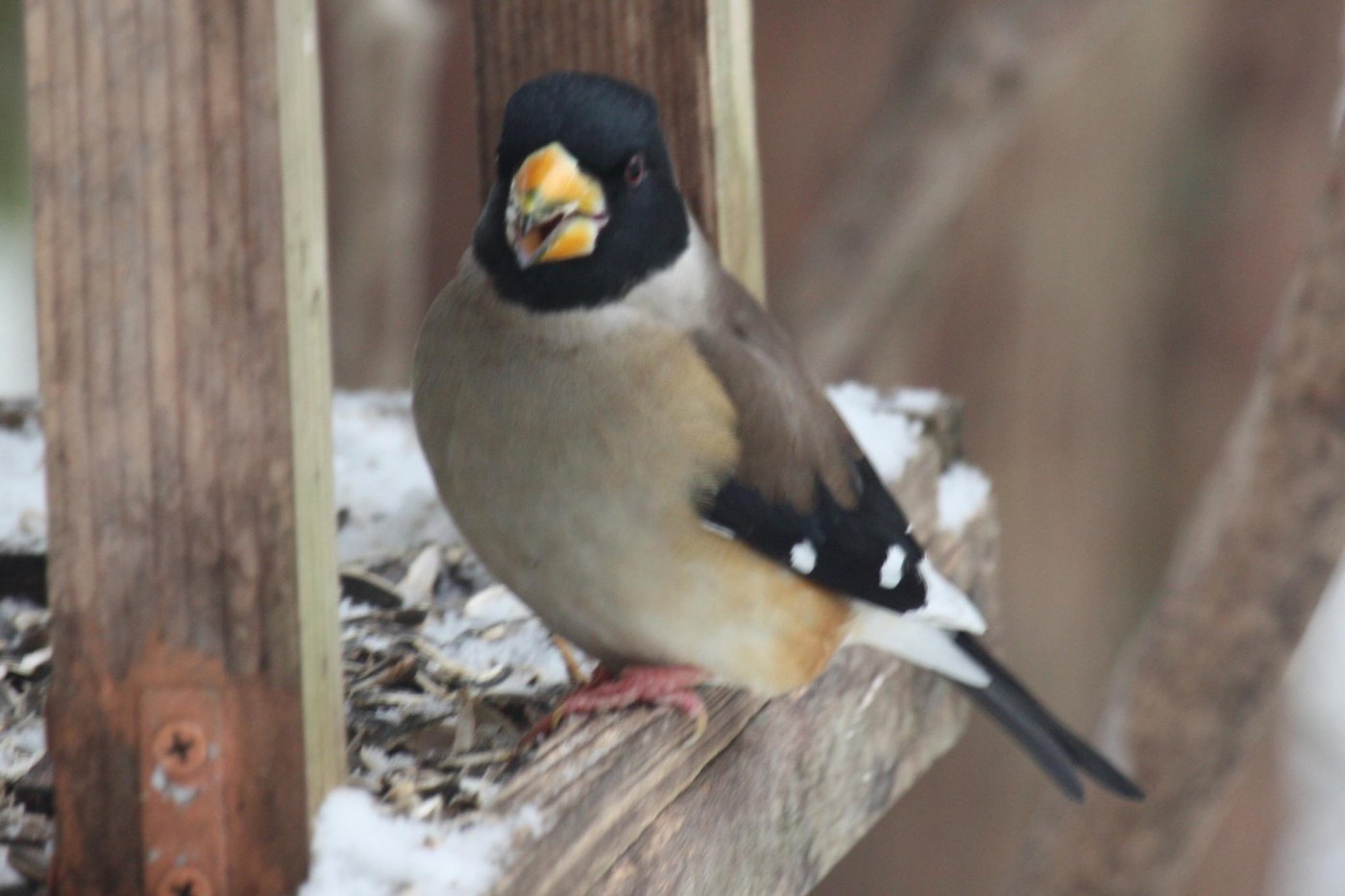
What Chinese Grosbeak Feathers Look Like
The Chinese Grosbeak (also called the Yellow-billed Grosbeak) is a heavyset East Asian finch with a bold, contrasty plumage. Males show a glossy blue-black hood covering the head that sharply contrasts with a plain gray back and mantle. The breast, flanks, and belly are a warm cinnamon-buff to orange-brown, fading to pale gray on the lower belly and vent — a soft, rounded contour feather with no streaking.
The wings are largely black, but the primaries carry a bold white patch at their base, forming a bright flash that's very obvious in flight and equally obvious on a loose flight feather: look for a black feather with a clean white block near the base rather than scattered spotting. The tail is black and slightly notched.
Females and immatures are duller, with an olive-gray head replacing the black hood, but they still show the same white primary patch, just with less contrast against the surrounding black.
Step-by-Step: Is This Feather From a Chinese Grosbeak?
- Check the head/hood feather: solid glossy black (male) or olive-gray (female) with no streaking.
- Look for the white patch on a black flight feather: a clean, well-defined white block near the base of an otherwise black primary is highly diagnostic.
- Feel the body feather weight: like other grosbeaks, feathers are dense and somewhat stiff, matching a stocky, big-billed finch.
- Check underparts color: warm cinnamon-orange breast/flank feathers, not streaky or pale gray throughout.
- Note the tail: black, only lightly notched, not deeply forked.
Similar Species & How to Tell Them Apart
- Japanese Grosbeak: larger and plainer overall, lacking the bold white primary patch; its wings are more uniformly dark.
- Hawfinch: also shows a white wing band and stout build, but its body plumage is pinkish-brown with a gray nape and only a black face/bib rather than a full black hood, and its white wing markings sit more on the secondaries/tips rather than as a clean patch at the primary base.
- Black-tailed/other Eophona grosbeaks: range and hood extent are the best separators; Chinese Grosbeak's combination of full black hood plus sharply cinnamon underparts is the most reliable field mark.
Where & When You'll Find Them
Chinese Grosbeaks breed in deciduous and mixed woodlands, parks, and forest edges across China, the Korean Peninsula, Japan, and the Russian Far East. They molt after breeding, typically from July through September, so fresh contour and flight feathers turn up near breeding groves and parks in late summer. The species is migratory across much of its range, moving south to southern China and northern Indochina for winter, so feathers may also appear at migratory stopover sites in fall.
Frequently asked questions
How do I tell a male from a female Chinese Grosbeak by feather alone?
Male head/hood feathers are glossy blue-black, while female head feathers are a duller olive-gray; both sexes show the white primary patch, but it looks more muted on females.
Is the white wing patch always visible on a single loose feather?
Yes — it's confined to specific primaries near the base, so if you have one of those feathers you'll see a clean white block against black, not scattered white spotting.
What's the easiest way to rule out a Hawfinch?
Check the head: Hawfinch shows a gray nape and only a black face/bib, never a fully black hood extending over the whole head like the Chinese Grosbeak's.
When in the year are these feathers most commonly found?
Late summer (July-September) during the post-breeding molt near woodland breeding sites, and again during fall migration at stopover locations.