
How to Identify Coal Tit Feathers
Spot a Coal Tit feather by its black cap paired with a distinctive white nape patch and two clean white wingbars — features that separate it from every other black-capped European tit.
Read the full Coal Tit encyclopedia entry →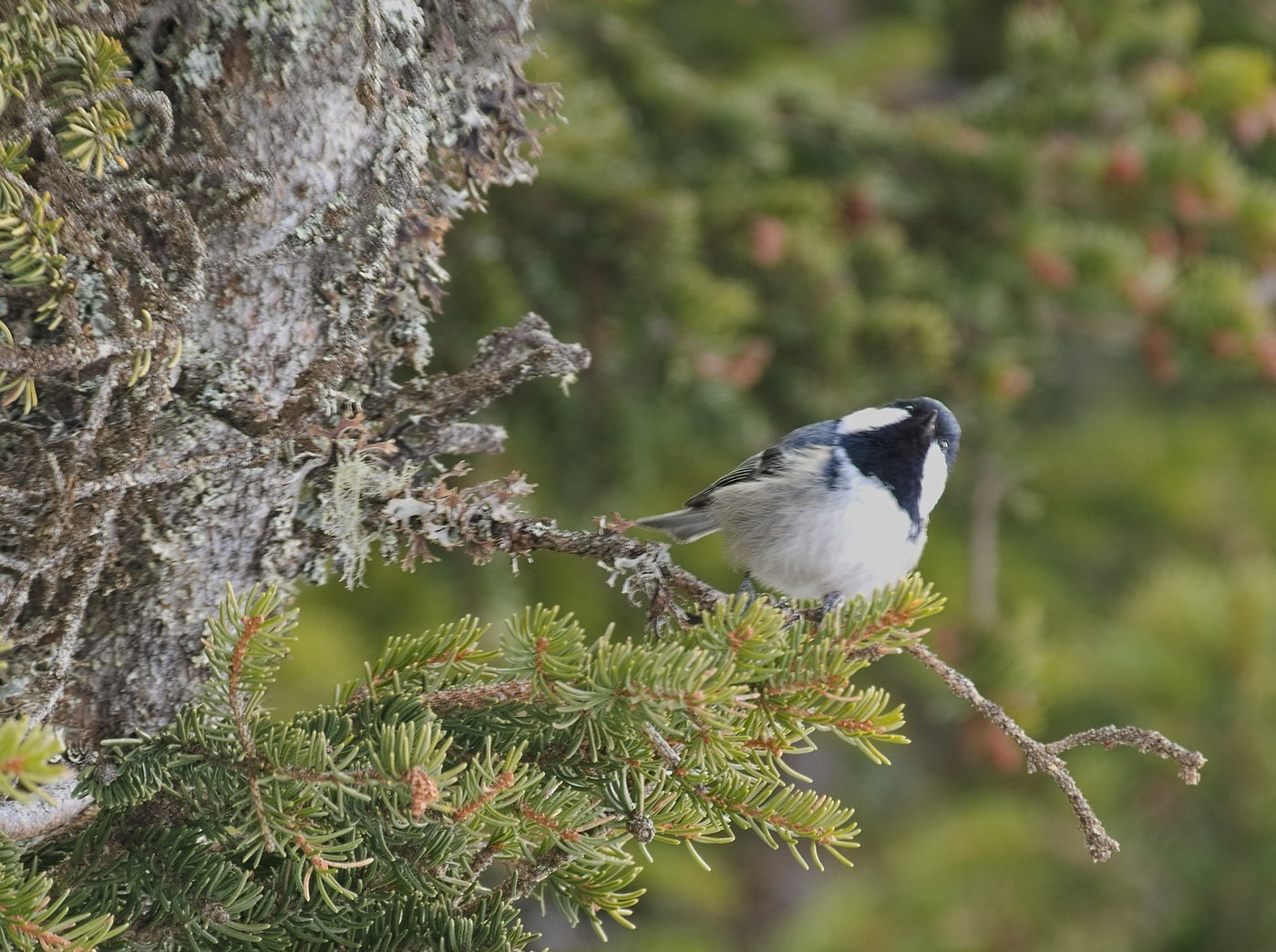
What Coal Tit Feathers Look Like
The Coal Tit is a small woodland tit found across Europe and Asia, and while its black cap and white cheeks might suggest confusion with several relatives, one feature clinches identification: a white patch on the nape (back of the head), unlike any other common black-capped tit in its range. If you find a feather from the head/nape area showing black transitioning into a distinct white spot, that's a strong positive sign.
The back is a soft gray-olive to buff-brown, and the wings are dark with two clean, well-defined white wingbars — Coal Tit shows two bars where several relatives show only one or none. Underparts are a pale buffy-white to soft pinkish-buff, notably not yellow, which is another useful contrast against brighter-bellied tits. The tail is gray and unremarkable.
Step-by-Step: Is This Feather From a Coal Tit?
- Check the head/nape feather: black cap with a distinct white patch on the nape is close to diagnostic on its own.
- Count the wingbars: two clear white bars on dark wing coverts, not just one.
- Examine underparts color: pale buffy-white to pinkish-buff, not yellow.
- Consider size: one of the smallest European tits, so feathers run notably small and delicate.
- Confirm habitat: coniferous or mixed woodland, where this species is a specialist.
Similar Species & How to Tell Them Apart
- Great Tit: much larger, with bright yellow underparts crossed by a bold black belly stripe, and only a single wingbar — no white nape patch at all.
- Marsh Tit / Willow Tit: both show a plain black cap without any white nape patch, generally a single indistinct wingbar or none, and a more uniformly brownish-tinged body.
- Blue Tit: has a blue (not black) cap and bright yellow underparts, easily ruled out by color alone.
Where & When You'll Find Them
Coal Tits inhabit coniferous and mixed woodlands across Europe and Asia, showing a particular fondness for spruce, pine, and fir stands. Most populations are resident year-round, though northern and mountain birds can be irruptive, moving south in years of poor conifer seed crops. Molt occurs after breeding, typically in July and August, so fresh feathers are most often found in conifer forest leaf litter or near woodland bird feeders throughout the year, with a seasonal uptick after the summer molt.
Coal Tits are agile, acrobatic foragers that often hang upside down at the tips of conifer branches while feeding, and their small, light feathers can be carried some distance by wind before settling on the forest floor or catching in low shrubs. Because the species readily visits garden feeders in winter, especially in cold spells, feathers are also commonly found on the ground directly beneath feeding stations near woodland edges.
Frequently asked questions
What is the single best feature for identifying this species from a feather?
A white patch on the nape (back of the head) combined with a black cap — this pairing is unique to Coal Tit among common European tits and is close to diagnostic by itself.
How many wingbars should I look for?
Two clean, well-defined white wingbars; most similar tits show only one or none, making the double bar a useful secondary clue.
Why does underparts color matter here?
Coal Tit's underparts are pale buffy-white to pinkish-buff, not yellow — this rules out Great Tit and Blue Tit, both of which have bright yellow bellies.
Are Coal Tit feathers found year-round or only in a certain season?
Year-round in resident populations, since the species doesn't migrate, though northern/mountain birds may move south in poor seed years, and fresh feathers are most common after the July-August molt.