
How to Identify Common Redshank Feathers
How to identify the streaked upperpart feathers and white-trailing-edge flight feathers of the Common Redshank, and separate them from Spotted Redshank and Greenshank.
Read the full Common Redshank encyclopedia entry →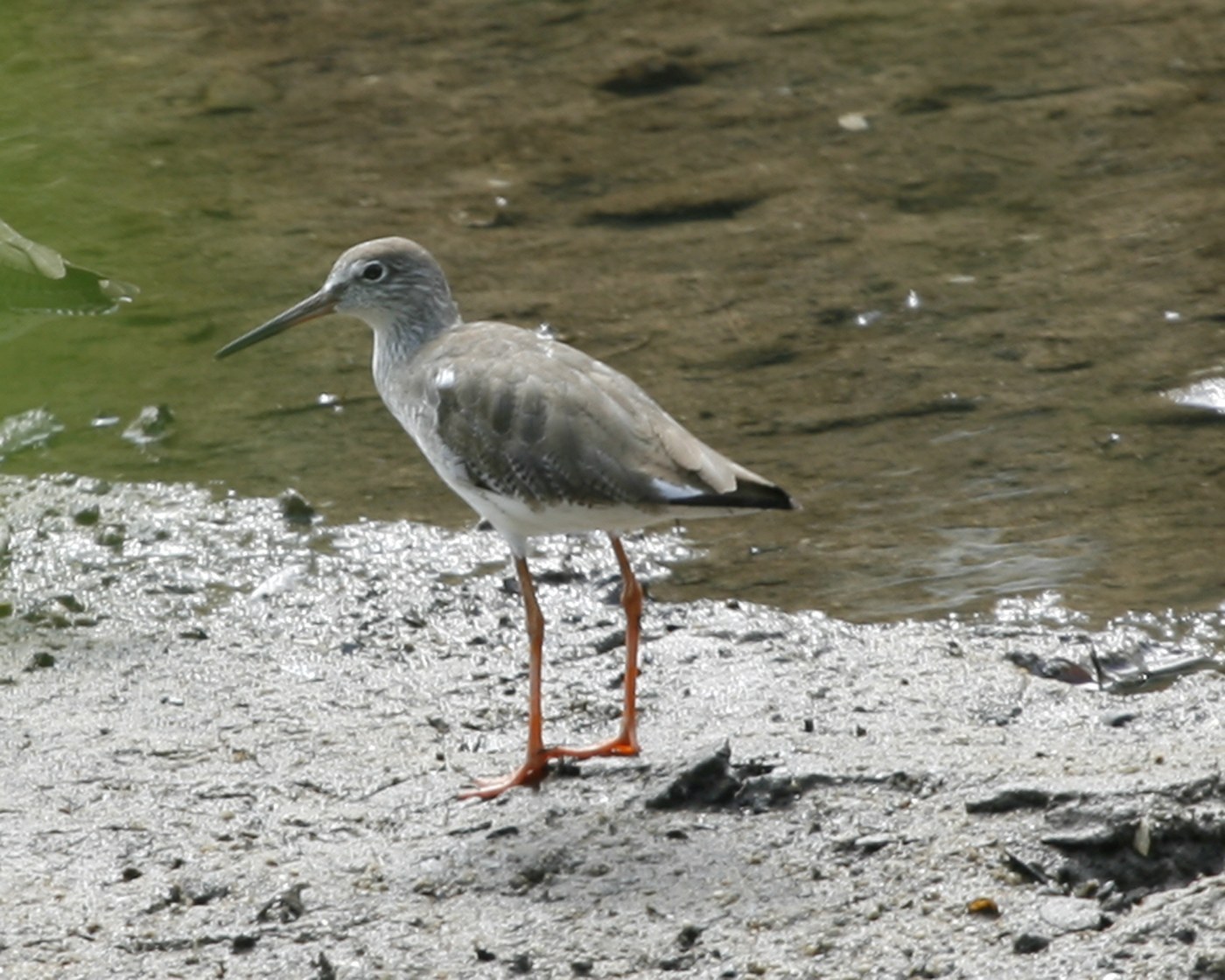
What Common Redshank Feathers Look Like
The Common Redshank is a mid-sized wading bird best known in life for its bright orange-red legs, but its feathers alone provide strong identification clues. Upperpart (back and covert) feathers are brownish-grey with irregular darker streaking and mottling, providing camouflage against mudflats and grassy marsh edges. The most distinctive feather-based field mark is the broad white trailing edge on the secondary flight feathers — in flight this creates a bold white band along the rear of the inner wing, and an isolated secondary feather will show a clean white tip or edge substantially wider than the fine pale fringing seen in many other shorebirds.
Redshanks also show a white wedge up the lower back and rump, so back/rump feathers from this area are notably paler, almost pure white, contrasting with the streaked brown feathers just above them — this white rump wedge is visible as the bird flies away and is a classic field mark. Tail feathers are barred grey-brown and white in a fine, even pattern. Underpart feathers are white with dark streaking concentrated on the breast and flanks, becoming cleaner white toward the belly.
Step-by-Step: Is This Feather From a Common Redshank?
- Check for white on the wing. A flight feather (secondary) with a notably broad white trailing edge, wider than a thin fringe, is a strong Redshank clue.
- Look for the pale rump/back wedge. Feathers from the lower back that are much whiter than the streaked feathers around them support Redshank.
- Assess upperpart pattern. Brownish-grey with irregular dark streaking/mottling (not bold spots or bars) fits Redshank's camouflage pattern.
- Check underparts. White with dark streaking on the breast/flanks, fading to cleaner white on the belly, is consistent with Redshank.
- Examine tail barring. Fine, even grey-brown and white bars across the tail feathers support the ID.
- Consider the habitat. Feathers found on coastal mudflats, estuaries, salt marsh, or wet grassland fit Redshank's preferred range.
Similar Species & How to Tell Them Apart
Spotted Redshank in non-breeding plumage is paler grey overall with a bold white supercilium (eyebrow stripe) and a more slender, slightly drooped bill tip; its legs are an even longer, more saturated red, and it lacks the bold white wing-trailing-edge pattern that Common Redshank shows, instead having a plainer wing. Common Greenshank is larger, with an upturned bill and, critically, greenish rather than red legs; its wing lacks the bold white secondary trailing edge, and it shows a similar white back wedge but without the streaked-brown contrast being as pronounced. Ruff varies enormously in plumage but never shows red legs or the same white wing-trailing-edge and rump-wedge combination together.
Where & When You'll Find Them
Common Redshanks breed on wet grassland, moorland, and salt marsh edges across temperate and northern Eurasia, moving to coastal mudflats and estuaries for the winter across a broad swath of Europe, Africa, and Asia. They undergo a partial molt before autumn migration and a complete molt on the wintering grounds, meaning flight feathers are more often found on wintering estuaries in late autumn and winter than on the breeding grounds, while worn body feathers can be found near breeding wetlands through the summer.
Frequently asked questions
What is the clearest feather-based way to identify a Common Redshank?
Look for a secondary flight feather with a notably broad white trailing edge — much wider than a thin fringe — which corresponds to the bold white wing band seen in flight.
Why is one of my feathers almost pure white while nearby ones are streaked brown?
Common Redshank has a distinctive white wedge running up the lower back and rump, so feathers from that specific area are much paler than the streaked brown feathers surrounding it.
How do I tell a Common Redshank feather from a Common Greenshank feather?
Greenshank lacks the bold white trailing edge on the secondaries that Redshank shows, and in life has greenish rather than red legs, though leg color itself isn't a feather trait.
Is a pale grey feather with a strong white eyebrow pattern still a Common Redshank?
More likely Spotted Redshank in non-breeding plumage, which is paler overall with a bold white supercilium and lacks Common Redshank's bold white wing-trailing-edge pattern.
When are Common Redshank feathers most often found on the coast?
Late autumn and winter, once birds have moved to estuaries and mudflats and undergone their complete molt on the wintering grounds.