
How to Identify Cory's Shearwater Feathers
A guide to recognizing the gray-brown and white feathers of Cory's Shearwater, a large tubenose seabird, and distinguishing them from Great Shearwater and Scopoli's Shearwater.
Read the full Cory's Shearwater encyclopedia entry →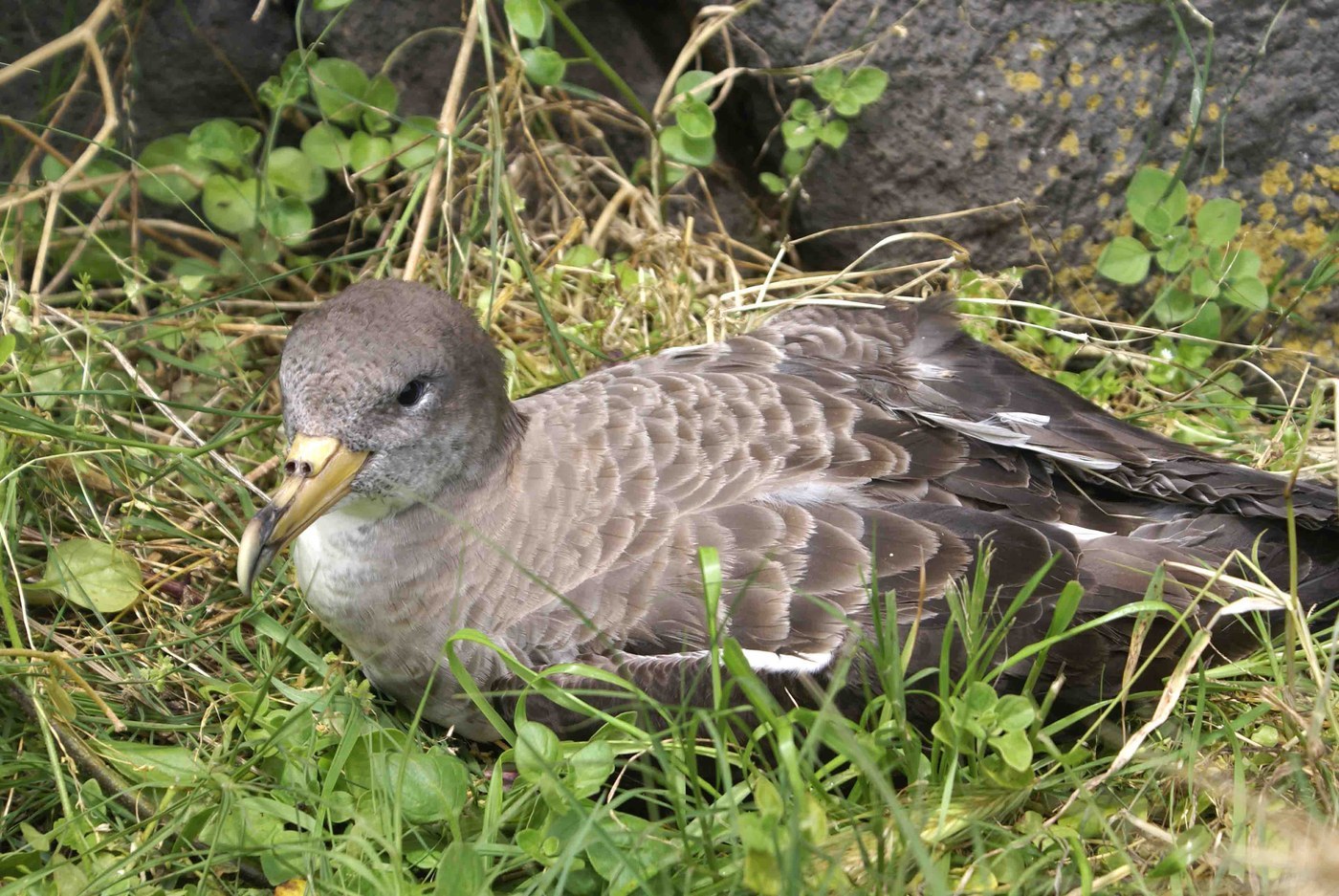
What Cory's Shearwater Feathers Look Like
Cory's Shearwater is a large seabird built for long ocean gliding, and its feathers reflect that lifestyle: dense, robust, and well-adapted to salt water. Upperpart feathers are a soft grayish-brown, without any sharp dark cap or contrasting collar, giving the whole upper body a fairly uniform, gently blended look. Underparts are clean white, and the underwing is mostly white as well, with only a softly diffused dusky trailing edge and wingtip rather than a sharply defined dark border.
Flight feathers (primaries) are long, narrow, and pointed, dark grayish-brown to blackish, built for efficient dynamic soaring over open water. The tail is medium length and wedge-shaped, grayish-brown to match the back. Because this is a burrow-nesting seabird that spends most of its life on the ocean, body feathers often show a dense layer of soft down at the base for insulation and waterproofing, and the feathers overall feel somewhat oilier or more water-resistant than a typical songbird feather.
Step-by-Step: Is This Feather From a Cory's Shearwater?
- Check size — feathers are notably large; primaries can be quite long and robust compared to typical passerine feathers.
- Look at the underwing transition — a softly diffused, not sharply defined, dark trailing edge and tip on an otherwise white underwing feather.
- Confirm no dark cap or white collar — the upperparts should look fairly uniformly grayish-brown without a bold cap.
- Feel the texture — dense, somewhat oily feel with abundant basal down suggests a pelagic seabird.
- Assess the tail shape — wedge-shaped and moderate in length.
- Factor location — beach or coastal finds near breeding colonies (Macaronesia, Mediterranean islands) or storm-washed shorelines support this ID.
Similar Species & How to Tell Them Apart
Great Shearwater is a common confusion species but shows a distinctly dark cap contrasting with a paler nape and a white band across the upper tail/rump, along with a dark smudgy belly patch — all features Cory's Shearwater lacks, since its upperparts blend more evenly and its underparts are clean white. Scopoli's Shearwater, a very close relative sometimes treated as the same species, is extremely similar and mainly separated by more extensive white on the underwing and subtle differences best confirmed with a full specimen rather than a single feather. Manx Shearwater is much smaller overall with a crisper black-and-white contrast and a sharply demarcated dark upperside, unlike the softer gray-brown wash of Cory's Shearwater.
Where & When You'll Find Them
Cory's Shearwaters breed colonially in burrows and rock crevices on islands across the Azores, Canary Islands, Madeira, and various Mediterranean islands, then range widely across the Atlantic Ocean outside the breeding season. Feathers are most likely to be found on beaches near breeding colonies, especially in late summer and autumn, when adults are provisioning chicks and undergoing molt, and after storms, which can wash both body feathers and flight feathers ashore from birds far out at sea.
Frequently asked questions
How do I tell a Cory's Shearwater feather from a Great Shearwater feather?
Great Shearwater shows a distinct dark cap and a pale rump band, features Cory's Shearwater lacks; Cory's upperparts blend more evenly gray-brown without a bold cap or rump contrast.
Why do shearwater feathers feel oilier than songbird feathers?
Shearwaters are pelagic seabirds that spend most of their lives on open ocean, so their feathers have dense basal down and natural oils for insulation and waterproofing.
Where are Cory's Shearwater feathers most often found?
On beaches near breeding colonies in the Azores, Canaries, Madeira, and Mediterranean islands, especially in late summer and autumn, or washed ashore after storms.
Is it easy to tell Cory's Shearwater from Scopoli's Shearwater by feather alone?
Not really — the two are extremely similar close relatives, and confidently separating a single feather usually requires more detail than a feather alone provides, so consider location and season as a tiebreaker.