
How to Identify Curlew Sandpiper Feathers
Telling apart the brick-red breeding plumage, grey non-breeding feathers, and white rump of this long-billed migratory shorebird.
Read the full Curlew Sandpiper encyclopedia entry →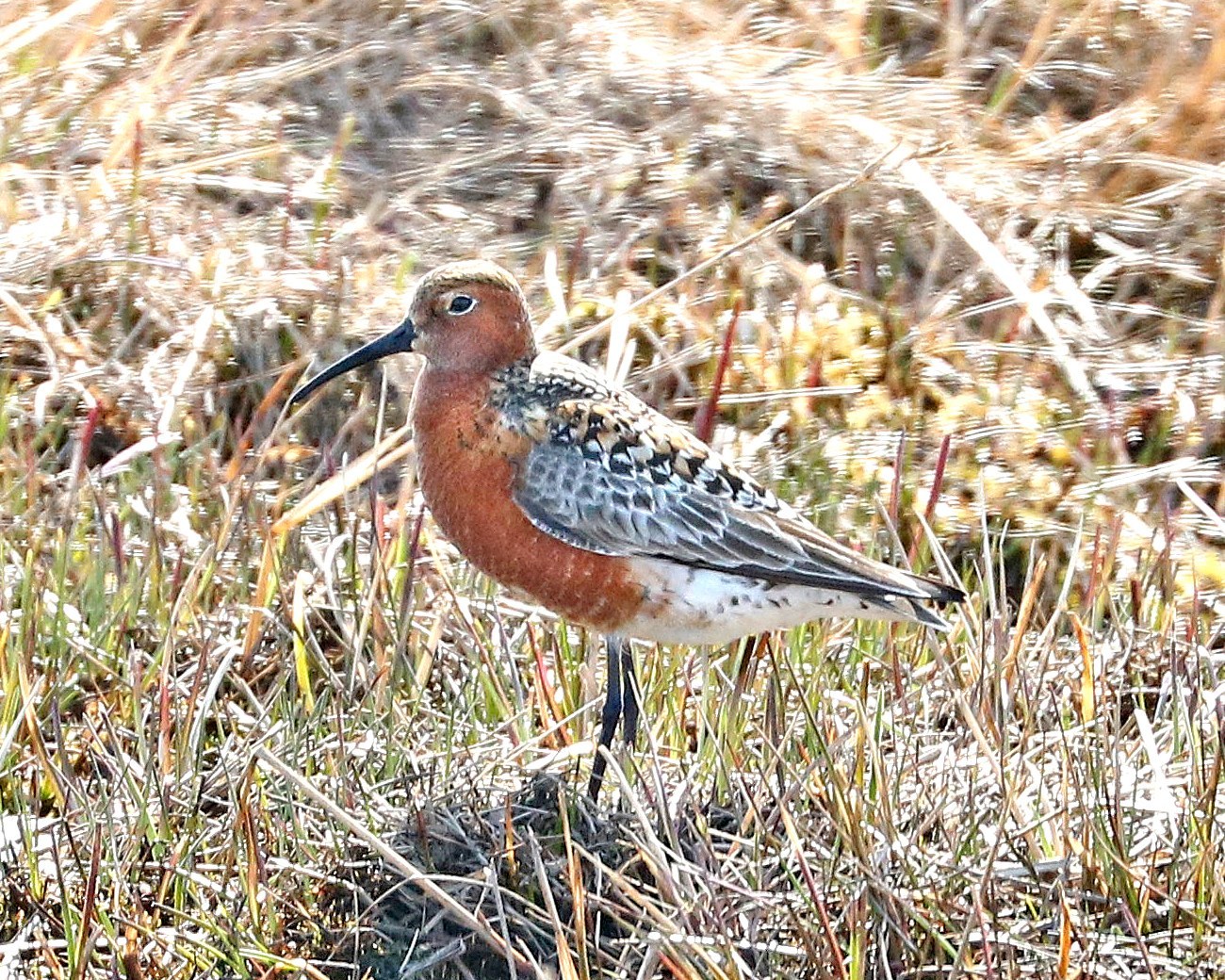
What Curlew Sandpiper Feathers Look Like
This long-distance migrant shorebird shows dramatically different plumages depending on season, so feather identification depends heavily on timing. In breeding plumage (roughly late spring into summer), body feathers on the head, breast, and belly are a rich brick-red to chestnut, with the back and scapular feathers showing dark centers edged in chestnut and buff — a warm, rusty overall look unusual among similarly sized sandpipers. In non-breeding (winter) plumage, the same bird looks quite different: body feathers turn plain pale grey above and white below, with little contrast, similar to many other small sandpipers. A key diagnostic feature present in all plumages is the white rump, formed by a patch of pure white feathers at the base of the tail, visible when the wings are lifted or on a shed rump feather — this white rump patch is a strong identifying feature distinguishing it from most similarly sized "peep" sandpipers, which typically have dark or barred rumps. The bill-associated head feathers correlate with a long, evenly downcurved bill, though this shape isn't visible in feathers themselves. Overall feather size is small (contour feathers 1.5–3 cm, flight feathers 6–9 cm), consistent with a mid-sized sandpiper.
Step-by-Step: Is This Feather From a Curlew Sandpiper?
- Check the season first. Rusty chestnut-red body feathers found in late spring/summer strongly suggest breeding-plumage Curlew Sandpiper; plain grey-white feathers require the white rump clue to confirm identity.
- Look for the white rump patch. A pure white feather from the rump/tail-base area, especially paired with grey or reddish body feathers, is one of the best diagnostic signs for this species.
- Assess the red tone if present. The breeding red should look brick/chestnut rather than the brighter orange-red of some other shorebirds.
- Measure size. Small contour feathers (under 3 cm) and flight feathers under 10 cm fit a small-to-mid-sized sandpiper.
- Consider habitat. Feathers found on coastal mudflats, estuaries, or inland wetland margins along a known migratory flyway support this identification.
Similar Species & How to Tell Them Apart
Dunlin, a very similar-sized and similarly patterned sandpiper often found alongside Curlew Sandpiper, shows a dark (not white) rump and, in breeding plumage, a black belly patch rather than the reddish underparts of Curlew Sandpiper — the rump color and belly pattern are the fastest ways to separate the two. Red Knot, which also shows brick-red breeding underparts, is considerably larger with correspondingly larger feathers, and lacks the sharply demarcated white rump patch. Non-breeding grey-and-white Curlew Sandpiper feathers can be confused with many other "peep" sandpipers in winter plumage, making the white rump feather the single most reliable identifying clue outside of the breeding season.
Where & When You'll Find Them
Curlew Sandpipers breed in the Siberian high Arctic and undertake long migrations to wintering grounds across Africa, South Asia, and Australasia, meaning they appear on coastal mudflats, estuaries, and wetlands across a huge range mainly as migrants or winter visitors rather than local breeders in most areas. Feathers in breeding chestnut plumage are most likely to be found in spring migration (birds already partly colored) or on the breeding grounds in summer, while grey non-breeding feathers turn up along migration routes and wintering areas mainly from autumn through winter. Because migration brings large numbers through stopover mudflats, coastal wetland sites along known flyways are the best places to search during passage periods.
Frequently asked questions
What's the single best clue if the feather is plain grey?
Look for an accompanying white rump feather — Curlew Sandpiper has a distinctly white rump patch, unlike Dunlin and most other similarly plain grey sandpipers, which show a dark rump.
Does the red breeding-plumage feather look orange or brick-red?
It should look brick-red to chestnut, a warmer and slightly duller tone than the brighter reds seen in some other shorebirds like Red Knot.
How can I tell this apart from a Dunlin feather?
Check the rump and belly pattern — Dunlin has a dark rump and a black belly patch in breeding plumage, while Curlew Sandpiper has a white rump and reddish (not black-patched) underparts.
When during the year are chestnut-colored feathers most likely?
Late spring through summer, when adults are in or approaching breeding plumage, either on migration or on the Arctic breeding grounds.
Where should I search for feathers during migration season?
Coastal mudflats, estuaries, and wetland stopover sites along the species' migratory flyways through Africa, South Asia, and Australasia.