
How to Identify Eastern Meadowlark Feathers
A field guide to the intricately patterned brown-and-black upperparts and flashing white outer tail feathers of the grassland-dwelling Eastern Meadowlark.
Read the full Eastern Meadowlark encyclopedia entry →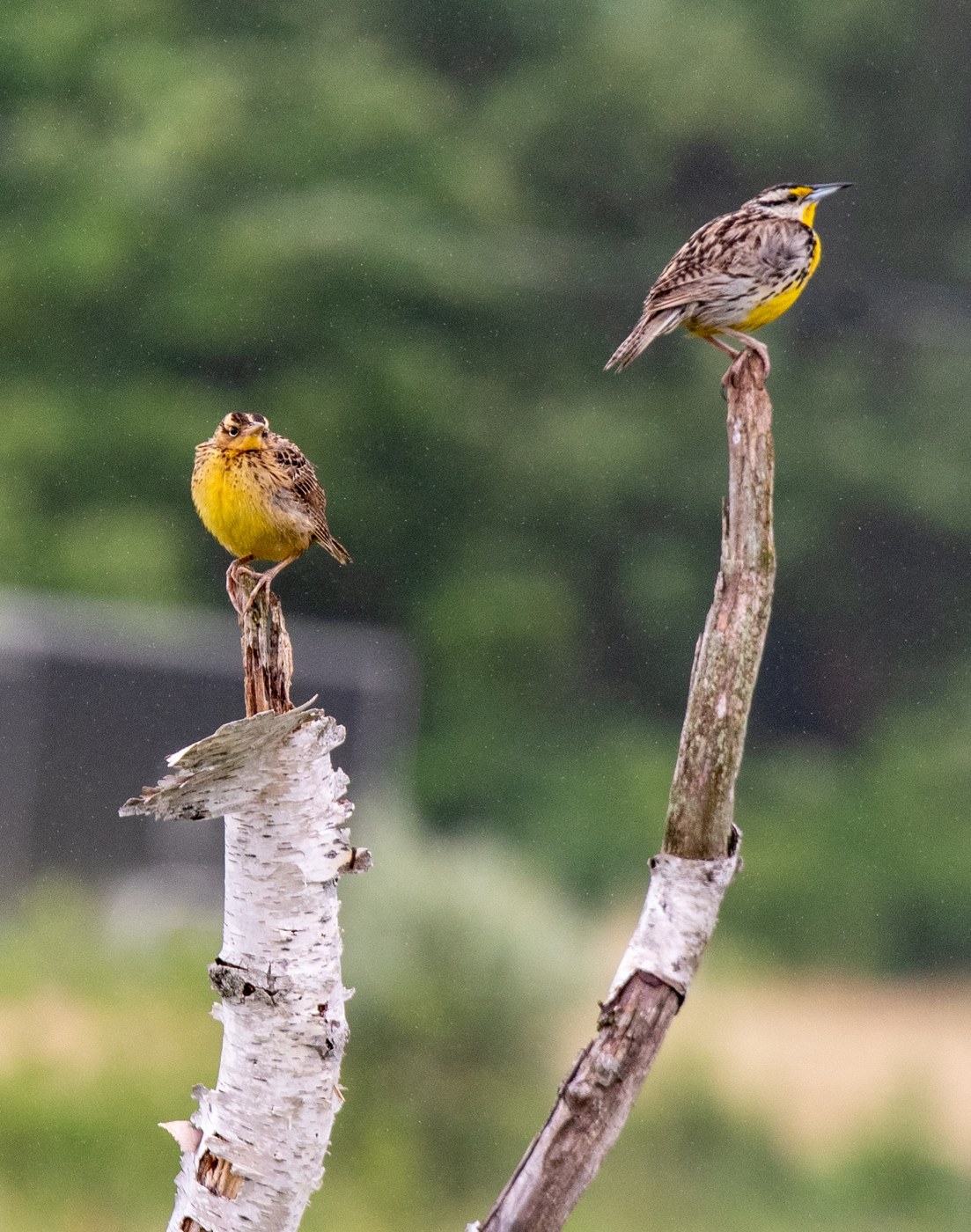
What Eastern Meadowlark's Feathers Look Like
Eastern Meadowlark feathers combine bold color with intricate camouflage patterning depending on which part of the body they come from. Breast and belly feathers are a bright lemon-yellow, with a bold black chevron or "V" pattern formed across the chest by darker feathers — a striking field mark even from a cluster of loose breast feathers. Upperpart feathers — back, scapulars, and wing coverts — are a completely different story: intricately patterned in buff, brown, and black bars and mottling, providing excellent camouflage in dry grass and stubble. The tail shows one of the most useful diagnostic features of all: the outer tail feathers are mostly white, flashing conspicuously in flight, while the central tail feathers are brown, barred with black. Flight feathers are brown with fine dark barring, unremarkable on their own but consistent with the rest of the cryptic upperpart pattern. Overall feather size fits a chunky, robin-sized grassland songbird.
Step-by-Step: Is This Feather From an Eastern Meadowlark?
- Check for a bright yellow feather with a bold black chevron pattern — this breast feature is one of the most recognizable field marks in North American grassland birds.
- Look at tail feathers specifically. A mostly white outer tail feather, or a brown tail feather barred with black from the center, together strongly support meadowlark.
- Examine upperpart feathers for intricate buff-brown-black barring and mottling rather than plain brown — this cryptic pattern is typical of ground-nesting grassland birds.
- Measure the size. Chunky and robin-sized, larger than sparrows that share the same grassland habitat.
- Rule out plain, unpatterned brown feathers, since true meadowlark upperparts are always intricately marked, not plain.
- Weigh the open-grassland habitat heavily, since meadowlarks rarely stray into forest or dense shrub.
Similar Species & How to Tell Them Apart
The Western Meadowlark is nearly identical in feather pattern and is the single toughest confusion species — the two are best separated by song and subtle differences in the shade of yellow (Western tends slightly paler and grayer on the flanks), differences too fine to reliably use with an isolated feather, so range is often the deciding factor. Dickcissel, another grassland bird with yellow underparts and a black breast marking, is much smaller with a stubbier, finch-like feather size and lacks the extensive white in the tail. Bobolink, sharing similar grassland habitat, shows a completely different plumage — males in breeding plumage are boldly black-and-white/buff patterned without any yellow at all, and females are streaky brown without a yellow breast. The combination of bright yellow chevron-marked breast feathers plus white outer tail feathers is close to unique among common grassland songbirds in range overlap zones.
Where & When You'll Find Them
Eastern Meadowlarks inhabit open grasslands, pastures, hayfields, and airport margins across the eastern and central United States down through Central America and parts of South America, generally avoiding wooded or heavily developed land. Feathers are most likely to be found during the breeding season (late spring through mid-summer), when males are singing conspicuously from fence posts and both sexes are actively nesting on the ground, an activity that leads to more feather wear and loss near nest sites. A secondary period to check is late summer through early fall, during the post-breeding molt, when both adults and newly fledged young replace feathers before winter. Search along fence lines, grassy field edges, and mowed pasture margins for the best results.
Frequently asked questions
What is the most distinctive feather feature of an Eastern Meadowlark?
A bright yellow breast feather with a bold black chevron pattern, combined with mostly-white outer tail feathers that flash in flight.
How can I tell Eastern from Western Meadowlark feathers?
The two species are nearly identical in feather pattern; range and subtle shade differences in yellow tone are the best clues since the feathers themselves are very similar.
Do Eastern Meadowlark upperpart feathers look plain brown?
No — back and wing covert feathers show intricate buff, brown, and black barring and mottling that camouflages the bird in dry grass.
How is this different from a Bobolink feather?
Bobolink shows a completely different pattern — breeding males are black-and-buff/white without yellow, and females are streaky brown, unlike meadowlark's yellow chevron-marked breast.
When is the best time to find Eastern Meadowlark feathers?
Late spring through mid-summer during the breeding season, and again in late summer to early fall during the post-breeding molt.