
How to Identify Eurasian Blackcap Feathers
How the color of a single cap feather — black or rufous — tells you the sex of this common European warbler, and how to rule out similar Sylvia warblers.
Read the full Eurasian Blackcap encyclopedia entry →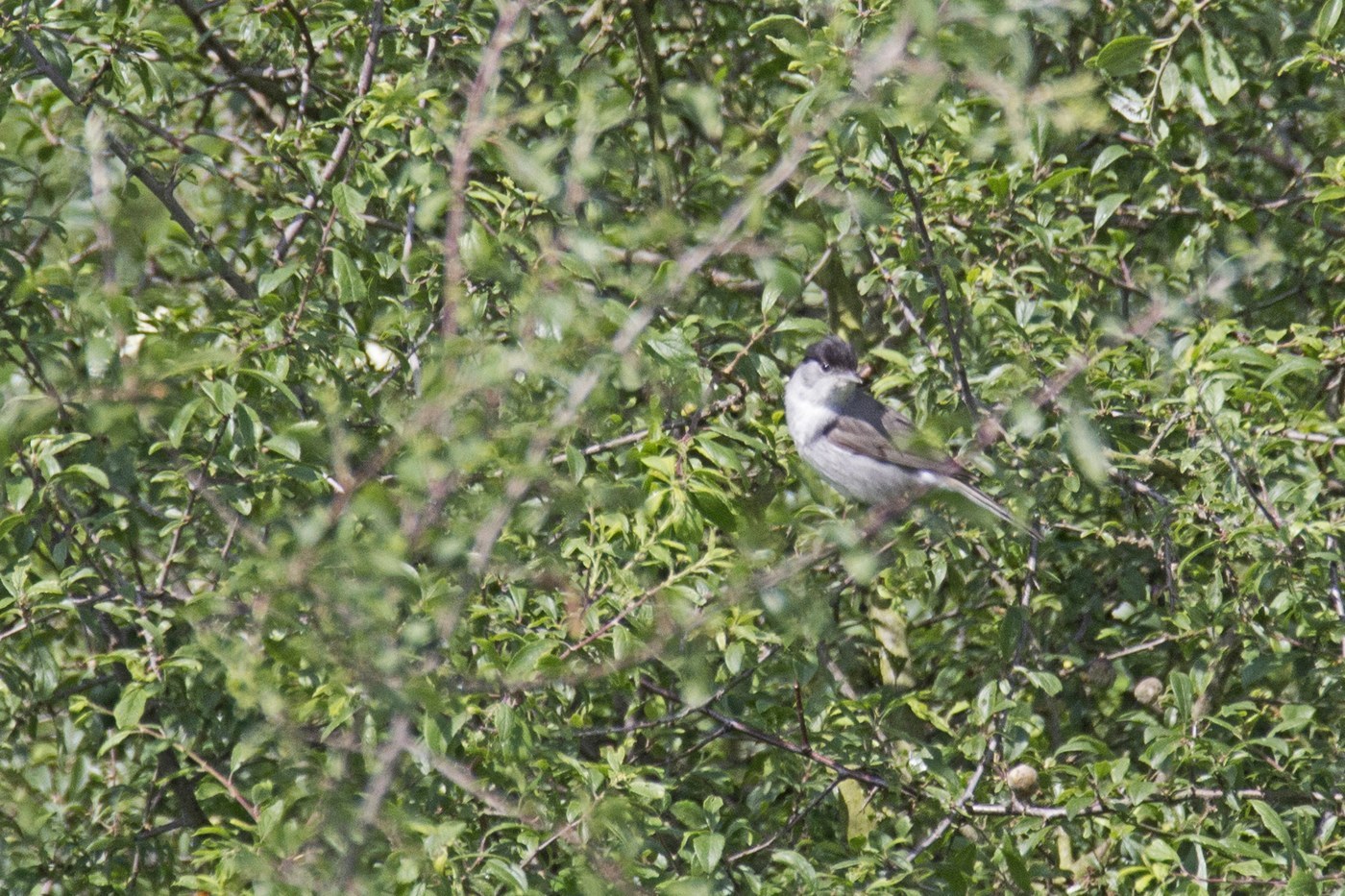
What Eurasian Blackcap Feathers Look Like
The Blackcap is a small, plain-bodied warbler whose single most useful feather is, unsurprisingly, from its cap.
- Male cap feathers: solid, glossy black, sharply defined and extending down to just above the eye.
- Female/juvenile cap feathers: the same shape and position, but colored a warm rufous-brown/chestnut instead of black.
- Body feathers: plain olive-gray to brownish-gray, unmarked, with no streaking, spotting, or wing bars anywhere.
- Wing and tail feathers: plain olive-brown, matching the body tone, without any pale panel or tail spots.
- Overall size: small warbler-sized feathers, consistent with a bird a bit smaller than a sparrow.
Step-by-Step: Is This Feather From a Eurasian Blackcap?
- Look first for a solid-colored cap feather. Black or rufous-chestnut, sharply set off from the rest of the body color, is the fastest route to this species.
- Check the rest of the body for plainness. No streaking, spotting, or wing bars anywhere supports Blackcap over more patterned warblers.
- Confirm small size. Feathers should be consistent with a small warbler, not a larger thrush or finch.
- Rule out a rufous wing panel. If there's a rufous patch specifically on the wing (not the cap), consider a different Sylvia warbler instead.
- Note feather texture. Soft, plain olive-gray body feathers with no pattern at all is typical of this genus.
Similar Species & How to Tell Them Apart
Garden Warbler, a close relative sharing similar habitat, has no cap at all — its feathers are uniformly plain grayish-brown from crown to back, making the presence of any distinctly colored cap feather a quick way to rule Garden Warbler out. Lesser Whitethroat shows an overall grayer body tone with a darker face mask but no solid cap color. Common Whitethroat has a distinctive rufous wing panel, which the Blackcap entirely lacks; if the colored feather comes from the wing rather than the crown, think Whitethroat instead of Blackcap.
Where & When You'll Find Them
Blackcaps breed in woodland edges, hedgerows, and scrub across most of Europe, and while historically a long-distance migrant to Africa, an increasing number now overwinter in gardens in the UK and elsewhere in northwestern Europe, a relatively recent shift in migratory behavior. Adults undergo a complete molt on the breeding grounds from July through September before migration (for those that still migrate), so cap and body feathers are most commonly found in garden and woodland leaf litter in late summer. Because Blackcaps are also frequent visitors to garden feeding stations, especially in winter where they've taken up residence rather than migrating, feathers can turn up around feeders and fat-ball dispensers as well as in the more traditional woodland-edge and hedgerow settings favored by breeding birds.
Frequently asked questions
Does the cap color ever change on an individual bird?
No, cap color is fixed by sex — males keep a black cap and females/juveniles a rufous one throughout adult life, so a single feather reliably indicates sex rather than age or season.
How is a Blackcap feather different from a Coal Tit's black cap feather?
Coal Tit has a black cap too, but its body feathers show a distinctive white nape patch and white wing bars that Blackcap entirely lacks, so checking the rest of the body feathers resolves the confusion.
Why are more Blackcaps wintering in gardens now instead of migrating to Africa?
A growing population, thought to originate largely from central European breeders, has shifted to short-distance migration into the UK and nearby regions, likely aided by garden bird feeding and milder winters.
Can juvenile male Blackcaps be told apart from females by feather?
Young males typically retain a rufous-brown cap like females until their first complete molt, so cap color alone can't reliably separate juvenile males from females before that molt.
Is the plain olive-gray body color shared by many other warblers?
Yes, plain grayish-olive tones are common across several Sylvia warblers, which is exactly why the cap feather (or its absence) is the most useful single diagnostic feature for this species.