
How to Identify Eurasian Blue Tit Feathers
How to spot the vivid sky-blue crown and wing feathers that make this small European tit one of the easiest garden birds to identify from a feather.
Read the full Eurasian Blue Tit encyclopedia entry →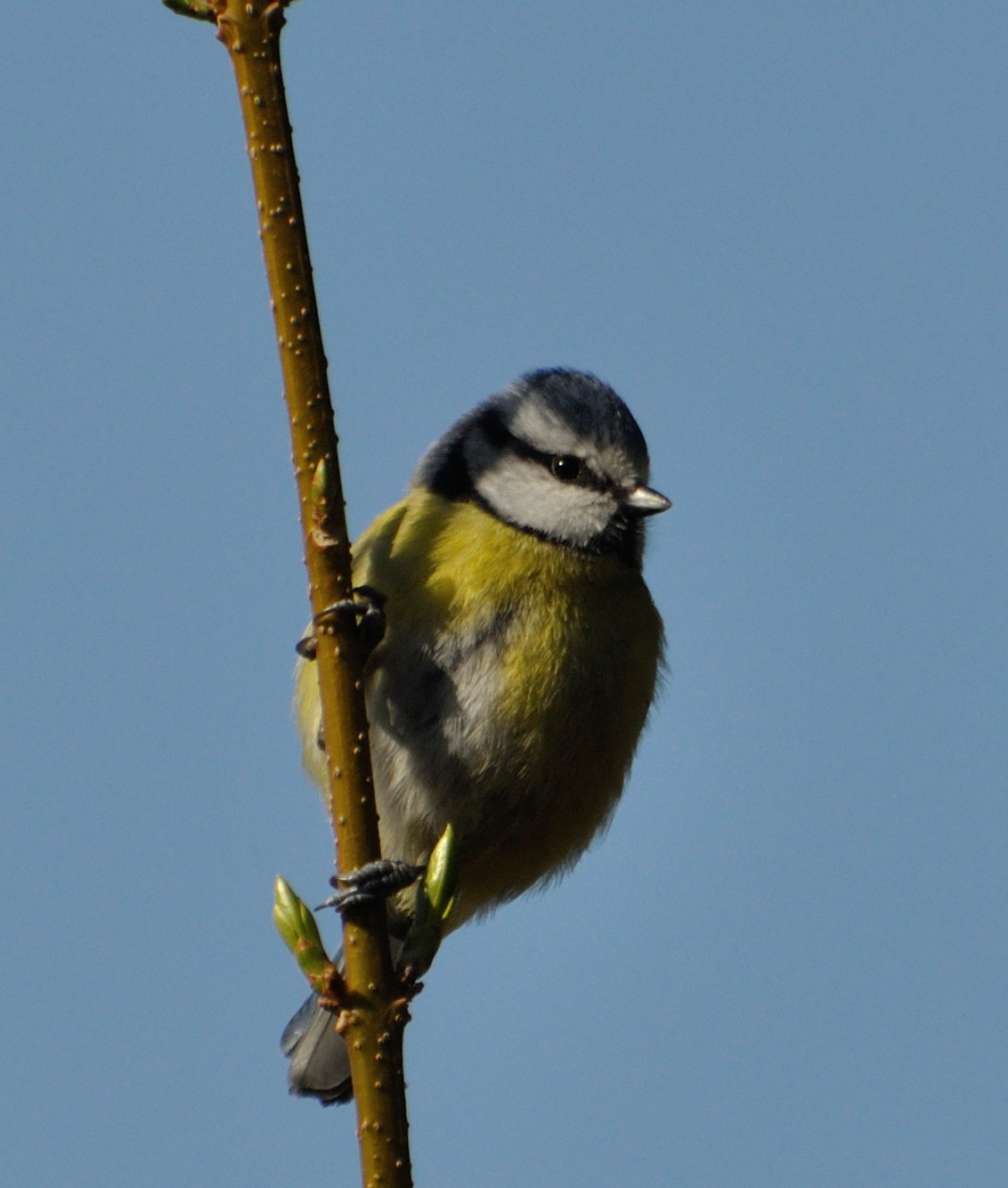
What Eurasian Blue Tit Feathers Look Like
Few small European birds show a color as vivid as the Blue Tit's, making this one of the more satisfying feathers to identify with confidence.
- Crown feathers: bright cerulean/sky-blue, forming a distinctive cap.
- Cheek and nape: white cheeks bordered by a thin blue band, with a black eye-line running through the eye.
- Wing feathers: blue, with a single crisp white wing bar crossing the covert feathers.
- Tail feathers: blue, notched at the tip.
- Back: olive-green, contrasting with the blue wings and crown.
- Underparts: bright yellow, with a faint dark line down the belly on some individuals (much less pronounced than the bold black stripe on a Great Tit).
- Overall size: tiny, only around 1-2 inches for body feathers, consistent with one of Europe's smallest tits.
Step-by-Step: Is This Feather From a Eurasian Blue Tit?
- Look for saturated blue color. A genuinely vivid sky-blue tone on a crown, wing, or tail feather is the fastest route to Blue Tit among common European birds.
- Check for a single white wing bar. One crisp white bar (not two) on an otherwise blue wing covert supports this species.
- Note the back color if present. Olive-green, not gray or black, is consistent with Blue Tit.
- Confirm small size. Feathers around 1-2 inches fit a tiny tit rather than a larger songbird.
- Consider yellow underparts. A bright yellow body feather paired with any blue feathers found nearby strengthens the identification.
Similar Species & How to Tell Them Apart
Great Tit is considerably larger and shows a black head (not blue) along with a bold black belly stripe, making it easy to separate once size and head color are considered. Coal Tit has no blue at all, instead showing a black cap, white nape patch, and grayish body. No other common bird sharing Blue Tit's woodland and garden habitat combines vivid sky-blue crown/wing/tail feathers with yellow underparts and an olive back, making this a relatively low-ambiguity feather identification within its range.
Where & When You'll Find Them
Blue Tits are abundant residents of woodland, hedgerows, parks, and gardens across nearly all of Europe, frequently using nest boxes, which makes garden feeders and nest box surroundings prime spots to find shed feathers. They undergo a complete molt after the breeding season, roughly July through August, once young have fledged, so this window — especially around nest boxes and feeding stations — is when blue crown and wing feathers are most likely to turn up. Outside the molt period, Blue Tits are also frequent visitors to peanut feeders and fat-ball dispensers year-round, and the scuffles that break out between multiple birds jostling for a feeding perch can dislodge a stray feather even well outside the main molting season, so garden feeders are worth checking at any time of year, not just in late summer.
Frequently asked questions
Is the blue color in Blue Tit feathers from pigment or structure?
It's largely structural — produced by the microscopic arrangement of the feather barbs scattering light — rather than a simple pigment, which is part of why the blue can look especially vivid and saturated compared to duller pigment-based colors.
How is a Blue Tit's wing bar different from a Chaffinch's?
Blue Tit shows a single white wing bar on an otherwise all-blue wing, while Chaffinch shows two white wing bars on a brownish wing with black flight feathers, a clearly different pattern and color combination.
Do juvenile Blue Tits have duller blue feathers?
Yes, juveniles typically show a more washed-out, yellowish-tinged version of the blue and less crisp contrast until their post-juvenile molt produces the brighter adult coloring.
Why are Blue Tit feathers often found near nest boxes?
Because the species is a cavity nester that readily uses nest boxes, feathers accumulate both from adults during nest-building/incubation and from fledglings during the post-breeding molt right around the box.
Can Blue Tit feathers be confused with a kingfisher's?
Unlikely if you compare closely — kingfisher blue is typically more intensely turquoise and paired with orange underparts, quite different from the Blue Tit's yellow underparts and olive back.