
How to Identify Eurasian Siskin Feathers
A guide to the small, sharply two-toned yellow-and-black feathers of this acrobatic finch, with tips for separating them from Greenfinch and Serin feathers.
Read the full Eurasian Siskin encyclopedia entry →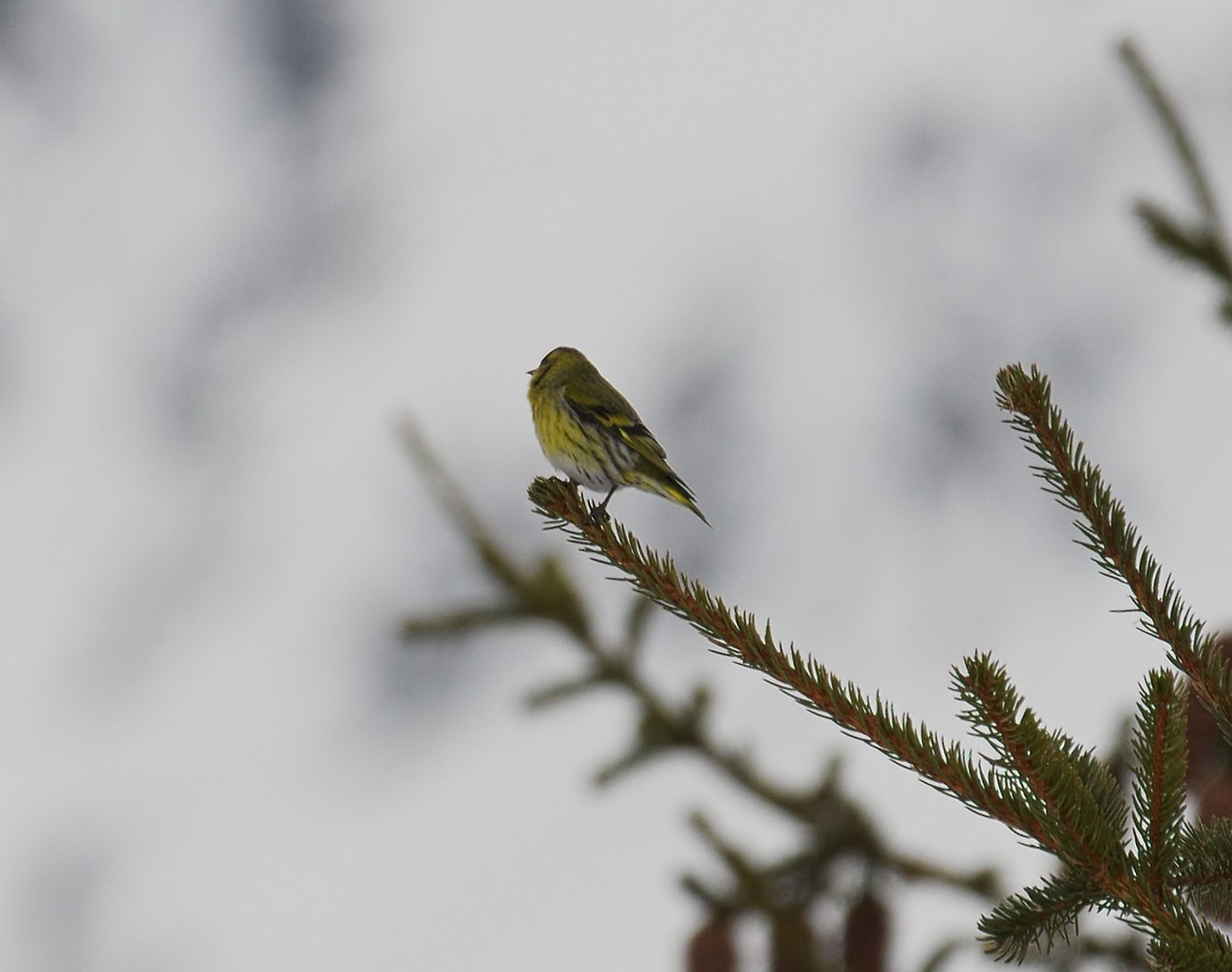
What Eurasian Siskin Feathers Look Like
Eurasian Siskin feathers are small (body feathers 2-3 cm, primaries around 5-6 cm) and built around a striking yellow-and-black contrast on the wing. Male wing coverts and the base of the flight feathers show bright lemon-yellow patches set against otherwise blackish wings, creating bold yellow wingbars and a yellow flash at the base of the tail. Body feathers are yellow-green on the breast and back with fine dark streaking on the flanks; males have a small black cap and chin patch, though these are only visible on head feathers, which are less commonly found loose. Female and juvenile feathers are duller and more heavily streaked overall, with less yellow saturation but the same basic wing pattern in muted form. Tail feathers are notably forked in shape when whole, with yellow at the base and black tips — a useful shape clue even on a single feather.
Step-by-Step: Is This Feather From a Eurasian Siskin?
- Check the size. Tiny feathers, only a few centimeters — consistent with a small finch, not a bunting or sparrow.
- Look for yellow-and-black wing contrast. A blackish wing feather with a clean yellow patch at the base or edge is the strongest single clue.
- Inspect a tail feather if present. Yellow base fading to black tip, with a forked overall tail shape, fits Siskin well.
- Check flank/body feathers for streaking. Fine dark streaks on a yellow-green ground indicate Siskin (or possibly Serin/Greenfinch — see below).
- Weigh habitat context. Found under conifers (spruce, alder, birch) rather than open scrub or gardens strengthens the case for Siskin over Serin or Greenfinch.
Similar Species & How to Tell Them Apart
- European Greenfinch feathers are larger and stockier, with a more uniform olive-green body and a bolder, wider yellow wing/tail flash but without the crisp black-and-yellow contrast pattern of Siskin's wing coverts.
- European Serin feathers are even smaller and more uniformly streaky yellow-green throughout, lacking Siskin's clean blackish wing with an isolated yellow patch; Serin also shows a bright yellow rump patch not shared by Siskin.
- European Goldfinch feathers show red, black, and white head plumage and broad gold (not lemon-yellow) wingbars on black wings — the gold tone and added red/white head elements separate it readily.
- Common Redpoll, which often flocks with Siskins, has streakier brown-buff body feathers with a red cap and lacks yellow in the wing entirely, so any yellow patch rules out Redpoll immediately.
Where & When You'll Find Them
Eurasian Siskins favor coniferous and mixed woodland, especially spruce, alder, and birch stands, across northern and central Europe, with many populations moving south or wandering irregularly in winter following seed crops (an "irruptive" species). Feathers turn up most reliably in late summer through winter, when siskins gather in large, active flocks at alder and birch seed heads and at garden feeders, and molt-related feather loss plus predation by Sparrowhawks concentrates feathers on the ground beneath feeding trees. In breeding season (spring), look instead in mature conifer stands where they nest higher in the canopy.
Frequently asked questions
What's the fastest way to tell a Siskin feather from a Greenfinch feather?
Size and contrast: Siskin feathers are smaller with sharp black-and-yellow contrast, while Greenfinch feathers are larger and more uniformly olive with a broader, softer yellow flash.
Do female Siskin feathers still show yellow?
Yes, but more muted — expect duller yellow-green tones with heavier streaking rather than the bright, crisp yellow-black contrast of males.
Is a forked tail shape useful for identifying a single feather?
Somewhat — an individual outer tail feather from a Siskin will show a yellow base and black tip, and if you have a full tail the fork shape helps confirm a small finch rather than a bunting.
Why do Siskin feathers turn up more in winter?
Siskins form large nomadic winter flocks at seed sources like alder and birch, and heavy feeding activity plus predator attention concentrates molted or predator-plucked feathers below those trees.
Could a yellow-flecked black feather be from a tit instead?
Check the shape and tone — tit body feathers tend toward blue-gray, olive, or black-and-white patterns rather than the specific lemon-yellow-on-black wing contrast typical of Siskin.