
How to Identify Eurasian Wigeon Feathers
A guide to the chestnut-and-cream head feathers and pinkish body plumage of this dabbling duck, with clear pointers for separating it from Teal and American Wigeon.
Read the full Eurasian Wigeon encyclopedia entry →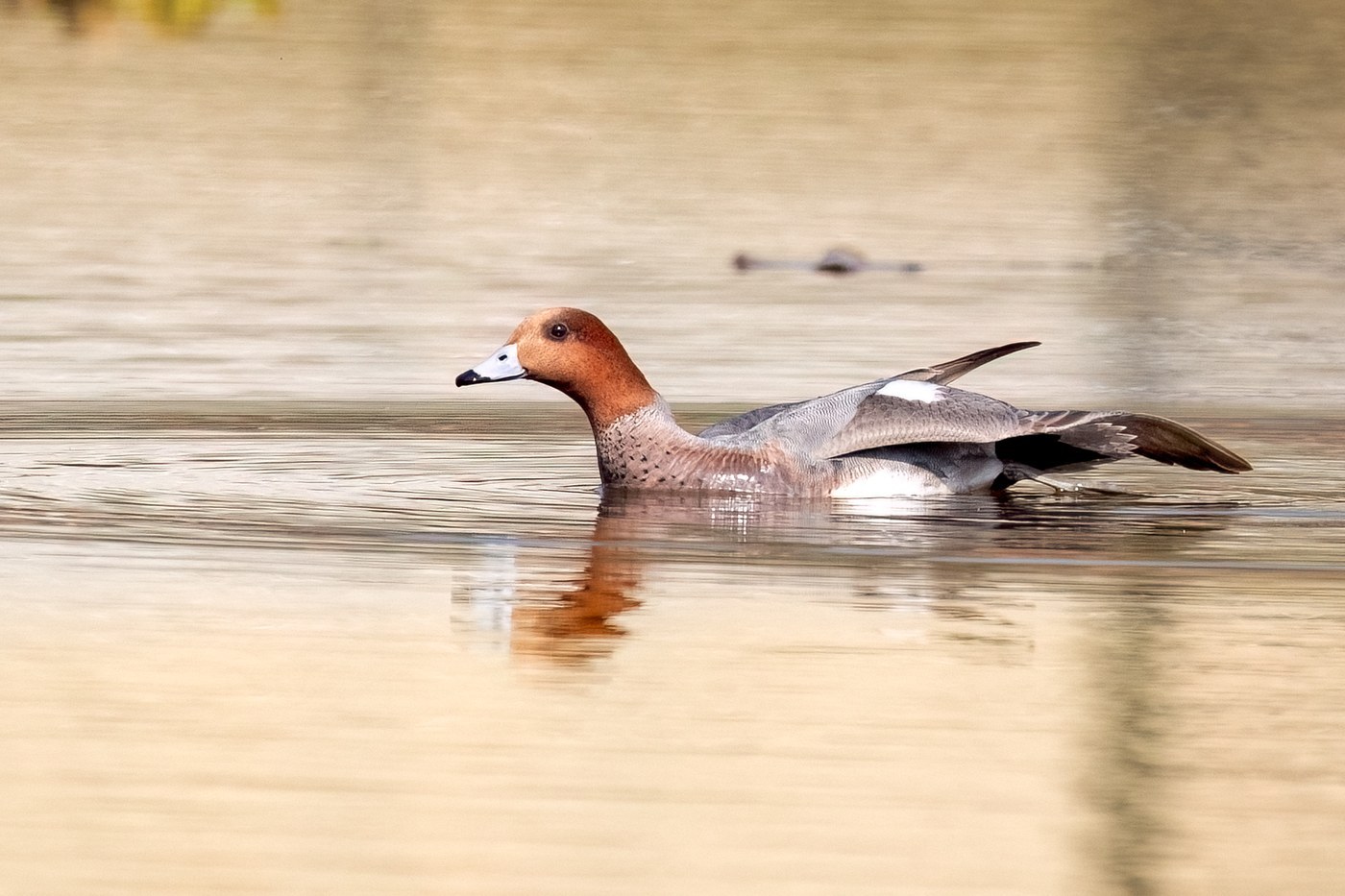
What Eurasian Wigeon Feathers Look Like
Eurasian Wigeon feathers are mid-sized for a dabbling duck (body feathers 3-5 cm, primaries around 15-18 cm) with a color palette built around chestnut, cream, and soft pink-gray. The male's head feathers are the standout: a rich chestnut (rusty-red) crown and face, broken by a bold pale cream-yellow stripe running down the center of the forehead and crown — a combination not shared by any similar duck. Body feathers on the breast show a warm pinkish-vinaceous tone, while the flanks and back are finely vermiculated gray (fine wavy lines rather than bold barring). The speculum (wing patch) feather is a glossy green, bordered by black, set within otherwise gray-and-white wing coverts — in flight this produces a large white wing patch that shows well even on individual covert feathers, which are broadly white. Female and juvenile feathers are a more subdued mottled rufous-brown throughout, without the chestnut-and-cream head pattern, but often still show a hint of white in the wing covert feathers.
Step-by-Step: Is This Feather From a Eurasian Wigeon?
- Check for a chestnut head feather with a cream forehead stripe. This combination is the single fastest and most reliable clue for a male.
- Look at breast feather tone. A warm pinkish-vinaceous cast (rather than plain brown or gray) supports Wigeon.
- Inspect flank feathers for fine vermiculation. Delicate gray wavy lines, not bold black bars, fit this species.
- Check wing covert feathers for white. A broad white panel among the wing coverts (versus a narrower pale patch) is consistent with adult male Wigeon.
- If duller and mottled, focus on shape and size. A female-type feather that's mid-sized and warm rufous-brown, found alongside more diagnostic male feathers or in typical Wigeon habitat, supports this identification.
Similar Species & How to Tell Them Apart
- Eurasian Teal feathers are considerably smaller overall, and the male's head shows an all-chestnut face with a glossy green eye patch rather than a cream forehead stripe — a very different head pattern despite the shared chestnut base tone.
- American Wigeon, a rarer visitor to parts of Europe, has a male head feather showing a green (not chestnut) patch behind the eye and a white (not chestnut) crown, making crown and head-patch color the key separator.
- Gadwall feathers lack any chestnut or cream head coloring altogether, showing intricate gray-brown scaling instead, and Gadwall's speculum feather is white rather than green.
- Common Pochard feathers show an all-chestnut head with no cream stripe and no green speculum at all (Pochard wings are plain gray), making the absence of both the cream stripe and the green wing patch a quick differentiator.
Where & When You'll Find Them
Eurasian Wigeon breed on freshwater lakes, marshes, and tundra pools across northern Europe and Asia, but the species is best known in much of Europe as an abundant winter visitor, forming large flocks that graze on grass, saltmarsh, and shallow water plants at estuaries, reservoirs, and coastal grassland. Feathers are therefore most findable from autumn through late winter, when large wintering flocks concentrate at traditional sites, increasing feather loss from both routine molt maintenance and predation by raptors like Peregrine Falcon. A secondary period worth checking is late summer on northern breeding grounds, when adults undergo a flightless wing molt and shed a full set of matching feathers at once near breeding wetlands.
Frequently asked questions
What is the single best clue for identifying a male Wigeon feather?
A chestnut head feather with a bold pale cream stripe down the forehead and crown — no other similarly colored European duck combines these two features.
How do I tell Wigeon from Teal feathers?
Size and head pattern: Wigeon feathers are larger with a cream forehead stripe on a chestnut head, while Teal is smaller with an all-chestnut face set off by a green eye patch instead of a stripe.
What if I find a plain rufous-brown feather with no obvious pattern?
That's likely a female or juvenile Wigeon body feather; rely on size, warm rufous-brown tone, and any accompanying white wing covert feathers or habitat context to support the ID.
Is the green speculum feather unique to Wigeon?
Not entirely, but combined with broad white wing coverts and a chestnut-and-cream head feather elsewhere, it strongly supports Wigeon over species with differently colored specula like Gadwall's white speculum.
When are Wigeon feathers most common in Europe?
Autumn through winter, when large wintering flocks gather at estuaries, reservoirs, and coastal grasslands, though a late-summer flightless molt on northern breeding grounds also produces feathers.