
How to Identify European Robin Feathers
A guide to the orange-red breast feathers and plump body feathers of one of Europe's most familiar garden birds, including how to identify juveniles without the orange breast.
Read the full European Robin encyclopedia entry →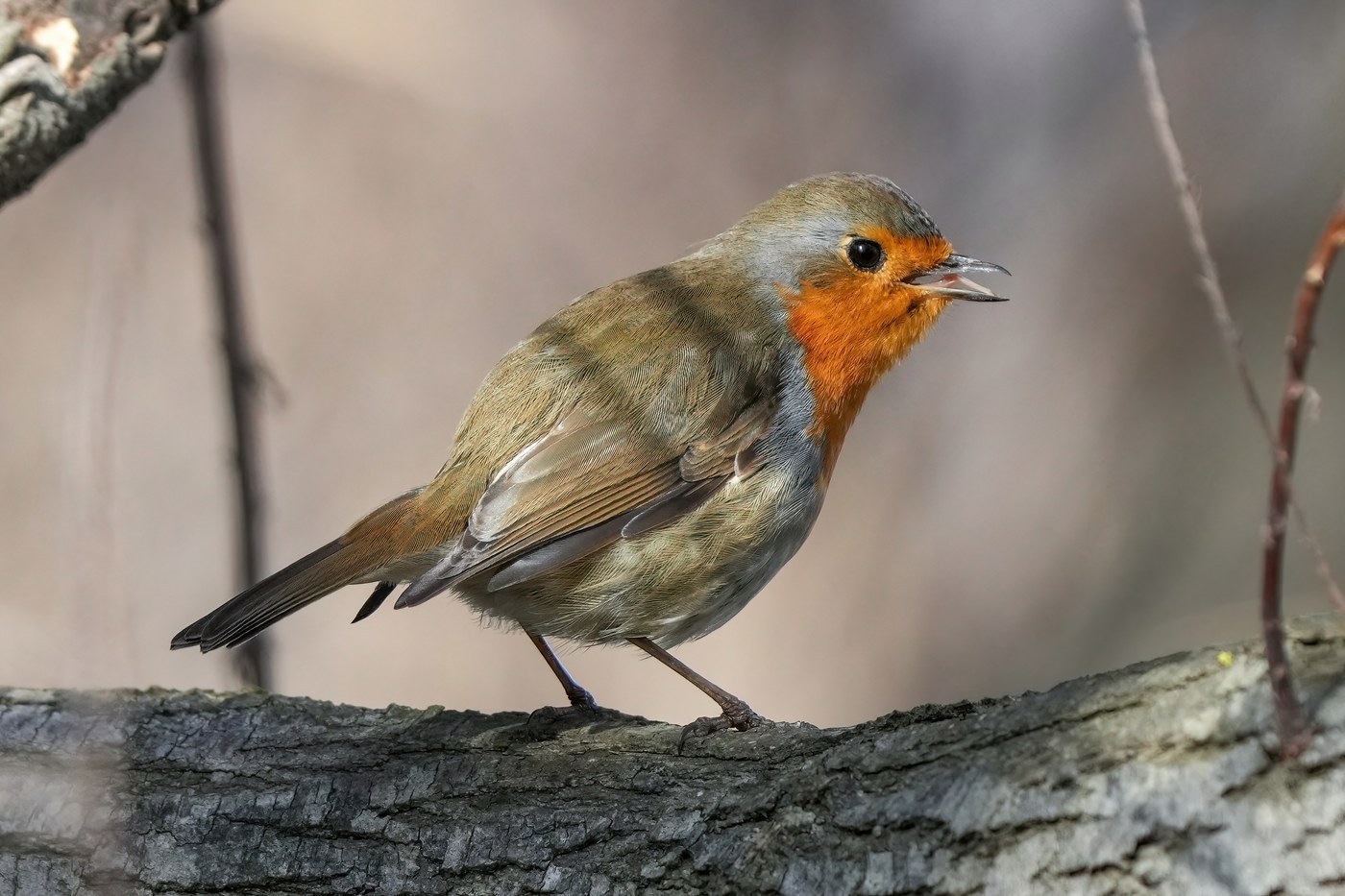
What European Robin Feathers Look Like
European Robin feathers are anchored by the species' famous orange-red face and breast patch, which in feather form shows as a vivid, warm orange-red covering the forehead, throat, and upper breast, bordered by a narrow blue-gray band that separates the orange from the olive-brown upperparts — this blue-gray border is a subtle but useful detail on a good breast feather. Upperpart (back, wing) feathers are a plain warm olive-brown, unstreaked, providing a muted backdrop to the bright breast patch. Belly and flank feathers fade to off-white or pale buff. Overall feather size is small-to-medium for a songbird (body feathers 2-4 cm), and the bird's characteristically plump, round-bodied shape is reflected in fairly soft, dense body feathers. Juvenile Robins lack the orange patch entirely for their first few months, instead showing warm brown feathers heavily spotted with buff/gold, a speckled camouflage pattern quite different from the adult's bold orange — a fact worth knowing so a spotted brown feather found in late summer isn't dismissed as "not a Robin."
Step-by-Step: Is This Feather From a European Robin?
- Check for an orange-red patch bordered by blue-gray. This is the fastest and most reliable adult diagnostic — no other common European garden bird shows this specific combination.
- If the feather is plain olive-brown with no orange, check where on the body it likely came from. Back and wing feathers are unmarked olive-brown even on adults, so absence of orange doesn't rule out Robin if it's clearly a non-breast feather.
- If the feather is brown with buff/gold spotting, consider a juvenile Robin. This speckled pattern is common in the weeks after fledging, roughly early to late summer.
- Assess size and plumpness. A small, softly textured feather fits this species' characteristically round-bodied build.
- Consider the setting. Found in a garden, woodland edge, or hedgerow — classic Robin habitat — supports the identification alongside the color check.
Similar Species & How to Tell Them Apart
- Common Redstart males show a similarly orange breast, but the orange extends further down the body and the tail is bright rufous-orange (constantly quivered in life), a color the Robin's tail does not share — Robin's tail feathers are plain olive-brown.
- Black Redstart males show an orange-red tail and belly but a dark, sooty-black face/breast rather than Robin's bright orange face, essentially the reverse color arrangement.
- Juvenile Song Thrush or Dunnock, both plain brown-toned birds, lack any spotting pattern as bold and buff-gold as juvenile Robin, and lack any hint of the blue-gray border feather found bordering adult Robin's orange patch.
- Bullfinch males show a rosy-pink (not orange) breast with a black cap and gray back, a distinctly different color palette and pattern from Robin.
Where & When You'll Find Them
European Robins are common, largely non-migratory residents (with some northern/eastern populations moving south in winter) of gardens, woodland edge, hedgerows, and parks across nearly all of Europe, well known for their tameness around humans and their year-round territorial singing. Because Robins are present and active in gardens throughout the year, feathers can be found in any season, but two periods stand out: midsummer, when recently fledged juveniles with spotted brown plumage are common and still learning to fly safely, leading to more predation and feather loss, and late summer through autumn, during and after the adult post-breeding molt, when Robins are notably secretive and quiet while regrowing feathers.
Frequently asked questions
What's the quickest way to confirm an adult Robin feather?
An orange-red patch bordered by a thin blue-gray band, found on breast or face feathers — this specific combination is distinctive among common European garden birds.
Why might a spotted brown feather still be from a Robin?
Juvenile Robins lack the orange patch for their first couple of months, showing warm brown feathers heavily spotted with buff/gold instead, especially common in mid-to-late summer.
How do I tell Robin from Redstart feathers?
Redstart's orange extends further down the body and its tail feathers are bright rufous-orange, while Robin's tail stays plain olive-brown, making tail color the key separator.
Do all Robin body feathers show orange?
No — only the face, throat, and breast region; back and wing feathers are a plain unmarked olive-brown even on colorful adults.
When are Robin feathers easiest to find?
Year-round in typical garden/woodland-edge habitat, with upticks in midsummer (fledgling activity) and late summer/autumn (adult post-breeding molt).
European Robin identified by the community
Recent European Robin feathers identified with Feather Identifier.
