
How to Identify Ferruginous Pygmy-Owl Feathers
A guide to the tiny rufous-brown feathers, spotted crown, and false eye-spot nape feathers of this small diurnal owl.
Read the full Ferruginous Pygmy-Owl encyclopedia entry →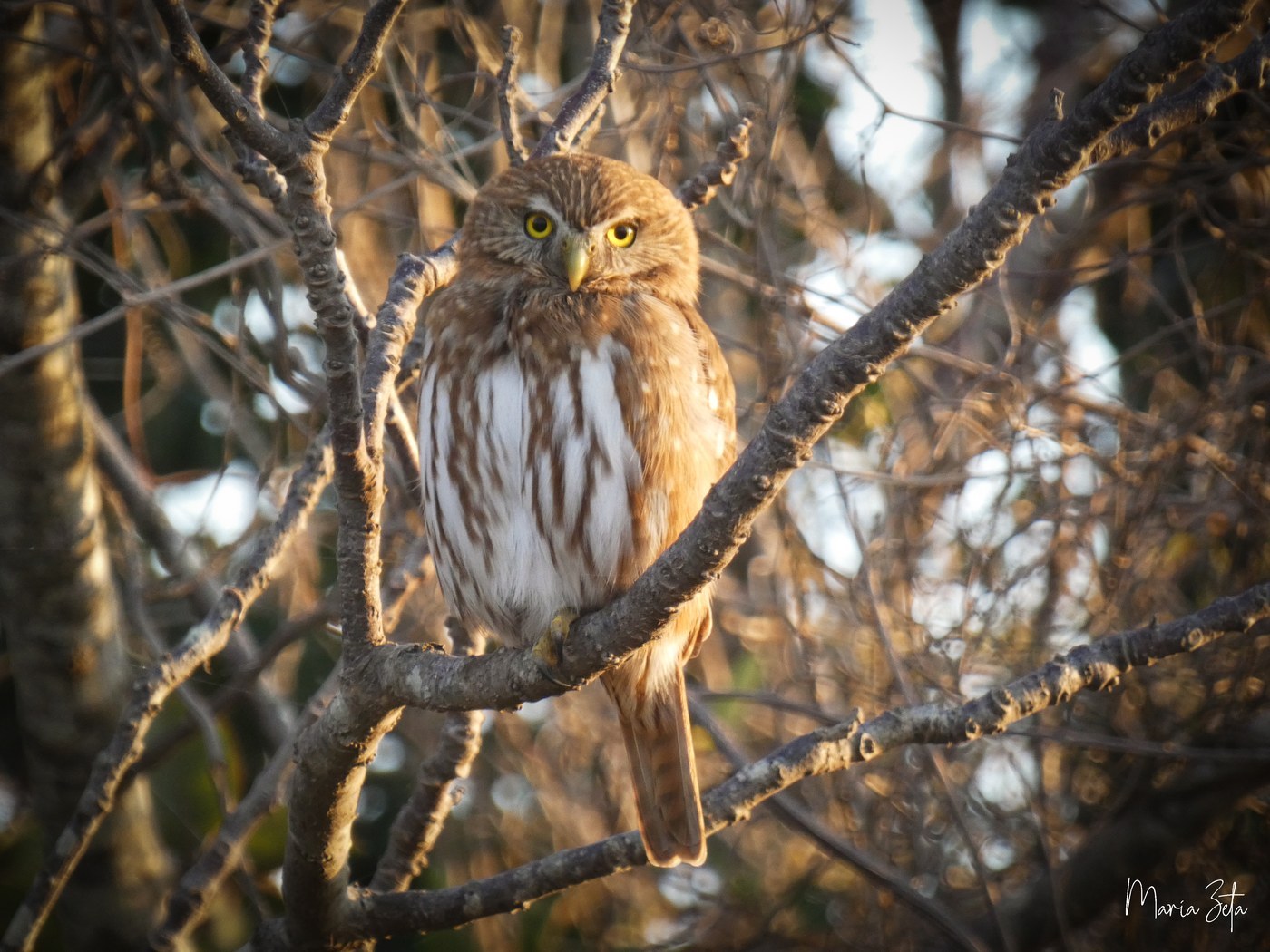
What Ferruginous Pygmy-Owl's Feathers Look Like
Ferruginous Pygmy-Owl is a very small owl, and most individuals show a warm rufous-brown to reddish-brown overall coloring (a rufous morph is common through much of its range, though grayer-brown morphs also occur). Crown feathers are finely streaked or spotted with whitish or buffy markings, rather than plain, giving a lightly speckled cap. Underparts are pale with bold rufous-brown streaking down the breast and flanks. The tail is proportionately long for such a small owl and is strongly barred dark and rufous, and this species habitually cocks its tail upward, so tail feathers often show more wear at the tip than in owls that hold the tail level. One of the most distinctive features is on the nape (back of the head): a pair of black-and-white "false eye-spot" feather markings, mimicking a second face and thought to help deter mobbing songbirds; a feather from this area showing a bold blackish spot ringed in white/buff is highly diagnostic. Flight feathers are small (this is a tiny owl) but still show the soft, fringed leading edge typical of owls.
Step-by-Step: Is This Feather From a Ferruginous Pygmy-Owl?
- Check for a false eye-spot feather: a small nape feather with a bold black spot bordered by white or buff is one of the most reliable single clues for this species.
- Assess overall color: warm rufous-brown tones, rather than gray, fit the common rufous morph found through much of the range.
- Look at tail barring: strong, even dark-and-rufous barring on a proportionately long tail feather, often with a worn tip from habitual cocking, supports this species.
- Check crown feathers for fine spotting: a lightly streaked or spotted crown feather, rather than plain, matches this owl's cap pattern.
- Confirm small size: feathers should be tiny, well under those of most other owls, consistent with a bird only about 17 cm long.
Similar Species & How to Tell Them Apart
Northern Pygmy-Owl, found further north and at higher elevations in overlapping regions, is generally grayer-brown rather than rufous, and while it also has nape false eye-spots, its overall coloring and finer, less warm-toned crown spotting help separate it; range and elevation are also useful context since the two species mostly replace each other geographically. Elf Owl, the smallest North American owl, lacks ear tufts like this species but is more uniformly grayish-buff without strong rufous tones or the same bold tail barring, and it has a shorter tail relative to body size. Screech-owls (Eastern, Western) are notably larger with visible ear tufts and yellow eyes, and their body feathers show more complex cryptic mottling rather than the cleaner rufous-and-streak pattern of pygmy-owls. The false eye-spot nape feathers combined with small size and rufous tones is the most efficient identifying combination.
Where & When You'll Find Them
Ferruginous Pygmy-Owl inhabits arid scrub, mesquite woodland, saguaro desert, and thorn forest from the southwestern United States (a small, localized range in Arizona and Texas) south through Mexico and Central America into South America. Unlike many owls, it is partly diurnal, often hunting in daylight, which makes it somewhat easier to observe and increases the chance of finding feathers in daytime habitat searches. Feathers are most likely to be found near nest cavities in saguaro cacti or trees, and around favored perches used for hunting small birds and lizards. Molt generally follows breeding, occurring in summer months, though as a largely non-migratory resident species across most of its range, feathers can be found in suitable habitat across a broad part of the year.
Frequently asked questions
What is the most distinctive feather feature of Ferruginous Pygmy-Owl?
The false eye-spot feathers on the nape, showing a bold black spot bordered by white or buff, designed to look like a second face from behind.
Is this species' typical color gray or rufous?
Rufous-brown is the common morph across much of its range, though grayer-brown individuals also occur, so color alone should be paired with other clues.
How can I distinguish it from Northern Pygmy-Owl?
Northern Pygmy-Owl tends to be grayer overall with finer, cooler-toned crown spotting, and the two species mostly occupy different elevations and regions.
Why is the tail feather often worn at the tip?
This owl habitually cocks and flicks its tail upward, causing more wear at the tips of tail feathers than in owls that hold the tail level.
Is Ferruginous Pygmy-Owl active during the day?
Yes, it is partly diurnal, hunting in daylight more than most owls, which can make daytime feather and sighting searches more productive.