
How to Identify Goldcrest Feathers
A practical guide to identifying Goldcrest feathers by their tiny size, olive-green body color, and black-bordered orange or yellow crown stripe.
Read the full Goldcrest encyclopedia entry →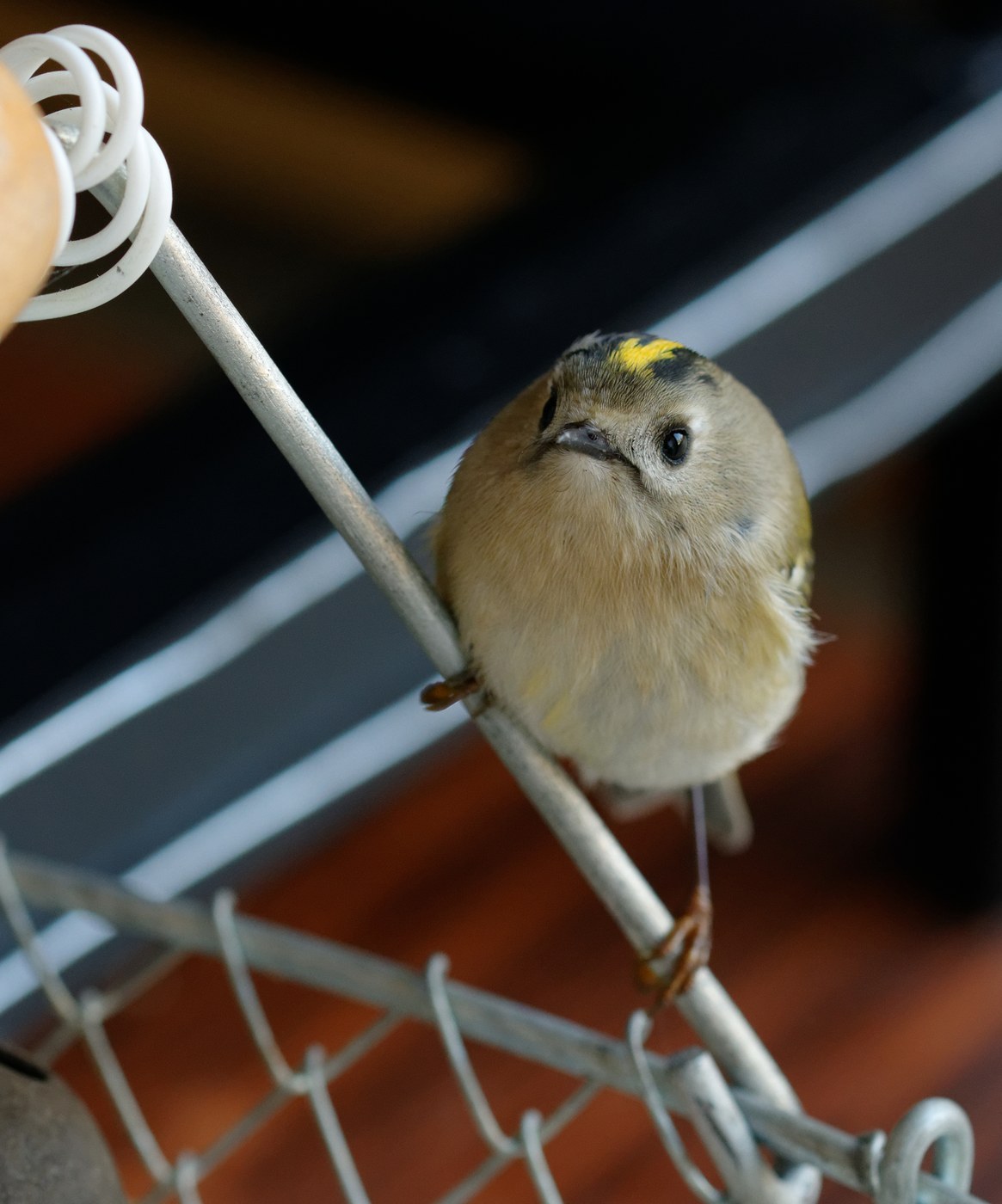
What Goldcrest's Feathers Look Like
As one of Europe's smallest birds, the Goldcrest produces correspondingly tiny feathers. Body feathers are olive-green above and pale buffy-white below, soft and fine-barbed. The most distinctive feathers come from the crown: a narrow central stripe of bright orange-yellow (male) or plain yellow (female), bordered on both sides by black, forming the erectile crest that gives the bird its name. Wing feathers show two pale whitish wingbars with a small blackish patch just behind the lower bar, a pattern visible even on an isolated covert feather. Flight feathers are minuscule, typically only 4-5 cm long, olive-edged on a dark brownish base. The tail is short and notched, olive-brown above.
Step-by-Step: Is This Feather From a Goldcrest?
- Check the size first. If a feather is much longer than about 5 cm, it is almost certainly not from this species — Goldcrest feathers are among the smallest you'll find.
- Look for the crown stripe. A tiny black-bordered orange or yellow feather is a near-certain match, since few other birds in the same habitat show this exact pattern in such a small size.
- Note the wingbar pattern. Two thin whitish bars with a dark smudge behind them on a small olive-green covert feather supports the identification.
- Check overall color. Olive-green above and pale whitish-buff below, with no streaking, matches this species; heavy streaking suggests a different small songbird.
- Consider the habitat. Feathers found in dense conifer branches or beneath spruce and fir stands fit this species' strong preference for coniferous trees.
Similar Species & How to Tell Them Apart
- Firecrest: Very similar size, but shows a bold black eyestripe with a white supercilium and a bronze-gold patch on the shoulder — features the plainer-faced Goldcrest lacks.
- Golden-crowned Kinglet (New World counterpart): Similarly tiny with a black-bordered crown patch, but has a bold white supercilium bordered by black that Goldcrest does not show, and occurs in a different region.
- Common warblers of similar size: Typically longer-winged and lacking both the crown stripe and the specific double wingbar-and-dark-patch combination.
Where & When You'll Find Them
Goldcrests favor dense stands of spruce, fir, and other conifers, though they also use mixed woodland, especially in winter. Feathers are most often found on the ground beneath conifer canopy, caught in needle litter, or near feeding territories in parks and gardens with ornamental conifers. Because Goldcrests molt in late summer, after breeding, that is the most likely time to find dropped feathers, though predation by small hawks and cats can leave feathers scattered at any time of year, particularly in winter when birds form mixed foraging flocks with tits.
Frequently asked questions
How small should a Goldcrest feather actually be?
Very small — flight feathers run around 4-5 cm, and body feathers are even shorter, reflecting the bird's status as one of the tiniest songbirds in its range.
What's the easiest single feature to check?
The crown stripe is the most reliable: a tiny feather that is orange or yellow down the center with black borders on both sides is very distinctive.
How do I rule out a Firecrest?
Look for a bronze-gold shoulder patch and a bold white-and-black face stripe on other feathers found nearby; Goldcrest lacks both of these features.
Why would I find these feathers in a garden rather than deep forest?
Goldcrests regularly use ornamental conifers in parks and gardens, especially outside the breeding season, so feathers can turn up well outside continuous forest.