
How to Identify Green Hermit Feathers
Recognizing the matte bronze-green body and long white-tipped tail streamers of this large forest-understory hummingbird.
Read the full Green Hermit encyclopedia entry →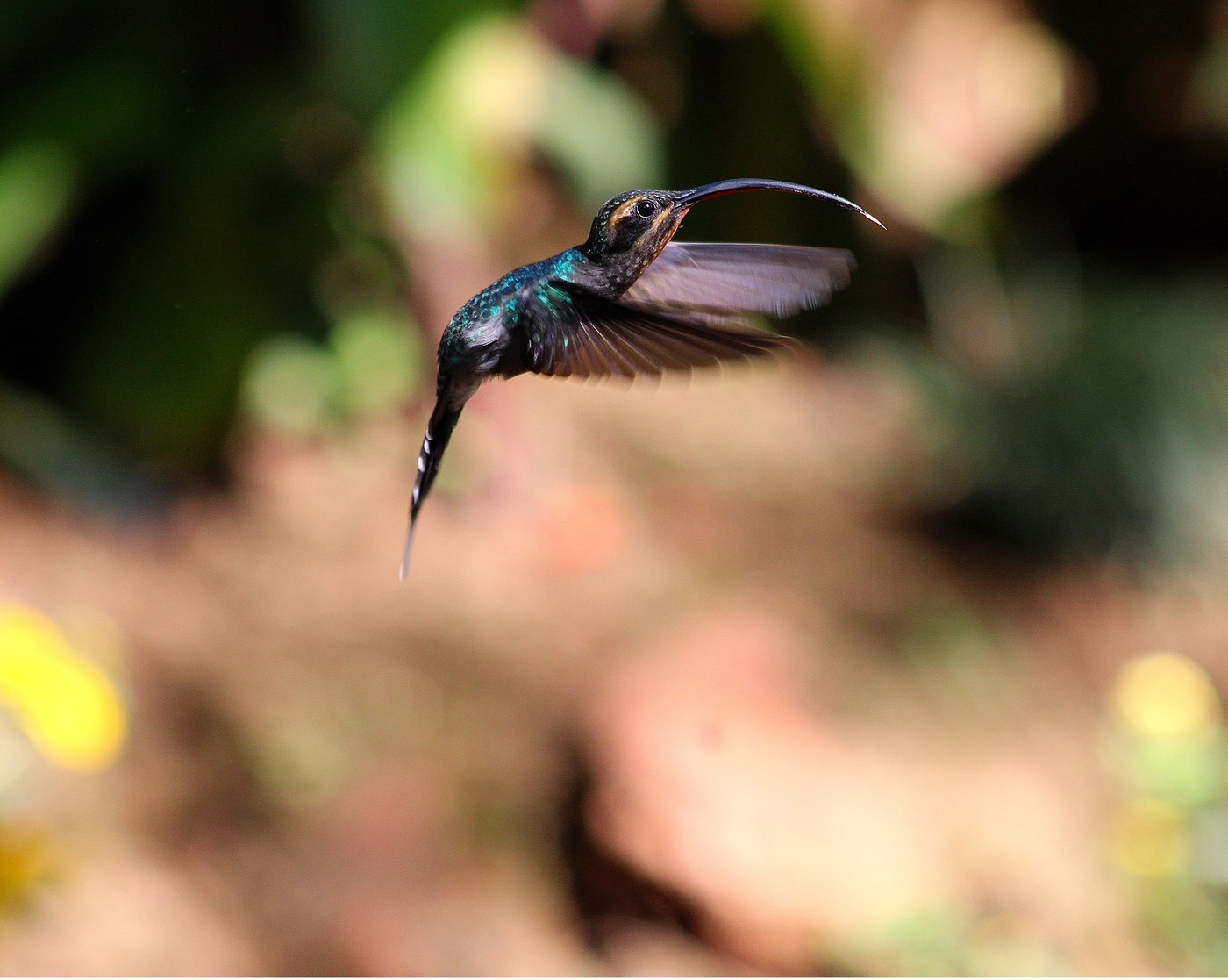
What Green Hermit's Feathers Look Like
The Green Hermit is a large hummingbird (14-16 cm including its tail streamers) but, unlike most hummingbirds, its plumage is matte and relatively dull rather than flashy and iridescent - an adaptation for staying camouflaged in the shaded forest understory it inhabits. Body feathers are a muted bronze-green above and buffy cinnamon below, lacking the shimmering, color-shifting quality seen in open-country hummingbirds. The face shows a dark stripe through the eye bordered by a pale buff stripe, giving a masked look. The single most diagnostic feature is the tail: the central pair of tail feathers is greatly elongated, narrow, and tipped in white, projecting well beyond the rest of the tail like a fine racket or streamer - a shape found in only a handful of hummingbird species.
Step-by-Step: Is This Feather From a Green Hermit?
- Look for a long, narrow feather with a white tip. If you've found an elongated feather (potentially several centimeters longer than typical body feathers) ending in a distinct white spot or tip, that's very likely a central tail streamer.
- Check the sheen. Green Hermit body feathers are matte bronze-green rather than brilliant iridescent - if the feather looks dull rather than metallic, that fits.
- Check color underneath. Belly/breast feathers should be buffy-cinnamon, not white or grey.
- Look for facial striping. A small feather with a dark stripe bordered by buff suggests the face/eye region.
- Consider the curved bill context. While the bill itself isn't a feather clue, hermits have long decurved bills adapted to specific flowers - if found near a hummingbird nest or feeding perch in deep forest, that supports this species over open-country hummingbirds.
Similar Species & How to Tell Them Apart
- Long-billed Hermit: Very similar overall shape and behavior; distinguished mainly by subtle differences in tail length and the exact shade of the tail tip - white tips in both, but Green Hermit's central feathers are typically longer and the body tone slightly greener.
- Other Phaethornis hermits: Several regional hermits share the dull bronze-green-and-buff pattern and white-tipped tail; separating them from feathers alone is difficult without knowing the specific range, so consider your location.
- Typical open-country hummingbirds (e.g., mangos, coquettes): Show brighter, more iridescent body feathers and shorter, broader tails without the extreme elongated streamer.
Where & When You'll Find Them
Green Hermits live in the shaded understory of tropical forest from Central America into northern South America, where they "trap-line" - visiting a fixed circuit of flowers rather than defending a territory. Because of this, feathers tend to turn up scattered along forest trails and near flowering understory plants rather than concentrated at a single spot, and can be found year-round given the species' non-migratory, tropical lifestyle.
Frequently asked questions
Why does this hummingbird feather look dull instead of shiny?
Green Hermits have unusually matte, bronze-green plumage compared to most hummingbirds, an adaptation for blending into the shaded forest understory rather than displaying bright colors in the open.
What is the long feather with a white tip?
That's almost certainly a central tail streamer - Green Hermits grow an elongated, narrow central tail feather pair tipped in white that projects well past the rest of the tail.
How do I tell this apart from a Long-billed Hermit feather?
The two are very similar; Green Hermit's central tail streamers tend to run slightly longer and its body tone slightly greener, but confirming often requires knowing which species occurs in your specific location.
Why don't I see bright, flashy colors like other hummingbirds?
Hermit hummingbirds as a group have duller, more camouflaged plumage than open-country hummingbirds because they forage in shaded forest understory where bright iridescence would be less useful and more conspicuous.
Is there a season when these feathers are more common?
Not particularly - the species is a tropical resident that doesn't migrate, so feathers can be found scattered along forest trails and near flowering plants throughout the year.