
How to Identify Grey Butcherbird Feathers
How to recognize the black hood, pale grey back, and white-marked black wings of this Australian shrike-like songbird.
Read the full Grey Butcherbird encyclopedia entry →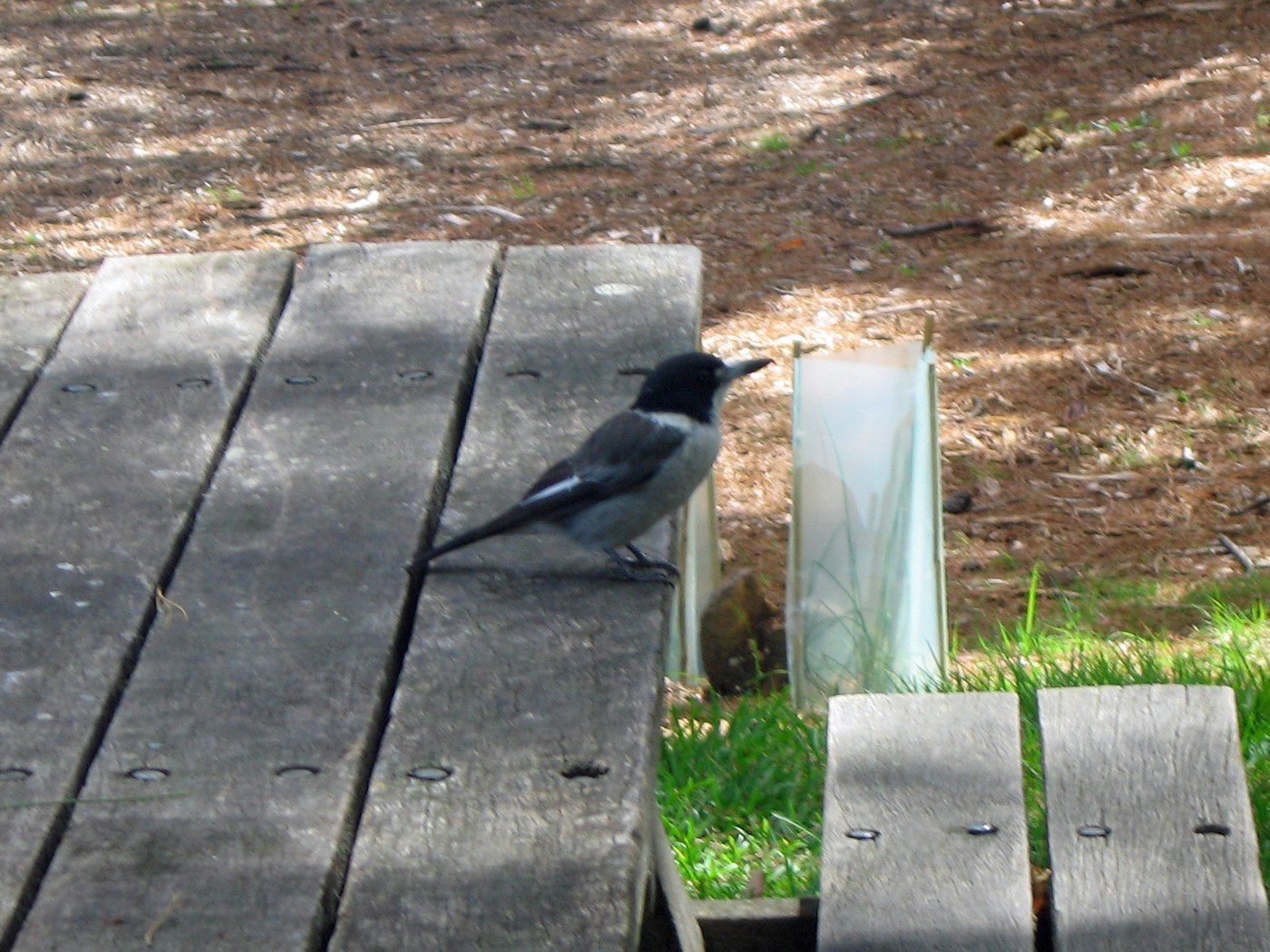
What Grey Butcherbird's Feathers Look Like
The Grey Butcherbird shows a clean, high-contrast pattern well suited to feather identification. The head and throat are solid black, forming a hood, separated from the pale grey back by a distinct white collar or half-collar band across the nape - a useful diagnostic if you find a feather showing this transition zone. Wing feathers are black marked with white, forming a visible white patch or panel when the wing is folded or spread, and the tail feathers are black tipped in white. Underparts are clean white. The bill, while not a feather, is heavy and hooked, reflecting this species' shrike-like predatory habits - useful context if the whole bird is found rather than just feathers.
Step-by-Step: Is This Feather From a Grey Butcherbird?
- Check for a black-and-white transition feather. A feather that's black on one end and pale grey on the other, or a small white feather found near black ones, suggests the collar area between hood and back.
- Look at wing feathers for white patches. Black feathers with clear white markings or edging indicate wing coverts or flight feathers.
- Check tail feather tips. Black feathers tipped in white are consistent with this species' tail.
- Assess overall contrast. The pattern should read as clean and high-contrast (black, grey, white) without any brown, streaking, or buff tones.
- Consider size. At about 30 cm, feathers should be moderate in size - larger than a typical songbird but smaller than a full-sized magpie.
Similar Species & How to Tell Them Apart
- Pied Butcherbird: Has black extending further down the neck with less of a distinct grey collar separation - if the black hood seems to blend more gradually into the back without a clear white collar break, Pied Butcherbird is a better fit.
- Australian Magpie: Considerably larger, with much more extensive white on the back (particularly in males) and a different overall proportion of black to white - size and the amount of white on the back help separate the two.
- Other Australian songbirds with black-and-white patterns: Generally lack the specific combination of black hood, pale grey (not white) back, and white half-collar seen in this species.
Where & When You'll Find Them
Grey Butcherbirds are resident across much of Australia, inhabiting woodlands, forest edges, parks, and suburban gardens, where they're often quite bold around human habitation. As non-migratory, territorial residents, feathers can be found year-round near a pair's territory, particularly around favored perches used for their shrike-like habit of impaling prey on thorns or in tree forks, and slightly more often during the local breeding season when adults are actively defending nests.
Frequently asked questions
What does the white band between black and grey feathers mean?
That's the collar area separating the Grey Butcherbird's black hood from its pale grey back - a feather showing this black-to-white-to-grey transition is a strong diagnostic clue.
How do I tell this apart from a Pied Butcherbird feather?
Pied Butcherbird's black extends further down the neck with a less distinct collar break, so a feather showing a clean, sharp white collar separating solid black from pale grey favors Grey Butcherbird instead.
Could this be an Australian Magpie feather?
Magpies are considerably larger with much more extensive white on the back, so smaller feathers with less overall white point to Grey Butcherbird rather than a magpie.
What's the significance of white markings on a black wing feather?
Grey Butcherbirds show white patches or edging on otherwise black wing feathers, forming a visible white wing panel - a useful confirming detail alongside the hood and collar pattern.
When are these feathers most likely to be found?
Look year-round near a resident pair's territory and favored perches, with a slight increase during the local breeding season when adults are more active defending nests.