
How to Identify Grey Crowned Crane Feathers
Recognizing the unique golden bristle crown and colorful chestnut-white-black wing feathers of this African crane.
Read the full Grey Crowned Crane encyclopedia entry →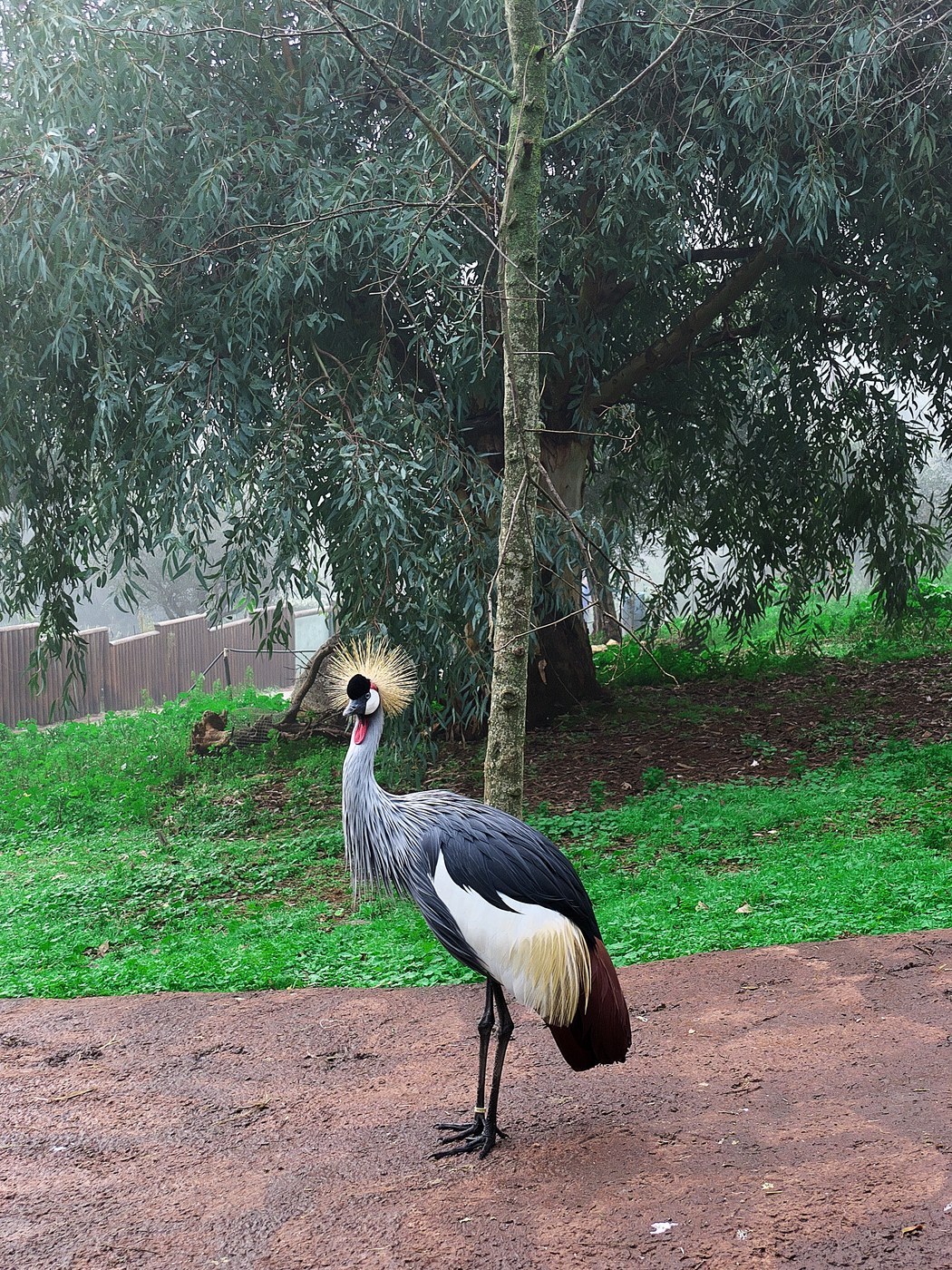
What Grey Crowned Crane's Feathers Look Like
This large crane (standing about a meter tall) has one feather structure that is truly unmistakable: a crown of stiff, bristle-like golden or straw-colored feathers radiating outward from the top of the head like a spiky halo - a texture and shape unlike any ordinary contour feather and unlike anything found on most other birds. The body plumage is otherwise mostly grey, with clean white cheek patches on the face (bare red skin also appears on the throat pouch and face, though that's skin rather than feather). The wings are surprisingly colorful for a crane: covert feathers show bands of white, chestnut/gold, and black, creating a striped, multicolored wing panel that contrasts sharply with the plain grey body - quite different from the more uniformly grey or white wings of most other crane species. Primary flight feathers are black.
Step-by-Step: Is This Feather From a Grey Crowned Crane?
- Check for the bristle crown feathers first. Stiff, thin, golden filamentous feathers unlike any normal contour feather are essentially diagnostic on their own - no ordinary body feather looks like this.
- Look at wing covert feathers for banding. White, chestnut/gold, and black bands together on a single feather or a set of feathers strongly support this species, given how unusual this colorful wing pattern is among cranes.
- Assess body feather color. Plain grey feathers, especially if found alongside the more colorful wing or crown feathers, are consistent with the body plumage.
- Consider feather size. As a large bird, expect substantial flight and covert feathers, and body feathers larger than most non-crane species you might otherwise compare against.
- Rule out plain grey herons/similar large birds. The combination of any chestnut/gold wing banding or bristle crown feather is what separates this species from other large grey wading birds.
Similar Species & How to Tell Them Apart
- Black Crowned Crane: Very similar structure, including the same striking bristle crown, but shows more black in the neck and body rather than the mostly grey plumage of the Grey Crowned Crane - overall darker neck coloring is the main distinguishing feature, along with a more West/Central African range versus this species' East/Southern African range.
- Other crane species generally: Lack the bristle crown feathers entirely and typically show far less colorful wing banding, making this species easy to separate from cranes elsewhere in the world.
Where & When You'll Find Them
Grey Crowned Cranes inhabit wetlands, grasslands, and agricultural areas across East and Southern Africa, often seen foraging in pairs or family groups near marshes and seasonal wetlands. They are largely resident, though local movements track wetland water levels and food availability rather than following a long-distance migratory schedule. Feathers - including the distinctive crown bristles, which are molted along with the rest of the plumage - can be found year-round near wetland foraging and roosting sites, with body feather molt likely concentrated after the breeding season.
Frequently asked questions
What is the strange bristly golden feather I found?
That's from the Grey Crowned Crane's unique crown - a tuft of stiff, filamentous golden feathers radiating from the top of the head, a structure unlike any ordinary body feather and essentially unmistakable on its own.
Why does this crane's wing feather look so colorful?
Unlike most cranes, which show fairly plain grey or white wings, Grey Crowned Cranes have wing covert feathers banded in white, chestnut/gold, and black, creating a distinctly striped, colorful wing panel.
How do I tell this apart from a Black Crowned Crane feather?
Black Crowned Crane shows notably more black in the neck and body plumage, while Grey Crowned Crane is mostly grey - overall neck color, along with range (West/Central Africa versus East/Southern Africa), is the best way to separate the two.
Are the bristle crown feathers present on both sexes?
Yes, both males and females of the Grey Crowned Crane grow the distinctive golden bristle crown, so finding one doesn't tell you the sex of the bird.
When are these feathers most likely to be found?
Look year-round near wetland foraging and roosting areas, with body feather molt likely increasing somewhat after the local breeding season.