
How to Identify Hooded Vulture Feathers
Learn the plain dark brown body feathers and pale downy hood feathering that separate this small African vulture from other vultures.
Read the full Hooded Vulture encyclopedia entry →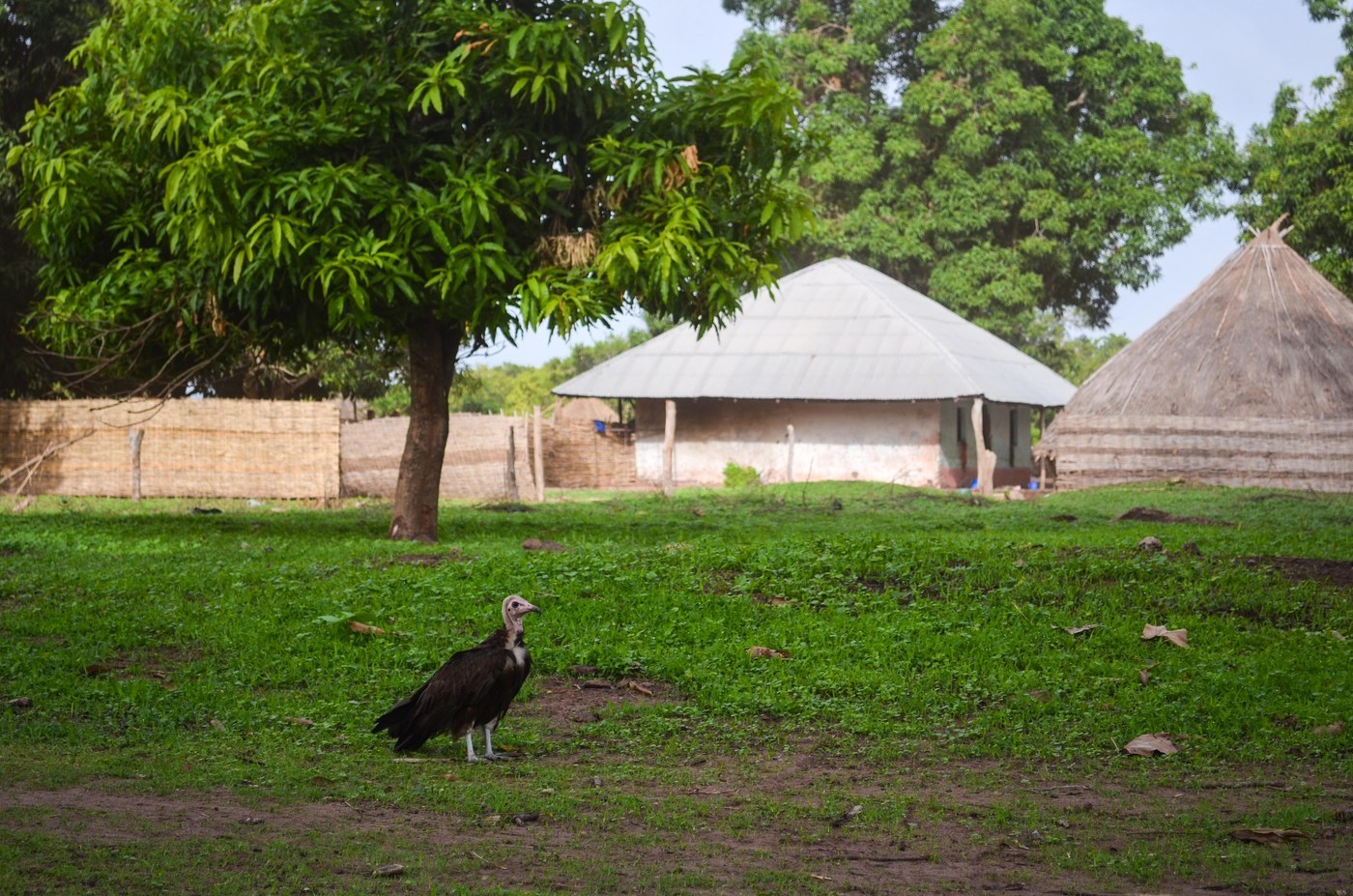
What Hooded Vulture Feathers Look Like
The Hooded Vulture is a small, slender African vulture, and its feathers reflect a notably plain, unpatterned appearance compared to most other vultures. Body and wing covert feathers are a uniform dark brown, sometimes with a slightly paler, worn grayish-brown cast on older feathers, but without the streaking, mottling, or scaling seen in many raptors. Flight feathers (primaries and secondaries) are blackish-brown, broad, and long relative to the body, consistent with a vulture's need for effortless soaring flight. The tail is short and rounded, with dark brown feathers showing little to no barring.
The species' name comes from a sparse covering of whitish to grayish-buff down on the head and neck (rather than true contour feathers, since the head/neck skin is largely bare) — this soft, hair-like down is a distinctive material if found, quite different from any structured flight or contour feather, and pale rather than the dark brown of the body.
Step-by-Step: Is This Feather From a Hooded Vulture?
- Check for plain, unpatterned dark brown on body/covert feathers — no streaking, spotting, or barring should be present.
- Measure size. This is one of the smaller Old World vultures; primaries run roughly 30-40 cm, notably shorter than the huge flight feathers of Griffon or Lappet-faced Vulture.
- Look for broad, blunt-tipped flight feathers typical of soaring vultures generally, before narrowing down by size and plainness.
- Check for sparse whitish-buff down, distinct from body feathers, which would come from the head/neck region.
- Rule out barring or pale feather edges — their presence points to a different vulture species.
Similar Species & How to Tell Them Apart
Egyptian Vulture is superficially the vulture most associated with a "hooded" look due to shaggy head feathering, but its body plumage is largely white with contrasting black flight feathers — entirely different from Hooded Vulture's uniform dark brown. White-backed Vulture, especially as a juvenile, can show streaky brown body feathers, but adults display a pale/whitish back patch and generally larger flight feathers; juveniles lack the plain, unstreaked look of Hooded Vulture. Lappet-faced Vulture and White-headed Vulture are both considerably larger with thicker flight feathers and more patterned underparts. The combination of small size, plain unmarked dark brown, and pale downy head material is the most reliable distinguishing set for Hooded Vulture.
Where & When You'll Find Them
Hooded Vultures are widespread across sub-Saharan Africa, closely associated with human settlements, refuse sites, and livestock areas as well as savanna and woodland, where they scavenge alongside larger vulture species. They are largely resident, non-migratory birds, so feathers can be found year-round near roosts, nesting trees, and scavenging sites such as abattoirs, refuse dumps, and carcasses, without a strong seasonal pattern beyond a modest increase during the molt that typically follows the breeding season.
Frequently asked questions
What is the main feather-level clue for Hooded Vulture?
Uniformly plain dark brown body and covert feathers with no streaking or barring, combined with a notably small size for a vulture.
How is this different from Egyptian Vulture?
Egyptian Vulture body plumage is largely white with black flight feathers, completely unlike the uniform dark brown of Hooded Vulture.
What does the pale downy material near the head mean?
It's sparse, hair-like down covering the mostly bare head and neck skin, not a true contour feather, and pale whitish-buff in color.
Could a juvenile White-backed Vulture be confused with this species?
Possibly, since juveniles are streaky brown, but adults show a pale back patch and larger overall flight feathers than the plain, smaller Hooded Vulture.
Is there a strong season for finding feathers?
Not really — this is a resident species without long migrations, so feathers can be found year-round near roosts and scavenging sites.