
How to Identify Kea Feathers
How to identify the olive-green scalloped feathers and orange-red underwing patches of the Kea, New Zealand's alpine parrot, versus Kaka feathers.
Read the full Kea encyclopedia entry →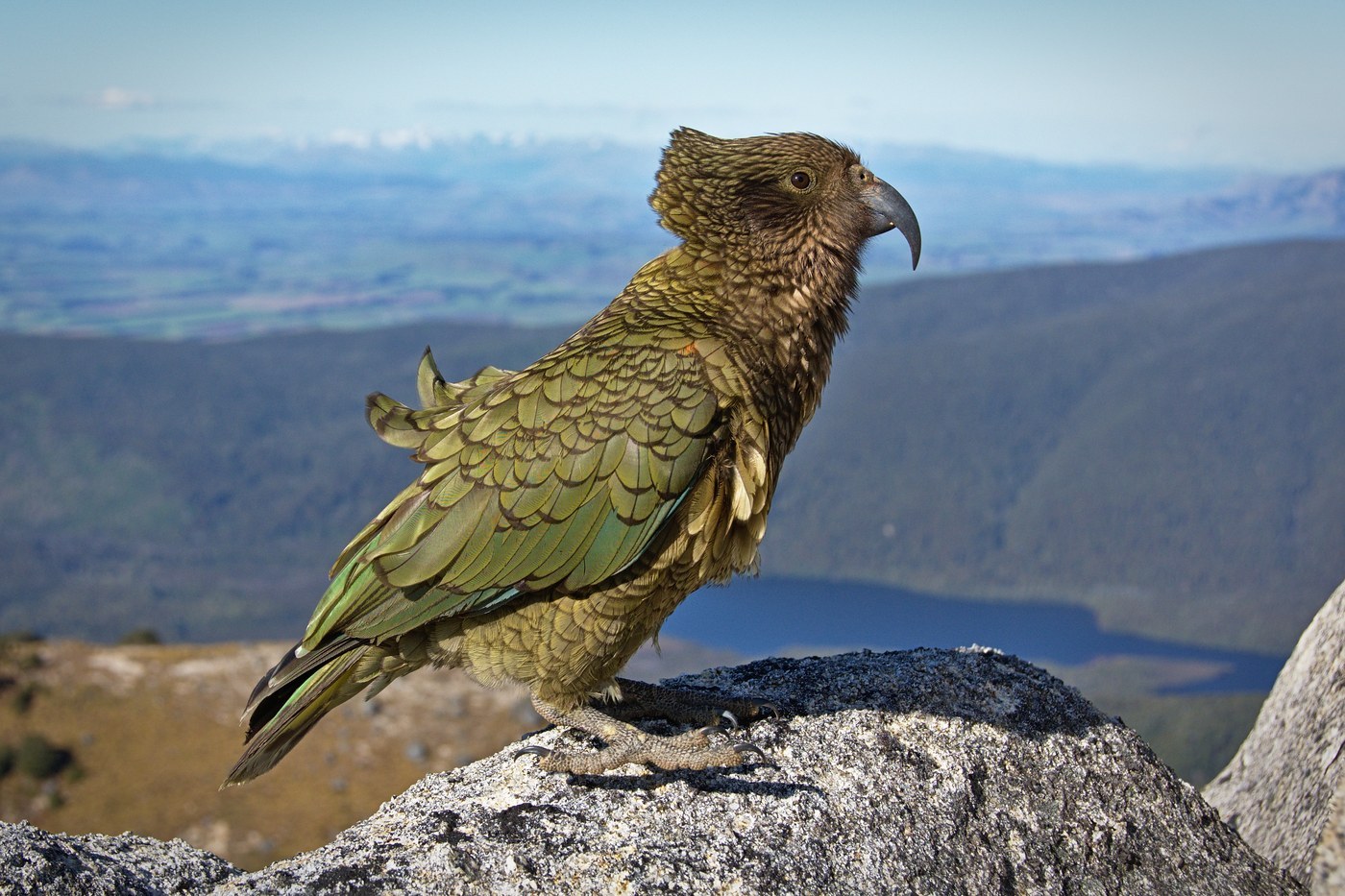
What Kea Feathers Look Like
Kea feathers are dominated by a rich olive-green tone across the back, wings, and crown, with each contour feather showing a subtly darker scalloped or crescent-shaped edge, giving the plumage a scaly, textured appearance up close — functional camouflage against alpine rock and scrub. The underside of the wings and the rump area tell a very different story: underwing coverts are a vivid orange-red, and the rump/uppertail coverts show orange-red feathers barred with black, both areas hidden in a resting bird but bright and unmistakable when found loose. Flight feathers are olive-green with a blue-green tinge toward the tips on the upper side, while the tail shows dull olive-green feathers above with a more yellow-green tone underneath, often with a narrow dark subterminal band. Kea feathers are large and sturdy, reflecting the bird's size and its rough alpine lifestyle of digging, prying, and scrambling over rock and scrub, and they often show more wear and fraying at the tips than feathers from birds in gentler habitats.
Step-by-Step: Is This Feather From a Kea?
- Check for olive-green scalloping. A green (not brown) contour feather with a darker scalloped edge is the Kea's signature look, as opposed to Kaka's brown scalloping.
- Look for orange-red with black barring. A vivid orange-red feather barred with black points specifically to Kea's rump/underwing area rather than Kaka's more solid crimson underwing.
- Assess wear. Frayed, worn tips are common given Kea's rough alpine habitat and rock/soil digging behavior.
- Measure size. Large, sturdy feathers fit this big, powerful mountain parrot.
- Match elevation and habitat. A feather found in high alpine or subalpine terrain in New Zealand's South Island strongly favors Kea, since it's the only parrot regularly living at those elevations.
Similar Species & How to Tell Them Apart
- Kaka shows brown, not green, scalloped body feathers, and its hidden crimson is more solidly red rather than orange-red barred with black; Kaka also favors lower-elevation forest rather than alpine terrain.
- Kakariki are solid bright green without scalloping and show a small red or yellow crown patch instead of Kea's hidden orange-red underwing/rump pattern.
- Kakapo feathers are moss-green mottled with black and yellow in an irregular camouflage pattern, softer in texture due to flightlessness, quite different from Kea's scalloped olive-green and stiffer, flight-capable feather structure.
- Introduced parrots in New Zealand (e.g., Eastern Rosella) show much more varied, brighter multicolor patterning and are found at lower elevations, unlikely to be confused with a genuine alpine Kea feather.
Where & When You'll Find Them
Kea are found only in the mountains of New Zealand's South Island, ranging from subalpine forest up into open alpine terrain above the tree line — one of the very few parrot species adapted to cold, high-elevation environments. As non-migratory residents, though some seasonal altitudinal movement occurs, feathers can be found year-round, with the post-breeding molt in late summer/autumn typically producing the most loose feathers. Look near ski fields, alpine car parks, and mountain huts where Kea are famously curious and bold around people, as well as scree slopes, subalpine scrub, and beech forest edges at higher elevations.
Frequently asked questions
What's the quickest way to separate Kea from Kaka feathers?
Body color — Kea's scalloped contour feathers are olive-green, while Kaka's are olive-brown; both hide bright red under the wings, so body tone is the more reliable first check.
Why do Kea feathers often look worn or frayed?
Kea live in rugged alpine terrain and frequently dig, pry, and scramble over rock and soil, which wears feather tips faster than in birds from gentler lowland habitats.
Is the orange-red underwing feather unique to Kea?
Not entirely — Kaka shows crimson-red in a similar hidden location, but Kea's version typically shows black barring within the orange-red, a useful distinguishing detail.
Where in New Zealand would I most likely find a Kea feather?
In subalpine and alpine terrain of the South Island — around ski fields, mountain huts, scree slopes, and high-elevation beech forest edges, since Kea rarely occur at low elevations.
Do Kea feathers show any blue?
Yes — the upper flight feathers often show a blue-green tinge toward the tips, a subtle cooler accent against the otherwise olive-green body plumage.
Kea identified by the community
Recent Kea feathers identified with Feather Identifier.
