
How to Identify Laughing Kookaburra Feathers
How to recognize the blue-patched wing coverts and rufous-and-black barred tail feathers of Australia's largest kingfisher.
Read the full Laughing Kookaburra encyclopedia entry →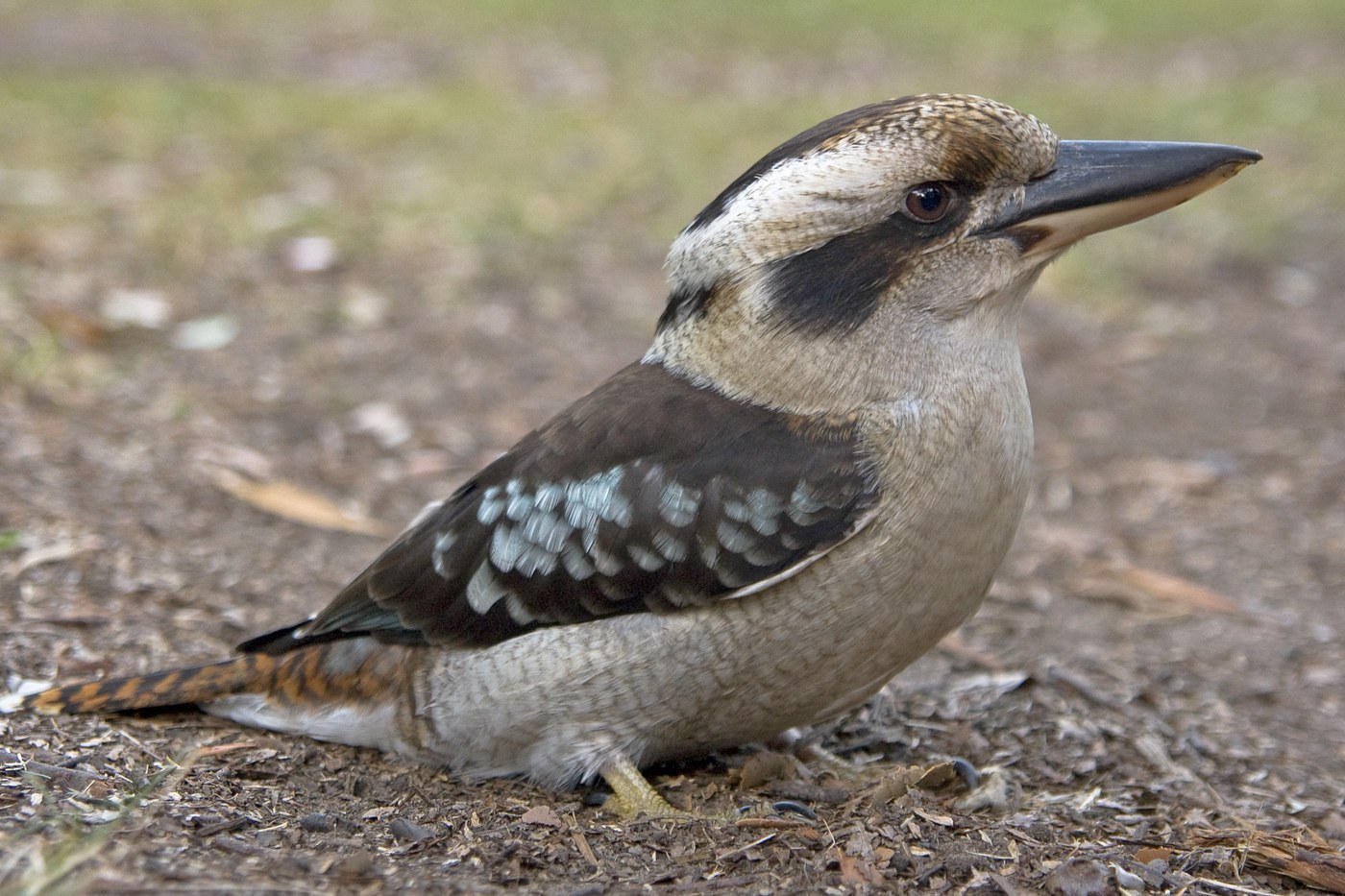
What Laughing Kookaburra Feathers Look Like
As the largest member of the kingfisher family in its range, the Laughing Kookaburra has substantial feathers with an eye-catching mix of earthy browns and flashes of blue.
- Body/contour feathers: Cream to whitish on the head and underparts, with fine dark streaking on the crown; back and wings warm brown.
- Wing covert feathers: A patch of bright blue feathers on the shoulder/covert area stands out sharply against the surrounding brown — a blue feather found with other brown kingfisher-type feathers is a strong clue.
- Tail feathers: Rufous-orange barred with black bands, a distinctive combination not typical of most birds this size; some outer tail feathers show blue tinges as well.
- Flight feathers: Brown, barred with darker brown, duller than the tail and shoulder patch.
- Eye-stripe feathers: A dark brown stripe of feathers runs through the eye across an otherwise pale head, similar to a bandit mask.
- Size: A large kingfisher; tail feathers can reach 5-7 inches (13-18 cm), and the bird's overall bulk means feathers are noticeably substantial.
Step-by-Step: Is This Feather From a Laughing Kookaburra?
- Look for a bright blue feather among mostly brown ones. A blue wing-covert feather paired with brown flight and tail feathers is highly suggestive of a kookaburra.
- Check the tail for rufous-and-black barring. An orange-rufous feather with bold dark bands is a strong, distinctive match.
- Inspect head feathers for a dark eye-stripe on a pale, cream background rather than an overall uniform color.
- Gauge the size. Feathers noticeably larger and heavier than a typical songbird, consistent with a large kingfisher.
- Consider habitat and range. Eucalypt woodland, forest edges, parks, and suburban gardens across eastern and southern Australia (and introduced populations in the west and New Zealand) fit this species.
Similar Species & How to Tell Them Apart
- Blue-winged Kookaburra: Shows much more extensive blue, including a blue crown/cap and blue rump, whereas Laughing Kookaburra's blue is more restricted to a shoulder patch, with a brown, streaked cap rather than blue.
- Other Australian kingfishers (e.g., Sacred Kingfisher): Much smaller overall, with more uniformly turquoise-blue upperparts rather than the kookaburra's brown-dominant plumage with an isolated blue patch.
- Blue Kookaburra (New Guinea): Overall much bluer body plumage, unlike Laughing Kookaburra's brown-and-cream base color.
Where & When You'll Find Them
Laughing Kookaburras are widespread residents of eastern and southern Australian eucalypt forests, woodlands, and increasingly suburban parks and gardens, with introduced populations in southwestern Australia and New Zealand. They are non-migratory and hold territories year-round, so feathers can be found in any season, though post-breeding molt in late summer (Southern Hemisphere, roughly January-March) tends to yield the most feathers near nest hollows and regular perching sites.
Frequently asked questions
What's the easiest single clue that a feather is from a Laughing Kookaburra?
A bright blue wing-covert feather found together with brown, barred flight and tail feathers is a strong and fairly unique combination for this species.
How do I tell this apart from a Blue-winged Kookaburra feather?
Blue-winged Kookaburra shows much more extensive blue, including on the crown and rump, while Laughing Kookaburra's blue is limited mainly to a shoulder patch with a brown, streaked cap.
Why does the tail feather I found have orange and black bands?
That rufous-and-black barred pattern is characteristic of the Laughing Kookaburra's tail and is one of its more distinctive feather features.
Is there a best season to find these feathers?
Late summer, after the breeding season in the Southern Hemisphere (roughly January-March), tends to be a productive time as birds molt near nesting territories.