
How to Identify Le Conte's Sparrow Feathers
How to spot the bright orange face and sharply striped white-and-black back feathers of this secretive marsh sparrow, and separate it from Nelson's Sparrow.
Read the full Le Conte's Sparrow encyclopedia entry →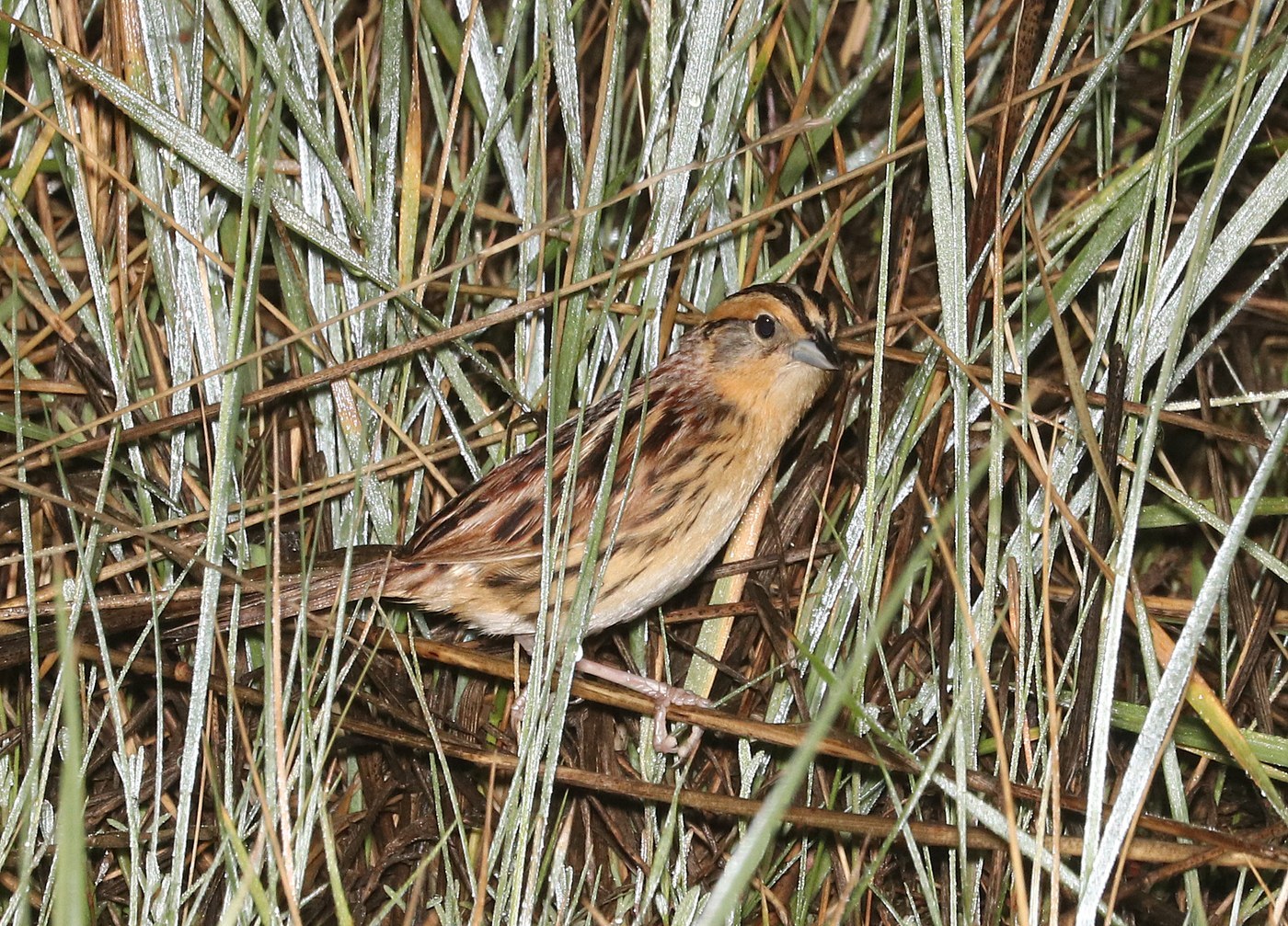
What Le Conte's Sparrow Feathers Look Like
Le Conte's Sparrow is a small, secretive sparrow of wet grasslands, and its feathers show an unusually bold, contrasty pattern for such a small, retiring bird.
- Face feathers: Bright orange-buff on the face and breast, with a contrasting gray patch on the ear/cheek, creating a bicolor look on head feathers.
- Back feathers: Boldly patterned with black and creamy-white stripes running lengthwise, giving a sharply "striped" or scaled appearance quite distinct from the softer streaking of most sparrows.
- Crown feathers: Dark, with a pale central crown stripe, adding another crisp contrast.
- Underparts feathers: Mostly plain orange-buff on the breast, with fine dark streaking confined to the flanks/sides rather than across the whole breast.
- Tail feathers: Short and notably narrow and pointed, giving the tail a spiky look typical of this sparrow group, unlike the broader, more rounded tail feathers of most sparrows.
- Size: A small sparrow; feathers run on the small side even for the sparrow family.
Step-by-Step: Is This Feather From a Le Conte's Sparrow?
- Check for bright orange-buff color on a face or breast feather, paired with a contrasting gray patch if the cheek area is included.
- Look for bold black-and-white stripes on a back feather. This crisp, high-contrast striping (rather than blended brown streaking) is a strong diagnostic.
- Inspect the crown for a pale central stripe bordered by dark lateral stripes.
- Check underparts for a mostly unstreaked orange-buff center with streaking pushed to the flanks only.
- Note the tail feather shape. Narrow and pointed rather than broad and rounded fits this sparrow group.
- Consider habitat. Wet meadows, sedge marshes, and damp grassland in the northern U.S., Canada, and wintering Gulf Coast marshes fit this secretive species.
Similar Species & How to Tell Them Apart
- Nelson's Sparrow: Also shows an orange-buff face, but with a grayer, less contrasty nape and back streaking that's softer and less sharply striped than Le Conte's bold black-and-white back pattern.
- Grasshopper Sparrow: Plainer, buffier overall without the bright orange face contrast or the crisp white back striping.
- Savannah Sparrow: More heavily streaked underparts (including across the breast, not just flanks) and lacks the bold orange face tone.
- Henslow's Sparrow: Shows an olive-tinged head rather than orange, and a more uniformly dark, less crisply striped back.
Where & When You'll Find Them
Le Conte's Sparrow breeds in wet meadows, sedge marshes, and damp grassy fields across the northern Great Plains and boreal regions of Canada and the north-central U.S., then winters in grassy and marshy habitats across the southeastern U.S., especially near the Gulf Coast. Because it's a secretive, ground-hugging bird that rarely flushes far, feathers are more often found by searching low grass and marsh edges carefully rather than open ground. Molt follows breeding in mid-to-late summer, so fresher feathers are most likely on breeding grounds in August, while wintering marshes can yield feathers from fall through early spring.
Frequently asked questions
What's the best single clue for identifying a Le Conte's Sparrow feather?
A back feather with bold, crisp black-and-white stripes is highly distinctive, since most sparrows show softer, blended streaking rather than this sharply contrasted striped pattern.
How do I tell this apart from a Nelson's Sparrow feather?
Nelson's Sparrow shows a grayer nape and softer, less contrasty back streaking, while Le Conte's Sparrow has bolder black-and-white striping and a brighter orange face.
Why is the tail feather I found so narrow and pointed?
Le Conte's Sparrow and its close relatives have distinctively narrow, pointed tail feathers compared to the broader, rounder tails of most other sparrows.
Where should I search for these feathers given how secretive the bird is?
Focus on wet meadows, sedge marshes, and damp grassy habitat at ground level, since the species rarely flies far and stays low in dense grass.