
How to Identify Malachite Sunbird Feathers
A guide to recognizing the brilliant emerald-green breeding feathers and elongated tail plumes of the male Malachite Sunbird, plus the duller female plumage.
Read the full Malachite Sunbird encyclopedia entry →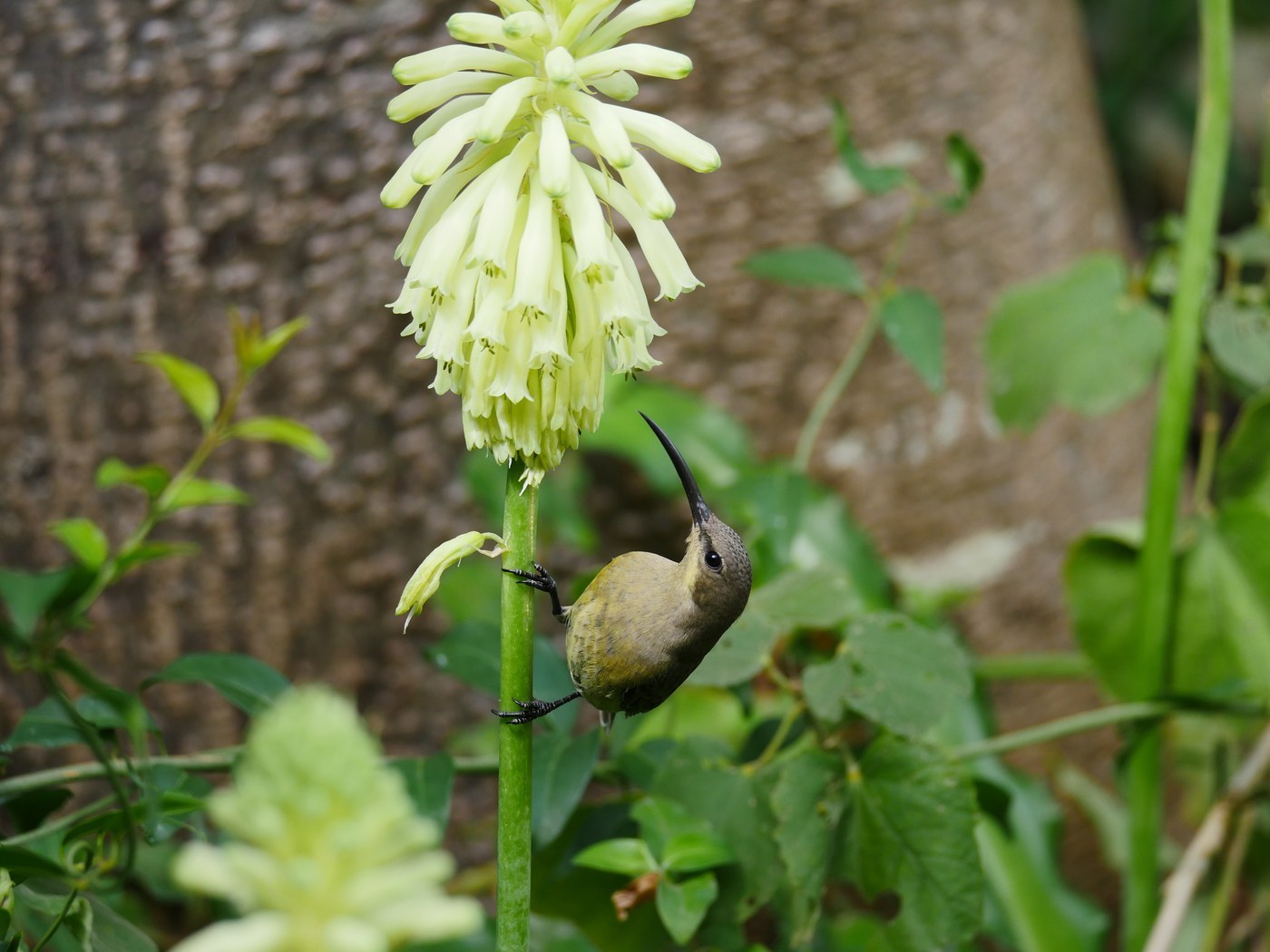
What Malachite Sunbird's Feathers Look Like
The Malachite Sunbird is a large African sunbird known for the male's spectacular breeding plumage. Breeding male body feathers are iridescent emerald to golden-green, covering the head, back, and much of the underparts, with the color shifting between green and gold depending on light angle — a hallmark of structural iridescence rather than fixed pigment. A small tuft of bright yellow pectoral feathers sits at the sides of the breast, tucked under the wing and only sometimes visible — a yellow feather found alongside green iridescent ones is a strong supporting clue. Male tail feathers include elongated central feathers, extending well past the rest of the tail, glossy green like the body. Non-breeding males and females look completely different: dull grayish-olive to brownish-grey overall, with a somewhat mottled or streaked breast, and entirely lacking iridescence or elongated tail feathers — closer in appearance to a large, plain warbler than to the brilliant breeding male.
Step-by-Step: Is This Feather From a Malachite Sunbird?
- Check for iridescent green or gold. A feather that shifts between emerald green and gold in changing light strongly suggests a breeding male Malachite Sunbird.
- Look for elongated central tail feathers. A long, narrow, glossy green feather clearly longer than typical body feathers points to a male's tail plume.
- Search for a small yellow tuft feather. A bright yellow feather found near green iridescent ones matches the pectoral tufts hidden under this species' wings.
- Consider size relative to other sunbirds. Malachite Sunbird is notably large for a sunbird (up to around 25 cm including tail plumes in males), so feathers are somewhat larger than those of most sunbird relatives.
- Don't rule out dull olive-brown feathers. These plain tones are typical of females and non-breeding males and are equally valid, if less exciting, evidence of this species.
Similar Species & How to Tell Them Apart
Bronzy Sunbird and other large highland African sunbirds can show somewhat similar iridescent green plumage, but Malachite Sunbird tends toward a purer, brighter emerald-gold rather than the more coppery-bronze cast of Bronzy Sunbird, and its tail plumes are proportionally longer. Scarlet-tufted Malachite Sunbird, a close relative found at high elevations in East Africa, looks almost identical but shows red rather than yellow pectoral tufts — a single tuft feather color is the fastest way to separate the two where their ranges might be confused. Female and non-breeding sunbirds across species are difficult to separate reliably by feather alone, so a plain olive-brown feather is best identified only to the sunbird family level unless paired with diagnostic male feathers found nearby.
Where & When You'll Find Them
Malachite Sunbirds favor montane grassland, moorland, fynbos, and gardens with abundant flowering plants (especially aloes and proteas) across southern and eastern Africa, often at higher elevations than many other sunbird species. Because males molt out of and into their brilliant breeding plumage on a seasonal cycle (often linked to the flowering season of key nectar plants and to breeding activity), the most spectacular iridescent green feathers are most likely to be found around the transition into and out of breeding condition, which varies by region but often centers on local spring and early summer. Feathers are most often found near favored flowering shrubs and display perches used by territorial males.
Frequently asked questions
How can I tell if a green feather is from a breeding male?
Check for iridescence that shifts between emerald green and gold in different light, combined with unusually long, narrow tail feathers — both point to a breeding male Malachite Sunbird.
What does a female or non-breeding male feather look like?
Plain grayish-olive to brownish-grey, often with light mottling on the breast, and completely lacking iridescence or elongated tail plumes.
How do I separate this from a Scarlet-tufted Malachite Sunbird?
Check the color of any pectoral tuft feather — yellow tufts indicate Malachite Sunbird, while red tufts indicate the closely related Scarlet-tufted Malachite Sunbird.
Why is the male's plumage only sometimes brilliant green?
Males molt between a plain eclipse (non-breeding) plumage and the brilliant iridescent breeding plumage on a cycle tied to breeding season and flowering availability, so feather appearance depends on when in that cycle the feather was shed.
Where should I look for feathers in the field?
Near flowering shrubs like aloes and proteas and around prominent display perches used by territorial males, especially in montane grassland, moorland, or fynbos habitat.