
How to Identify Meadow Bunting Feathers
A guide to the rufous-brown, white-browed feathers of the Meadow Bunting, a common East Asian grassland songbird.
Read the full Meadow Bunting encyclopedia entry →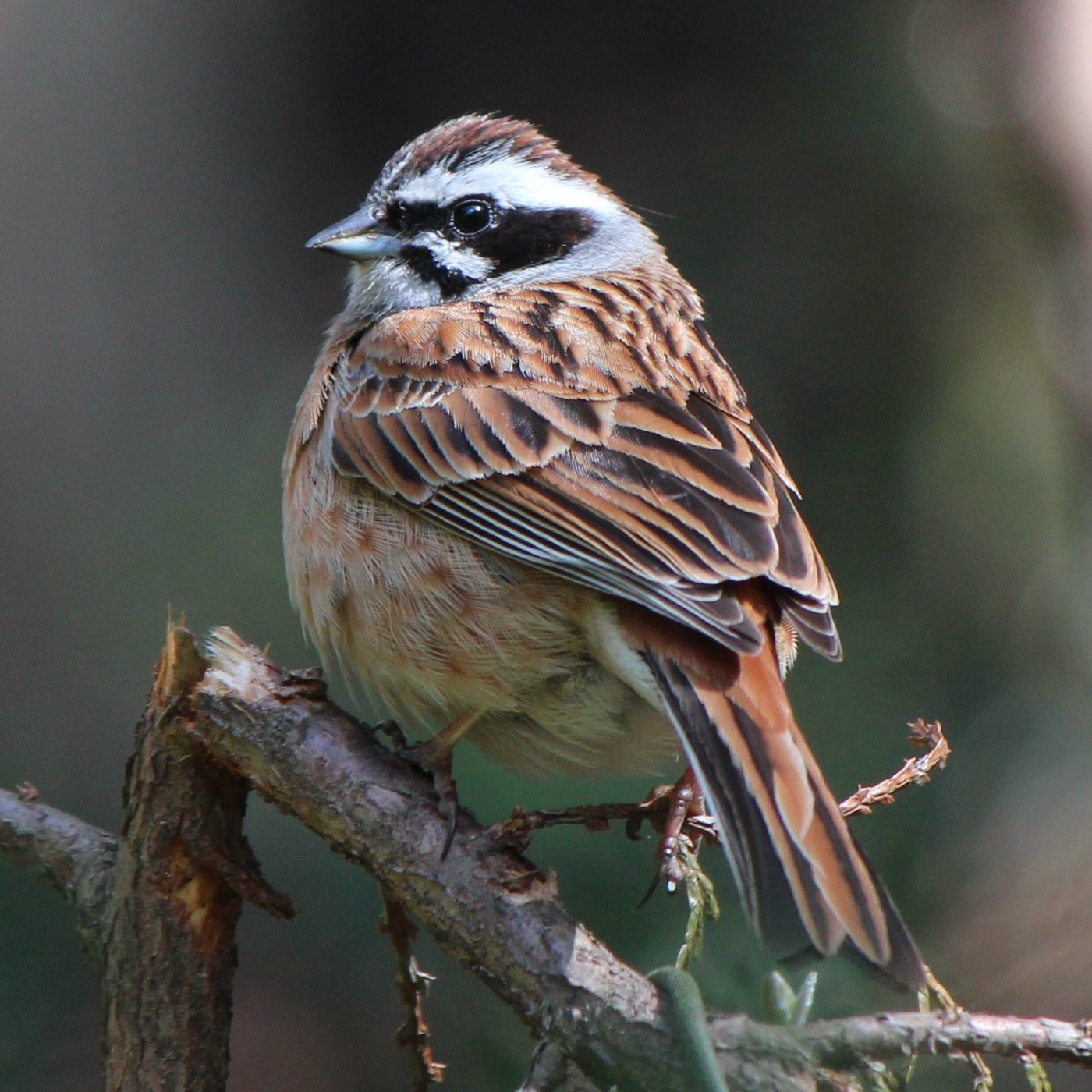
What Meadow Bunting Feathers Look Like
Meadow Bunting feathers show the classic bunting combination of rufous-brown streaking above and warm buffy tones below. Back and mantle feathers are chestnut-brown with darker brown streaking running down the center of each feather, giving a streaked appearance when several feathers are seen together. The most distinctive feathers come from the head: a bold white supercilium (eyebrow) stripe and white submoustachial stripe contrast against a chestnut crown and cheek patch, so isolated head feathers often show a clean white-and-chestnut split rather than a blended color. Underparts feathers are unstreaked and range from warm buff on the breast to rich chestnut on the flanks and rump — the rump feathers in particular are a deep, unmarked chestnut, a helpful clue if you can identify the feather's body location. Wing feathers are brown with narrow rufous edging, and the tail is brownish with white confined to the outer feather edges, visible as white margins along part of the vane if you find an outer tail feather.
Step-by-Step: Is This Feather From a Meadow Bunting?
- Look for the streaked-back pattern. Chestnut-brown feathers with dark central streaks are typical of the mantle and back.
- Check for a white-and-chestnut head feather. A crisp white stripe bordering a chestnut-toned feather suggests the supercilium or moustachial region.
- Identify unstreaked chestnut rump feathers. A plain, unmarked deep chestnut feather with no streaking likely comes from the rump.
- Examine tail feather edges. White margins limited to the outer web of an otherwise brown tail feather is consistent with this species' modest white tail markings.
- Weigh size. A small-to-medium songbird feather (bunting-sized, generally under 8 cm for flight feathers) fits.
Similar Species & How to Tell Them Apart
- Rustic Bunting: Shows a more crested head profile and heavier black streaking on the flanks, with a less uniformly chestnut rump.
- Chestnut-eared Bunting: Has a gray crown and nape contrasting with chestnut ear coverts, rather than Meadow Bunting's overall chestnut-and-white head pattern.
- Yellowhammer: Shows yellow tones on the head and underparts that Meadow Bunting entirely lacks, along with a chestnut rump that is more richly saturated in Yellowhammer.
- Eurasian Tree Sparrow: Lacks the bold white supercilium and shows a more uniform brown cap rather than the bunting's contrasting head pattern.
Where & When You'll Find Them
Meadow Buntings favor open grassy hillsides, scrubby field edges, agricultural margins, and rocky slopes across East Asia, including much of China, Korea, and Japan, where some populations are resident year-round. Feathers are most likely found along low scrub and grassy slopes rather than deep forest. Molt follows breeding, typically completing in late summer to early autumn, so fresh feathers are most commonly encountered from August through October, while resident populations can yield worn feathers from territorial activity throughout the year.
Frequently asked questions
What is the key head pattern to look for?
A bold white supercilium and submoustachial stripe contrasting sharply against a chestnut crown and cheek — a hallmark of Meadow Bunting head feathers.
What color is the rump feather?
A plain, unstreaked deep chestnut, distinct from the streaked back feathers.
How does this differ from a Yellowhammer feather?
Meadow Bunting lacks any yellow tones on the head or underparts, which are present and often prominent in Yellowhammer.
Are the tail feathers heavily marked with white?
No, white is limited to narrow margins on the outer web of the outer tail feathers, much less extensive than in many other buntings.
When is molt most active?
Late summer into early autumn, following the breeding season, producing the freshest feathers from August through October.