
How to Identify Mexican Chickadee Feathers
A guide to the gray-flanked, black-bibbed feathers of the Mexican Chickadee and how they differ from other North American chickadees.
Read the full Mexican Chickadee encyclopedia entry →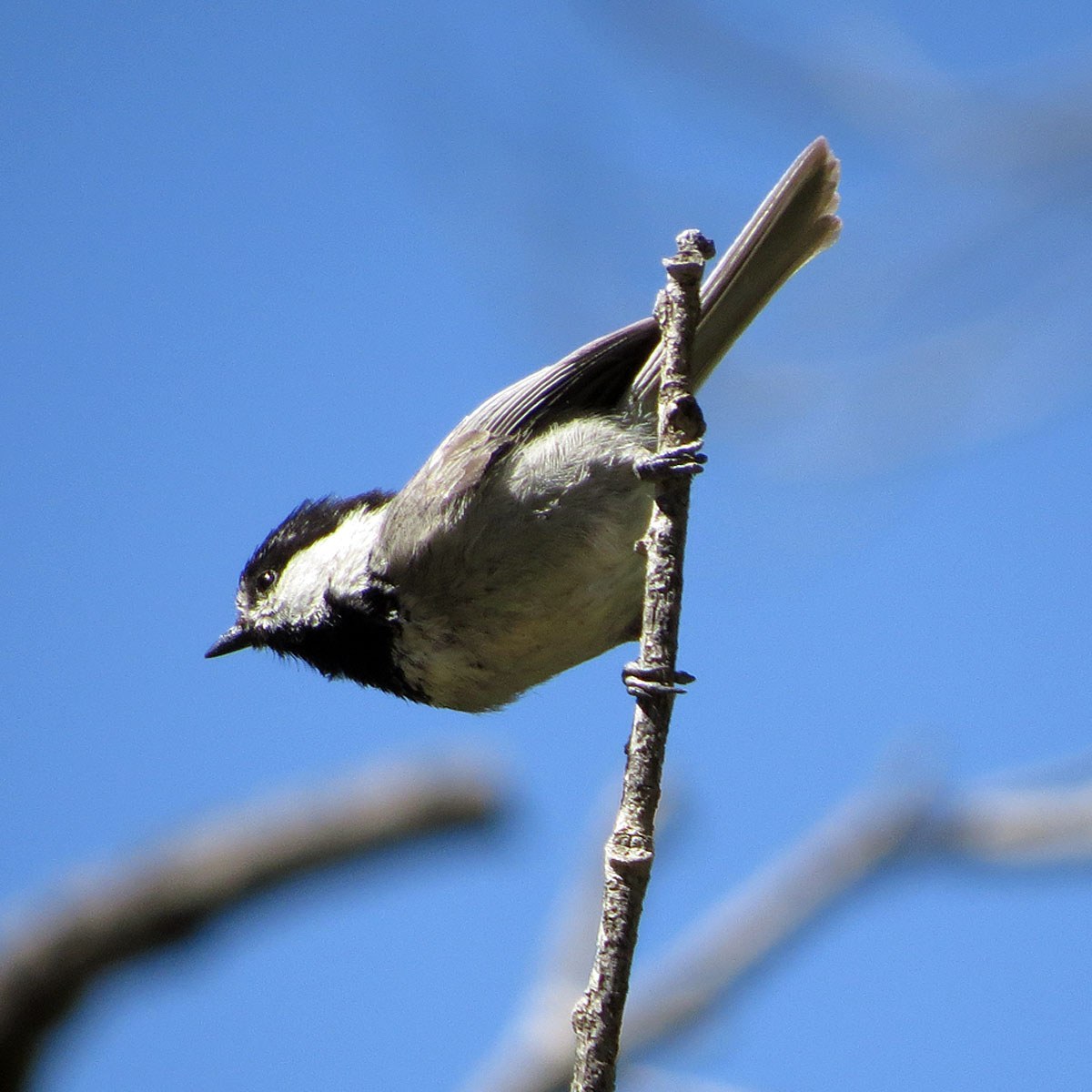
What Mexican Chickadee Feathers Look Like
Mexican Chickadee feathers follow the familiar chickadee black-cap-and-bib pattern but with a notably plain, cool-toned body. Crown and nape feathers are solid black, and the throat/bib feathers are also black, forming a bib that reaches slightly lower on the chest than in some other chickadee species. Cheek feathers are clean white, providing the classic chickadee facial contrast. Back and wing covert feathers are a plain gray, without the olive or brownish wash seen in some relatives, and importantly, flank feathers are gray, not buffy or rufous — a key difference from most other North American chickadees, which typically show at least a hint of warm buff on the flanks. Underparts (breast/belly) feathers below the bib are grayish-white, again lacking warm tones. Tail feathers are gray, of moderate length for a small songbird (around 6 cm), with pale gray edging but no bold white outer tail panels.
Step-by-Step: Is This Feather From a Mexican Chickadee?
- Check flank feather color first. Plain gray flanks (no buff or rufous wash) is the single most useful feather-level clue for this species among North American chickadees.
- Confirm the black-cap-and-bib pattern. Solid black crown and throat feathers paired with white cheek feathers fits the chickadee family generally, then flank color narrows it.
- Assess bib size. A slightly larger, longer black throat patch than in Black-capped or Mountain Chickadee can be a supporting clue when comparing feathers directly.
- Look at overall tone. Cool gray throughout, without olive or brown warmth on the back.
- Factor elevation/range. Feathers found in high-elevation pine-oak forest of the "Sky Island" mountains of southeastern Arizona/New Mexico or further south into Mexico support this identification.
Similar Species & How to Tell Them Apart
- Mountain Chickadee: Shows a white eyebrow stripe feather tract above the eye that Mexican Chickadee lacks, and its flanks, while grayish, often show slightly more contrast with a cleaner white face overall.
- Black-capped Chickadee: Has warm buffy flanks and a shorter black bib, quite different from Mexican Chickadee's plain gray flanks and longer bib; ranges barely overlap.
- Bridled Titmouse (same region): Shows a patterned black-and-white face with a crest, unlike the chickadee's simple cap-and-bib pattern, so feather shape and pattern shouldn't be confused once compared side by side.
Where & When You'll Find Them
Mexican Chickadees are birds of high-elevation pine and pine-oak forest, found in the "Sky Island" mountain ranges of southeastern Arizona and southwestern New Mexico and south through the highlands of Mexico. Because the species is a non-migratory resident tied closely to conifer forest, feathers are most likely found in mountain forest habitat above roughly 2,100 m elevation, rather than lowland desert or grassland. Molt follows breeding, generally completing in late summer, so the best window for finding fresh, crisp feathers is typically August through September, though resident birds can yield worn feathers from foraging and roosting activity throughout the year.
Frequently asked questions
What's the key feather clue that separates this from other chickadees?
Plain gray flanks with no buffy or rufous wash — most other North American chickadees show at least some warm tone on the flanks.
How does the bib compare to Black-capped Chickadee?
Mexican Chickadee's black throat bib tends to run slightly larger/longer, though flank color is the more reliable distinguishing feature.
Does Mexican Chickadee have an eyebrow stripe like Mountain Chickadee?
No, its face is plain white below the black cap, without the pale eyebrow stripe found on Mountain Chickadee.
Where in the US would I find this species' feathers?
High-elevation pine-oak forest in the Sky Island mountains of southeastern Arizona and southwestern New Mexico, extending south into Mexico's highlands.
When is molt most likely to produce fresh feathers?
Late summer, generally peaking in August and September after the breeding season.