
How to Identify Nankeen Kestrel Feathers
How to identify the rufous back feathers and finely streaked underparts of the Nankeen Kestrel, Australia's common hovering falcon.
Read the full Nankeen Kestrel encyclopedia entry →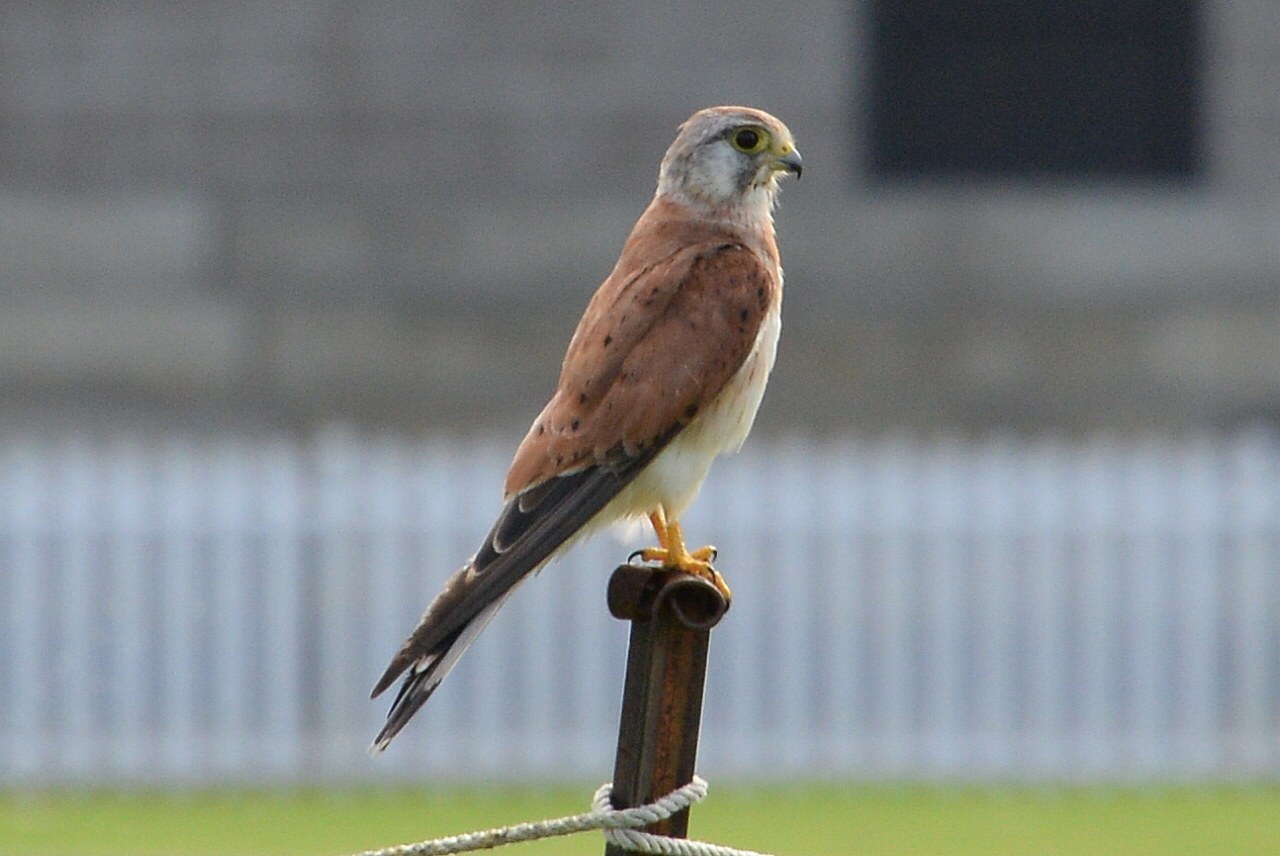
What Nankeen Kestrel's Feathers Look Like
The Nankeen Kestrel is Australia's most familiar small falcon, well known for hovering over open ground, and its feathers show a warm, rufous-toned pattern typical of kestrels worldwide. Back and wing covert feathers are a rich rufous to cinnamon-brown, marked with small dark spots or streaks, giving a lightly patterned rather than solid appearance. Underpart feathers — breast and belly — are pale cream to buff, with fine dark streaking running down each feather, more delicate than bold barring. Adult males show a contrasting gray head and tail, so a plain gray feather (rather than rufous) with a black subterminal band and white tip, if from the tail, indicates a male; females instead have a rufous tail barred with dark bands along its length, lacking the male's clean gray tone. Flight feathers are dark brownish-gray with paler barring on the inner webs. Feather size is small for a falcon, matching a bird about 12-13 inches long, with primaries around 5-6 inches.
Step-by-Step: Is This Feather From a Nankeen Kestrel?
- Check the back and wing covert feathers for rufous-cinnamon color with dark spotting — this warm tone is characteristic of kestrels generally and this species specifically in the Australian region.
- Examine underpart feathers for fine dark streaking on a cream-buff background, rather than bold barring or spotting.
- Look at any tail feather. Plain gray with a black band and white tip suggests a male; rufous with dark barring along its length suggests a female.
- Measure the feather. Primaries around 5-6 inches fit this small falcon.
- Consider the habitat. A feather found in open farmland, grassland, or roadside habitat in Australia or New Guinea supports this species, known for hovering over such open ground while hunting.
Similar Species & How to Tell Them Apart
The Brown Falcon, sharing similar open-country range, is considerably larger and darker overall, with more heavily marked, blotchy brown plumage rather than the finer streaking and cleaner rufous tone of Nankeen Kestrel. The Australian Hobby is more uniformly dark slate-gray above with rufous only on the thighs and underparts, lacking the extensively rufous back that Nankeen Kestrel shows. Female and juvenile Nankeen Kestrels can resemble female Brown Falcons in overall rufous tone, but the kestrel's smaller feather size and finer, more delicate streaking (versus the falcon's coarser markings) help separate them. If a feather is small, warmly rufous, and finely streaked rather than boldly blotched, Nankeen Kestrel is the best fit.
Where & When You'll Find Them
Nankeen Kestrels are widespread across Australia and parts of New Guinea, favoring open country of nearly every type — farmland, grassland, roadside verges, and semi-arid scrub — where their habit of hovering in place while scanning for prey makes them a familiar sight. Populations show some nomadic movement in response to food availability and drought conditions rather than a fixed migratory pattern, so feathers can be found across most of the year within suitable open habitat. Molt occurs over an extended period rather than a single tight window, consistent with the flexible, opportunistic breeding schedule this adaptable falcon shows across Australia's variable climate.
Frequently asked questions
What is the best clue for identifying a Nankeen Kestrel feather?
A back or wing covert feather in rich rufous-cinnamon with small dark spots, paired with finely streaked cream-buff underpart feathers, is the strongest combination for this species.
How can I tell if a tail feather is from a male or female?
A plain gray tail feather with a black band and white tip suggests a male, while a rufous tail feather barred with dark bands along its length suggests a female.
How do I tell Nankeen Kestrel from Brown Falcon?
Brown Falcon is considerably larger with coarser, blotchier brown markings, while Nankeen Kestrel is smaller with finer, more delicate streaking and a cleaner rufous tone.
What habitat should I search for these feathers?
Open farmland, grassland, and roadside habitat across Australia and parts of New Guinea, where this species is commonly seen hovering while hunting.
Is there a specific season for finding Nankeen Kestrel feathers?
Not sharply defined — molt occurs over an extended period, and the species' opportunistic, nomadic breeding pattern means feathers can be found across much of the year.