
How to Identify Noisy Miner Feathers
Noisy Miner feathers are plain pale gray with a crisp black cap and white-tipped wing and tail feathers, distinguishing them from other Australian honeyeaters.
Read the full Noisy Miner encyclopedia entry →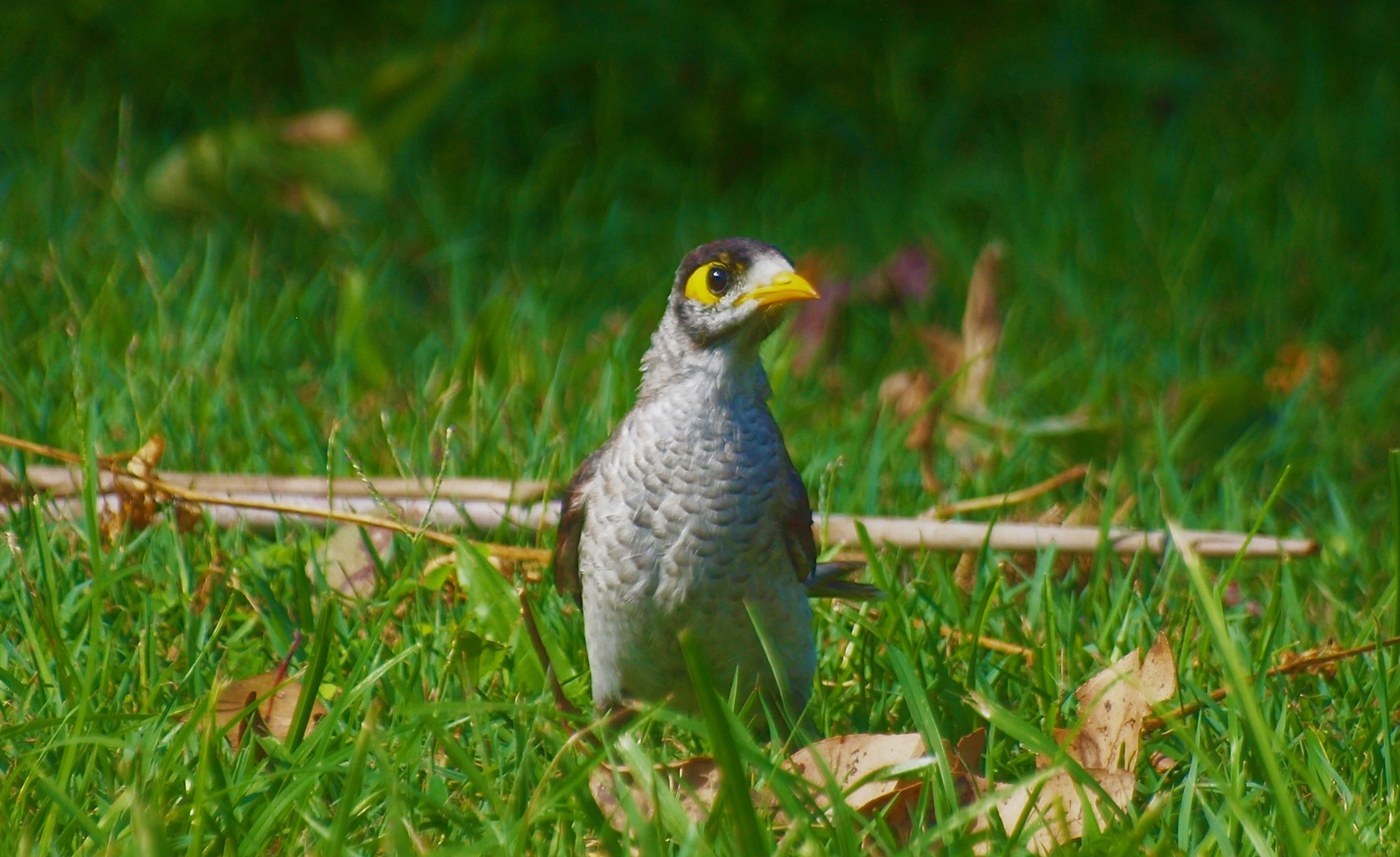
What Noisy Miner's Feathers Look Like
The Noisy Miner is a bold, gregarious Australian honeyeater with a fairly plain but distinctive gray-and-black feather palette. Body feathers on the back, breast, and belly are a soft pale gray, faintly scalloped with darker gray fringes on the upper breast that create a subtle scaled pattern up close. The most distinctive feather is from the crown and nape: a solid black cap feather, sharply contrasting with the pale gray of the rest of the head and body. Flight feathers are gray-brown to blackish with a notable pale to white patch or edge near the tip of the secondaries, visible as a whitish flash on the folded wing and as a distinct white-tipped feather if you find a molted secondary. Tail feathers are gray-brown with white tips on the outer feathers, 8-10 cm long. Overall feather size is medium for a honeyeater, with flight feathers around 8-11 cm. Shafts are grayish throughout.
Step-by-Step: Is This Feather From a Noisy Miner?
- Check for a solid black cap feather against otherwise pale gray body plumage.
- Look for white tips on secondary or outer tail feathers — a clean white patch on an otherwise gray-brown feather is a good sign.
- Measure size. Flight feathers of roughly 8-11 cm fit a medium-sized honeyeater.
- Note the scalloped gray breast pattern, subtle but present on fresh body feathers.
- Rule out yellow or streaked patterning — Noisy Miners lack any yellow wing panel (unlike the New Holland Honeyeater) and lack bold black-white streaking on the body.
- Consider habitat: open eucalypt woodland, parks, and gardens, often in noisy colonial groups.
Similar Species & How to Tell Them Apart
Yellow-throated Miner, a close relative found in drier inland Australia, has a paler gray body and lacks the solid black cap, instead showing a duller gray-brown crown; range and cap color both help separate the two. New Holland Honeyeater and other streaked honeyeaters have bold black-and-white streaked body feathers and yellow wing panels, quite different from the Noisy Miner's plain scalloped gray. Grey Butcherbird, superficially similar in gray tone, is much larger with heavier, more robust flight feathers and a black facial mask feather pattern rather than a full black cap. The Noisy Miner's plain pale gray body combined with a crisp black cap and white wing/tail tips is a fairly reliable combination among Australia's common woodland birds.
Where & When You'll Find Them
Noisy Miners are abundant in open eucalypt forest, woodland edges, parks, and suburban gardens across eastern and southeastern Australia, living in large, aggressive colonial groups that dominate their territory. Molt typically follows breeding, concentrated in late summer to autumn (January-April in the Southern Hemisphere), and because colonies are noisy and active around communal perch trees, feathers are often found clustered beneath favored eucalypts used for roosting and mobbing behavior. Given their aggressive territorial habits, feathers can also turn up from skirmishes with other birds even outside the main molt period.
Frequently asked questions
What is the most distinctive Noisy Miner feather?
A solid black cap/crown feather set against otherwise plain pale gray body plumage.
Do Noisy Miners have any yellow feathers?
No, the yellow on this bird is limited to bare skin and bill/leg color, not feathers; a yellow feather points to a different honeyeater instead.
How does this differ from a Yellow-throated Miner feather?
Yellow-throated Miners lack the solid black cap and are paler gray overall, with duller gray-brown crown feathers.
How big are Noisy Miner feathers?
Flight feathers run roughly 8-11 cm, medium for a honeyeater.
When is molt most likely?
Late summer into autumn, following the breeding season.