
How to Identify Northern Bald Ibis Feathers
Northern Bald Ibis feathers are glossy black with bronze-green-purple iridescence, plus distinctive long, shaggy nape plumes on this rare, bare-headed ibis.
Read the full Northern Bald Ibis encyclopedia entry →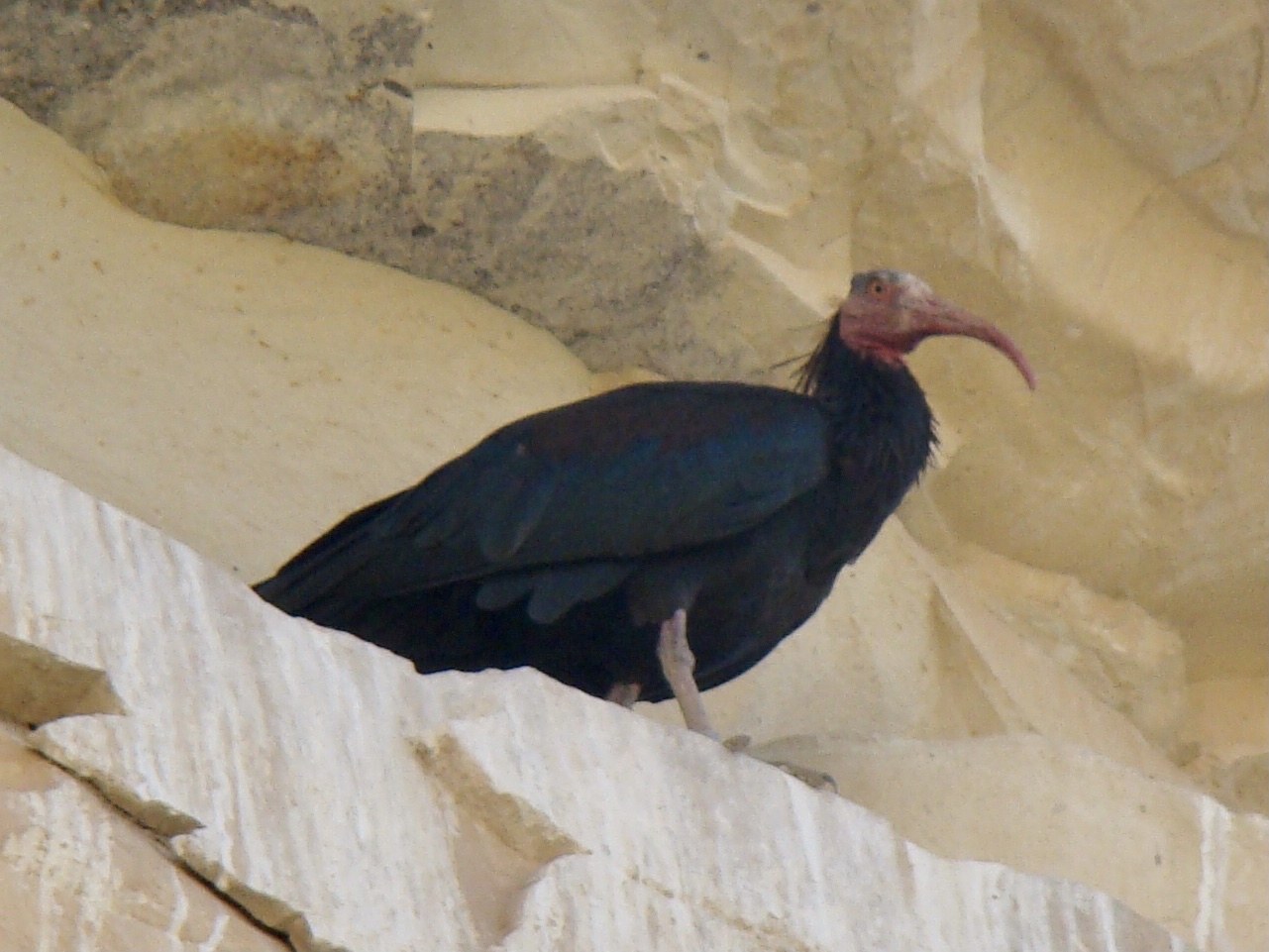
What Northern Bald Ibis's Feathers Look Like
The Northern Bald Ibis is a striking, glossy dark bird, and its feathers show a rich iridescence that's easy to spot even on a single detached specimen. Body feathers overall are blackish, but when caught in good light they show shimmering bronze, green, and purple-violet highlights, this multi-toned metallic sheen on an otherwise black feather is the primary diagnostic clue. The nape and back of the head bear a distinctive ruff of long, loose, shaggy plumes, several centimeters longer than typical body feathers with slightly frayed, wispy tips, a long, loose, black-glossed plume from this area is a strong species-specific sign. Flight feathers are large, broad, and blackish with strong greenish-bronze gloss, 20-30 cm long given the bird's substantial size. Tail feathers are similarly glossy black, broad, and rounded, 15-20 cm. Overall feather size is large, and shafts are dark, blending into the blackish vane. Note that the head and upper neck are bare, wrinkled red-pink skin rather than feathered, so no feathers should be expected from that specific region.
Step-by-Step: Is This Feather From a Northern Bald Ibis?
- Look for iridescence. Bronze-green-purple sheen on a black feather, viewed at different angles, is the strongest clue.
- Check for shaggy nape plumes. Long, loose-barbed, slightly frayed black feathers longer than typical body feathers suggest the nape ruff.
- Measure size. Large flight feathers (20-30 cm) and tail feathers (15-20 cm) fit this sizeable ibis.
- Confirm no feathers from the head/upper neck, since that area is bare skin, not plumage.
- Rule out plain black feathers with no sheen — a dull, matte black feather is less likely to be this iridescent species.
- Consider location and context, since this is a rare, range-restricted, and reintroduced species in parts of its former range.
Similar Species & How to Tell Them Apart
Glossy Ibis, a much more widespread relative, shows similar bronze-green iridescence but is notably smaller overall with narrower, more slender flight feathers, and has a fully feathered head/neck (unlike the Northern Bald Ibis's bare red skin). Common Raven and other large glossy black corvids can show iridescent sheen too, but their feathers are more uniformly blue-black or purple-black without the warm bronze tones typical of ibis plumage, and lack the shaggy, loose-plumed nape ruff. Cape Vulture and other large dark raptors/scavengers are much bulkier with heavily worn, less glossy flight feathers and no fine iridescent sheen. The combination of large size, strong bronze-green-purple gloss, and distinctive shaggy nape plumes is fairly distinctive once these features are checked together.
Where & When You'll Find Them
Northern Bald Ibis is a species with a small wild breeding population centered on the Atlantic coast of Morocco, plus reintroduced colonies in parts of Europe (notably Austria, Germany, and Spain) that migrate to wintering areas in Italy. Because populations are so limited and closely monitored, feathers are only likely to be found near known breeding cliffs, release-site aviaries, or wintering roost areas. Molt occurs post-breeding, generally through summer, so feathers found near active colonies in the summer months are most likely fresh.
Frequently asked questions
What makes a Northern Bald Ibis feather distinctive?
Strong bronze-green-purple iridescence on an otherwise black feather, plus long shaggy nape plumes if the specimen is from the head/neck ruff area.
Are there any feathers on this bird's head?
No, the head and upper neck are bare, wrinkled red-pink skin, not feathered.
How does this differ from a Glossy Ibis feather?
Glossy Ibis is smaller with narrower feathers and has a fully feathered head/neck, unlike the bare-headed Northern Bald Ibis.
How large are the feathers?
Large; flight feathers run 20-30 cm given the bird's sizeable build.
Where would I realistically find one of these feathers?
Near known breeding colonies on Moroccan coastal cliffs, or near reintroduction/release sites and wintering roosts in Europe.