
How to Identify Philadelphia Vireo Feathers
A guide to distinguishing the plain olive-green, wingbar-less feathers of the Philadelphia Vireo from similar small songbirds.
Read the full Philadelphia Vireo encyclopedia entry →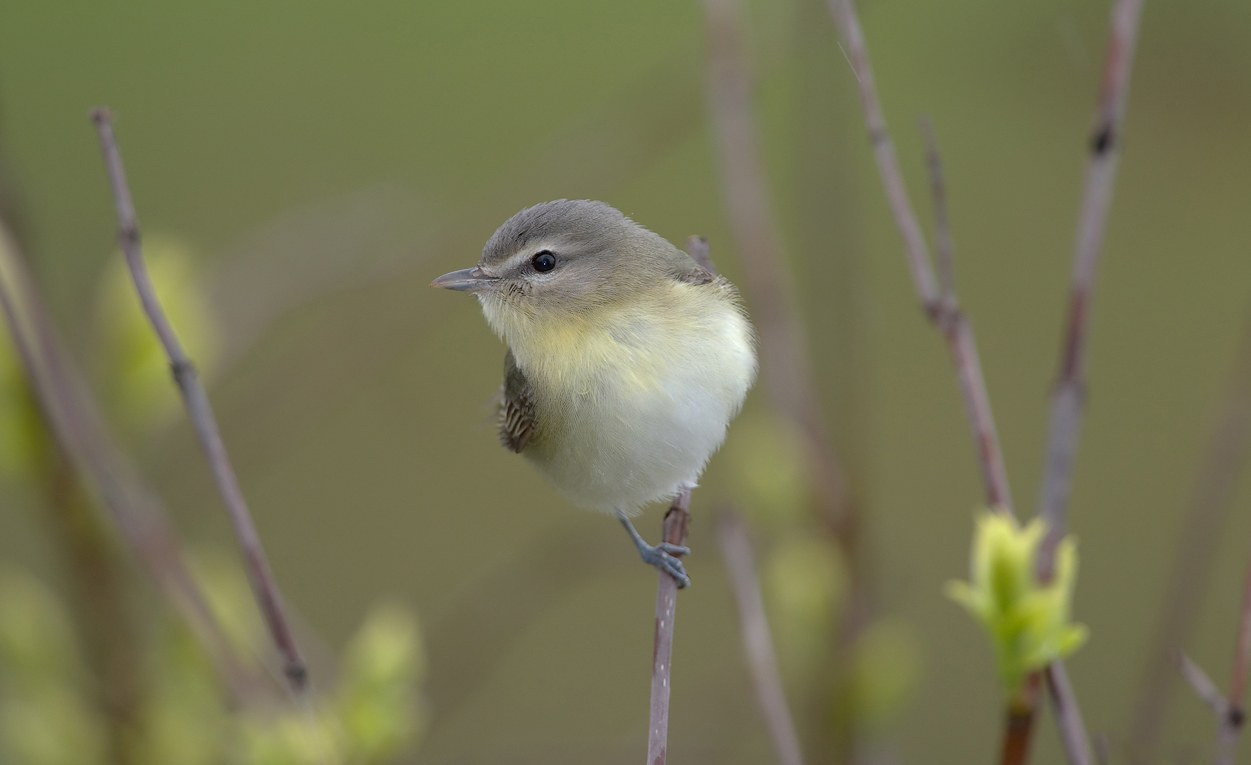
What Philadelphia Vireo's Feathers Look Like
The Philadelphia Vireo is a small, understated migratory songbird, and its feathers are correspondingly subtle and plain:
- Back and crown feathers are a soft olive-green, unmarked and unstreaked
- Underpart feathers are pale yellow, often strongest on the throat and breast and fading paler toward the belly
- Wing feathers are plain olive-brown with no wing bars at all — this absence is a key diagnostic feature, since many similar small songbirds show pale wing bars
- A dark line through the eye is present in life but not something you'll see on a loose feather
- Tail feathers are plain olive-brown, unbanded and unmarked Feathers are tiny — primaries only about 4-5 cm — consistent with the vireo's small, compact body size.
Step-by-Step: Is This Feather From a Philadelphia Vireo?
- Check for wing bars. A completely plain olive wing feather with no pale bars is a strong point in favor of this species over many wing-barred vireos and warblers.
- Assess the yellow wash. Pale yellow concentrated on the throat/breast, fading toward the belly, fits this species better than a uniformly pale or uniformly bright yellow bird.
- Measure the feather. Anything in the 4-5 cm primary range fits a small vireo rather than a larger vireo species.
- Feel the feather texture. Vireo feathers tend to be slightly stiffer than the very soft, fine feathers of warblers, reflecting the vireo's slightly heavier bill and build.
- Consider timing and location — during migration in eastern/central North American woodland edges and clearings, especially in fall, increases the likelihood.
Similar Species & How to Tell Them Apart
- Warbling Vireo: paler and grayer overall with less yellow, and generally a whiter throat rather than the yellow wash of Philadelphia Vireo.
- Red-eyed Vireo: larger overall with a grayer crown contrasting against the olive back, and whiter (not yellow) underparts.
- Tennessee Warbler: superficially similar olive-and-yellow tones but has a noticeably thinner, more pointed bill and finer, softer feather texture typical of warblers rather than vireos; Tennessee Warbler also tends to show more gray on the head.
- Yellow-throated Vireo: much brighter, more saturated yellow on the throat/breast and shows bold white wing bars, immediately ruling out Philadelphia.
Where & When You'll Find Them
Philadelphia Vireos breed in second-growth deciduous and mixed forest across southern Canada and the extreme northern United States, then migrate through the central and eastern U.S. to winter in Central America. They favor forest edges, clearings, and shrubby regrowth rather than deep unbroken forest. Feathers are most likely to be found during spring migration (May) and especially fall migration (September), when birds pass through woodland edge habitat well south of the breeding range; on the breeding grounds themselves, look in young aspen or birch regrowth stands during the summer molt period.
Frequently asked questions
What is the key feather feature that rules out many look-alikes?
The complete absence of wing bars on an otherwise olive wing feather.
How does the yellow coloring compare to a warbler's?
It's a paler, softer yellow wash concentrated on the throat and breast, fading toward the belly, rather than a uniformly bright yellow.
How can I tell this from a Tennessee Warbler feather?
Tennessee Warbler feathers are finer and softer with a thinner-bill-associated texture, and the bird shows more gray on the head.
What size feather should I expect?
Very small — primaries only about 4-5 cm long.
When are these feathers most likely to be found?
During spring (May) and especially fall (September) migration through woodland edges and clearings.