
How to Identify Pied Currawong Feathers
A guide to the sooty black-gray body feathers, white wing patch, and white-tipped tail of the Australian Pied Currawong.
Read the full Pied Currawong encyclopedia entry →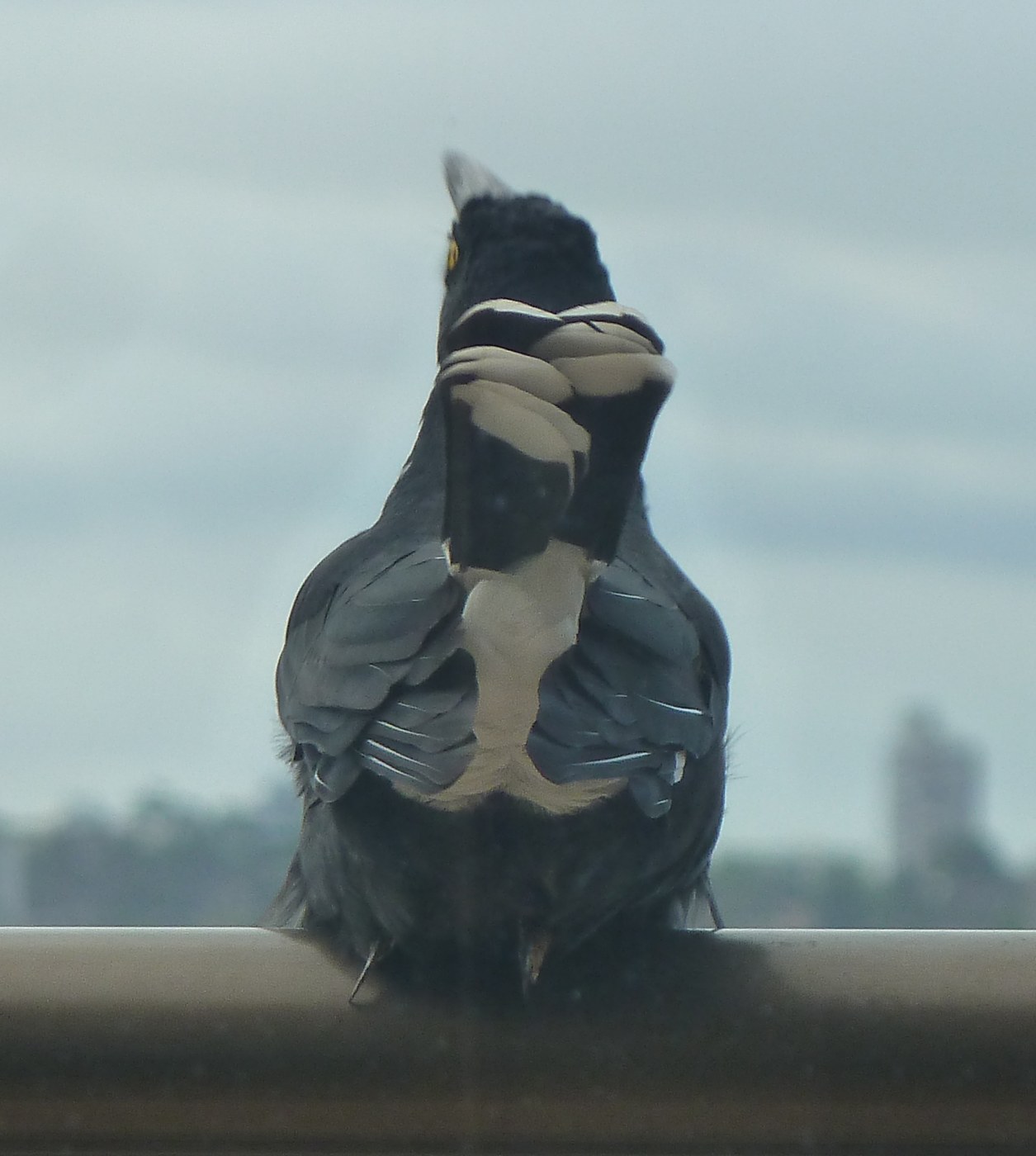
What Pied Currawong's Feathers Look Like
The Pied Currawong is a large, robust Australian songbird, and its feathers show a bold combination of dark tones and crisp white markings:
- Body and head feathers are a sooty black to dark gray, less glossy than a true crow's plumage
- Wing feathers show a white patch at the base of the primaries, visible as a flashing white wing panel in flight — a shed primary showing this white base is a strong diagnostic clue
- Tail feathers are dark with a broad, clean white tip on each feather, creating a bright white terminal tail band
- Undertail covert feathers are white, contrasting against the dark belly and vent Feathers are large and robust for a songbird, reflecting the currawong's size (around 45-50 cm), noticeably bigger and heavier than typical Australian passerines.
Step-by-Step: Is This Feather From a Pied Currawong?
- Check tail feathers for a broad white tip on an otherwise dark feather — this is one of the most reliable single clues.
- Look for a white patch at the base of a primary feather, which shows as a wing flash in flight.
- Check undertail covert feathers for white coloring contrasting against dark body feathers.
- Assess overall size and bulk — feathers noticeably larger and heavier than typical songbirds (but smaller than true crow feathers) fit this species.
- Consider location — eastern Australian forests, farmland, and increasingly suburban parks and gardens support this species.
Similar Species & How to Tell Them Apart
- Grey Currawong: overall paler gray-brown rather than sooty black, with less extensive white wing patching and a less crisp white tail tip.
- Black Currawong: found in Tasmania, entirely black or with only a small white wing patch and no white tail tip, lacking the Pied Currawong's combination of white wing patch plus white tail tip plus white undertail coverts.
- Australian Raven/Torresian Crow: entirely glossy black with no white feathering at all, immediately ruled out by any white feather material.
- Australian Magpie: also black-and-white, but with a much more extensively white back/nape and different overall pattern distribution (white saddle/mantle rather than white confined to wing patch, tail tip, and undertail).
Where & When You'll Find Them
Pied Currawongs inhabit forests, woodlands, farmland, and increasingly urban parks and gardens across eastern Australia, from Queensland south through New South Wales and Victoria. Some populations undertake seasonal altitudinal movements, descending from higher elevations in winter to lowland areas including suburbs and coastal towns, which is when large flocks and their molted feathers are most conspicuous in urban settings. Molt in resident lowland populations tends to follow the post-breeding period in late summer/autumn, so feathers are most likely to be found beneath roost trees in parks, gardens, and forest edges during this time.
Frequently asked questions
What is the best diagnostic feather feature for this species?
A dark tail feather with a broad, clean white tip, combined with a white patch at the base of the primaries.
How does this differ from a Grey Currawong feather?
Grey Currawong is paler gray-brown overall with less extensive white wing patching and a less crisp white tail tip.
Could this be confused with an Australian Magpie feather?
Unlikely — Magpies show much more extensive white across the back/nape in a saddle-like pattern, different from the currawong's wing-patch-and-tail-tip pattern.
Where in Australia is this species found?
Eastern Australia, from Queensland south through New South Wales and Victoria, including forests, farmland, and urban parks.
When are feathers most likely to be found in suburban areas?
In winter, when some populations move down from higher elevations into lowland towns and gardens.
Pied Currawong identified by the community
Recent Pied Currawong feathers identified with Feather Identifier.
