
How to Identify Pied Wagtail Feathers
How to identify the black-backed, long white-edged tail feathers of the British Pied Wagtail and separate it from the gray-backed White Wagtail.
Read the full Pied Wagtail encyclopedia entry →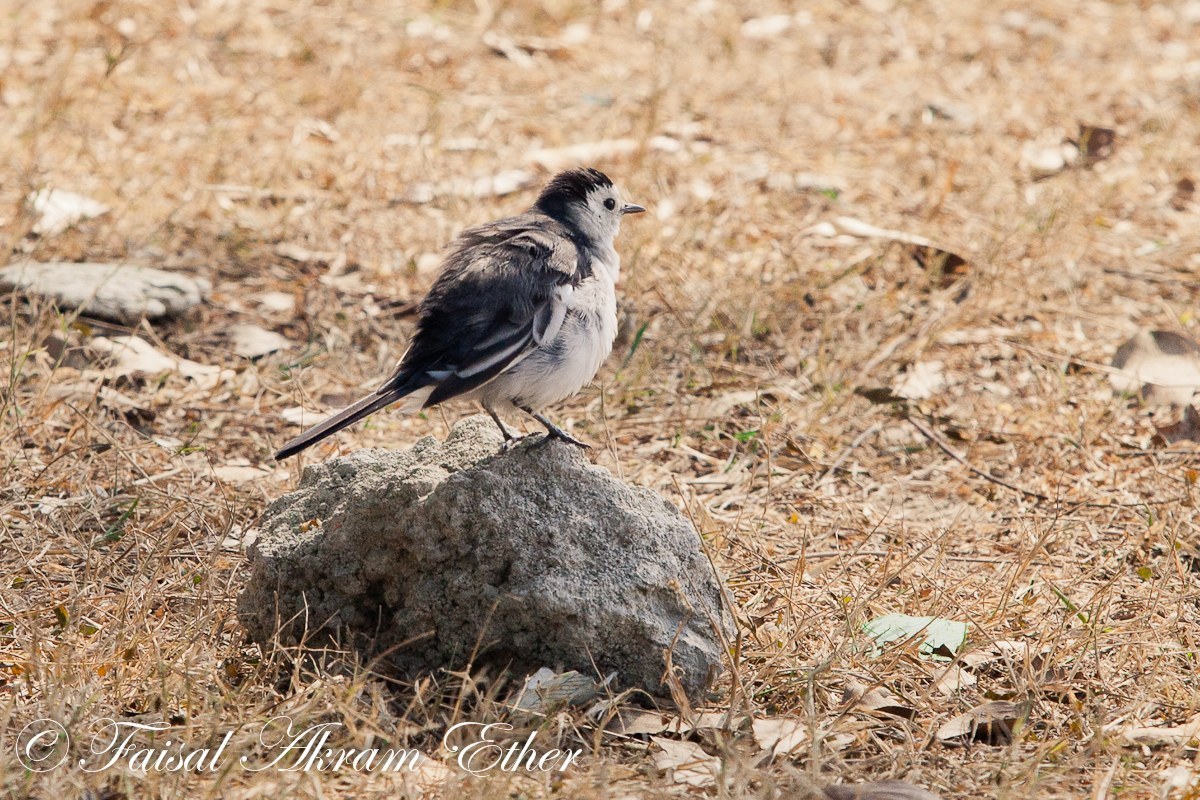
What Pied Wagtail's Feathers Look Like
The Pied Wagtail (the black-backed British subspecies of the White Wagtail) is a slender, constantly tail-wagging songbird with a crisp black-and-white/gray pattern:
- Back feathers are solid black in adult males (a key feature separating this subspecies from the paler gray-backed nominate White Wagtail found across continental Europe and Asia)
- Throat and breast feathers form a black bib in breeding adults, white in winter/juvenile birds
- Face feathers are white, contrasting with a black cap
- Tail feathers are notably long relative to body size; the central feathers are black while the outermost pair on each side is mostly or entirely white — a white or largely white long, narrow tail feather is one of the best individual clues for this species group
- Wing feathers are black with white edging forming visible wing bars Feathers are small to medium in size, with the disproportionately long tail feathers being a distinctive structural feature.
Step-by-Step: Is This Feather From a Pied Wagtail?
- Check tail feathers specifically. A long, narrow feather that is mostly or entirely white (rather than black) indicates an outer tail feather from this wagtail group.
- Assess back feather color — solid black points to the British "Pied" subspecies, while pale gray would instead indicate the continental "White" Wagtail nominate form.
- Look for black bib feathers on the throat/breast (breeding adult) or check for white throat feathers (winter/juvenile).
- Check wing feathers for white edging forming bar-like patterns against black.
- Consider location and season — the black-backed Pied form is centered on Britain and Ireland, while the gray-backed White Wagtail form occupies continental Europe/Asia; hybrid/intermediate birds occur where ranges meet.
Similar Species & How to Tell Them Apart
- White Wagtail (nominate, continental Europe/Asia): pale gray rather than black back feathers — this is the main difference between the two forms, essentially a subspecies-level distinction.
- Grey Wagtail: shows yellow underparts (especially undertail) rather than pure black-and-white, immediately ruled out by any yellow feather coloring.
- Citrine Wagtail: also shows yellow on the head/underparts, distinguishing it from the strictly black-and-white/gray Pied/White Wagtail.
- Japanese/other Asian pied wagtails: similar black-and-white patterns but different geographic range; local range should be used as a tiebreaker where plumage overlaps closely.
Where & When You'll Find Them
Pied Wagtails are common across Britain and Ireland, favoring open ground near water, farmland, urban parks, parking lots, and rooftops, often walking briskly while pumping the tail up and down. Many British birds are resident or short-distance migrants, while some populations move to milder wintering areas including parts of western Europe and North Africa. Feathers are most likely to be found near communal winter roost sites (sometimes in urban trees or buildings where large numbers gather to roost together) and around open feeding areas near water, with molt concentrated in late summer after breeding.
Frequently asked questions
What is the best feather clue to identify a Pied Wagtail specifically?
A solid black back feather combined with a long, mostly white outer tail feather - the black back separates it from the gray-backed White Wagtail form.
How does this differ from the White Wagtail found in continental Europe?
White Wagtail has a pale gray back rather than the solid black back of the British Pied Wagtail; they are considered subspecies of the same species.
How can I rule out a Grey Wagtail?
Grey Wagtail shows yellow underparts, especially on the undertail, which Pied Wagtail entirely lacks.
Where would I find Pied Wagtail feathers in winter?
Near communal urban roost sites where large numbers gather together, as well as open feeding areas near water.
When is molt most likely to occur?
In late summer, after the breeding season.