
How to Identify Reddish Egret Feathers
A guide to identifying Reddish Egret feathers through the dark morph's shaggy rufous neck plumes and slate-blue body versus the white morph's all-white feathers, both with a distinctive shaggy head.
Read the full Reddish Egret encyclopedia entry →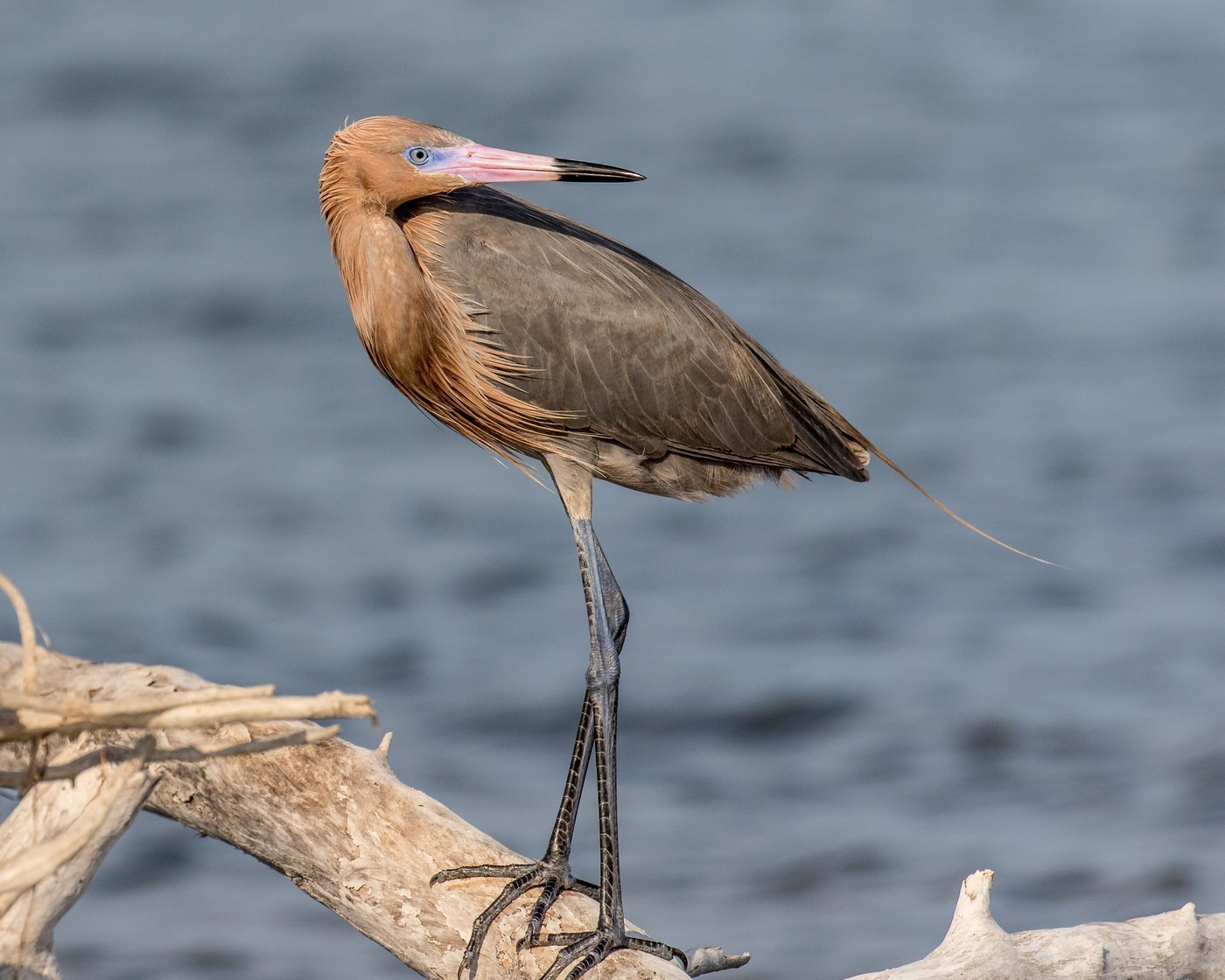
What Reddish Egret's Feathers Look Like
The Reddish Egret is a distinctive North American wading bird that occurs in two color morphs, and its feathers reflect a genuinely "shaggy," almost disheveled look compared to the sleek plumage of most herons and egrets. In the dark morph, head and neck feathers are shaggy and rufous/cinnamon-colored, with a loose, wispy texture rather than lying smooth — this shaggy "mane" appearance is one of the most diagnostic features of the species and is present even outside the breeding season. Body feathers in the dark morph are slate-blue to gray, and during the breeding season, elongated wispy plumes develop on the head, neck, and back, adding to the disheveled look.
The white morph shows the same shaggy head/neck feather structure but in pure white rather than rufous — so the shaggy shape, not the color, is the key identifying feature that carries across both morphs. Flight feathers are gray in the dark morph and white in the white morph, matching the body color in each case. It's worth noting that the bicolored (pink-and-black) bill and blue-gray legs, while excellent identification features on a living bird, are not feather-based traits.
Step-by-Step: Is This Feather From a Reddish Egret?
- Check for a shaggy texture. Loose, wispy-textured feathers from the head/neck area, rather than smooth and sleek, are a strong first clue for this species in either morph.
- Look at color by morph. Rufous/cinnamon shaggy neck feathers suggest dark morph; pure white shaggy neck feathers suggest white morph — both are valid for this species.
- Examine body feather color for dark morph. Slate-blue to gray body feathers, distinct from the rufous neck, support dark morph identification.
- Check for elongated plume feathers. Long, wispy plume-like feathers from the head, neck, or back suggest breeding-condition adults.
- Consider habitat. A shaggy-textured feather found in coastal shallow saltwater habitat in the southern US, Mexico, or the Caribbean fits this species' specialized range.
Similar Species & How to Tell Them Apart
For the dark morph, the main confusion risk is the Little Blue Heron, which is smaller, shows an overall smooth slate-blue plumage without the rufous shaggy neck, and has an all-dark bill rather than the Reddish Egret's bicolored pink-and-black bill (a living-bird clue, though smoother feather texture overall is the feather-based tell). The Tricolored Heron has a slimmer build with a contrasting white belly and lacks the shaggy neck feathering entirely. For the white morph, the key comparisons are the Snowy Egret, which lacks any shaggy head plumes and has smooth, sleek feathering along with black legs and yellow feet (again a living-bird clue), and the Great Egret, which is much larger with correspondingly larger, smooth (non-shaggy) feathers. In both morphs, the shaggy, wispy feather texture of Reddish Egret is the most reliable feather-only distinguishing feature from these similar white or blue-gray herons and egrets.
Where & When You'll Find Them
Reddish Egrets inhabit shallow coastal saltwater flats, lagoons, and estuaries along the Gulf Coast, Florida, the Caribbean, and parts of Mexico and Central America, rarely straying far from saline or brackish water. As a largely resident species with limited seasonal movement, feathers can be found year-round in suitable coastal habitat. Breeding season (roughly spring into summer, timing varies by region) brings the development of elongated plume feathers and increased feather turnover near colonial nesting sites, often shared with other heron and egret species on coastal islands, making that season and location the most productive time to find distinctive plume feathers.
Frequently asked questions
What is the most reliable feather clue for Reddish Egret in either color morph?
A shaggy, loosely textured feather from the head or neck area is the key diagnostic feature, since both the rufous dark morph and the white morph share this distinctive shaggy structure.
How do I tell dark morph Reddish Egret from Little Blue Heron?
Look for shaggy, rufous-tinged neck feathers rather than the smooth, uniformly slate-blue feathers of Little Blue Heron, which lacks the shaggy texture entirely.
How do I tell white morph Reddish Egret from Snowy Egret?
Check for shaggy head/neck plume feathers, which Reddish Egret shows but Snowy Egret lacks, since Snowy Egret has smooth, sleek plumage throughout.
When do the elongated plume feathers develop?
During the breeding season, roughly spring into summer depending on region, when both morphs grow wispy elongated feathers on the head, neck, and back.
What habitat should I search for these feathers?
Shallow coastal saltwater flats, lagoons, and estuaries along the Gulf Coast, Florida, the Caribbean, and parts of Mexico and Central America.