
How to Identify Redwing Feathers
A guide to identifying Redwing feathers by the diagnostic orange-red flank and underwing patch, streaked (not spotted) breast, and pale eyebrow stripe.
Read the full Redwing encyclopedia entry →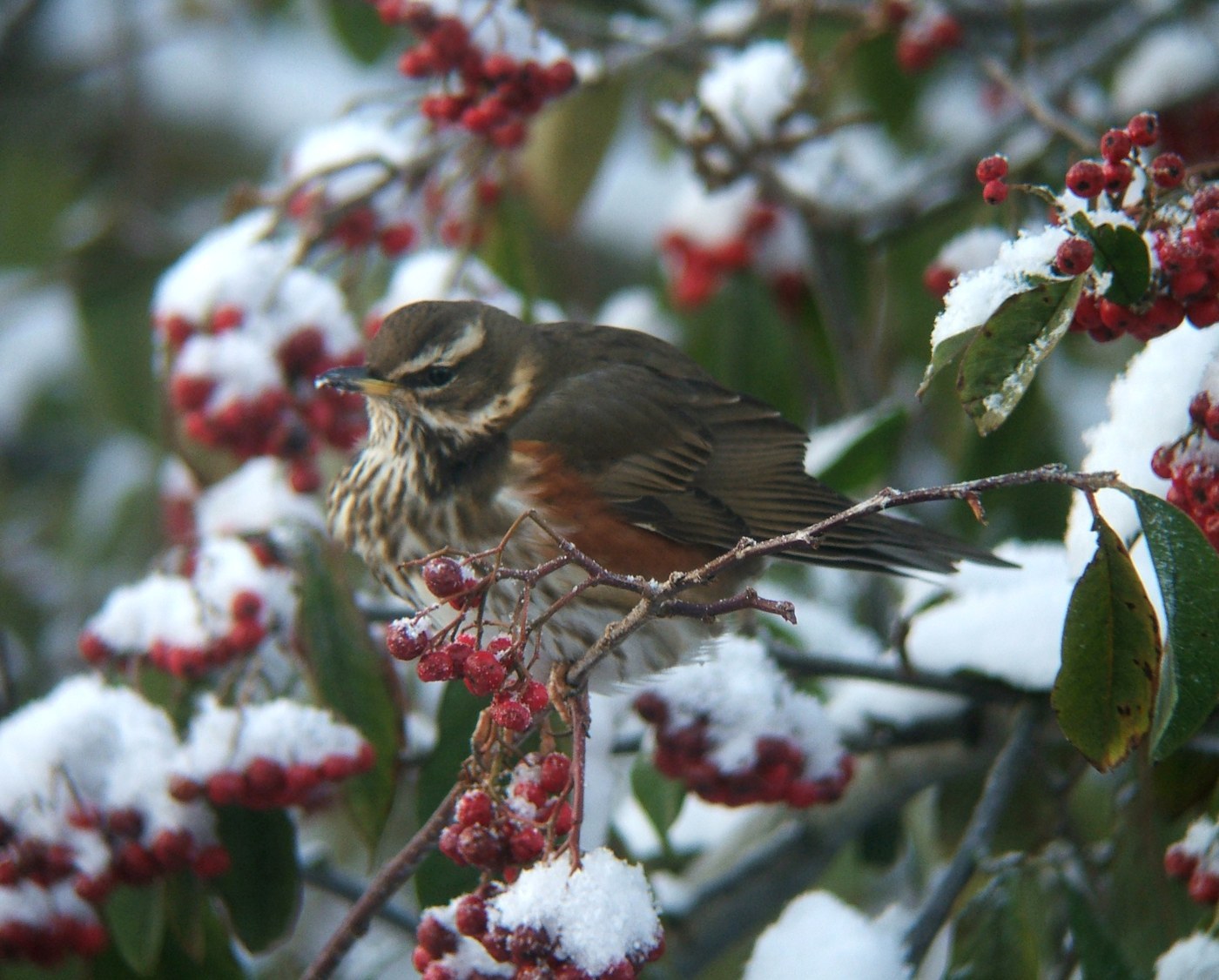
What Redwing's Feathers Look Like
The Redwing is a small thrush of Europe and Asia, and while its overall plumage is a fairly standard brown thrush pattern, one feather feature makes identification straightforward. Flank feathers and underwing covert feathers are bright orange-red to rufous — this is the diagnostic patch that gives the species its name, and it's often the single most useful feather to find, since it's a color combination not shared by most other similarly sized brown thrushes in the same range. Back and wing feathers are otherwise a warm brown, unremarkable on their own.
Breast feathers are cream to buff colored with dark brown streaking — importantly, this is a streaked pattern rather than the bold rounded spots seen in some related thrushes, which is a useful secondary clue. Above the eye, supercilium (eyebrow stripe) feathers are pale creamy-white, forming a distinct stripe that contrasts against the darker brown crown — visible even in a small facial feather sample. Tail feathers are plain brown, without strong pattern, rounding out a fairly modest feather set apart from the standout flank/underwing color and the facial stripe.
Step-by-Step: Is This Feather From a Redwing?
- Check for orange-red flank feathers. A rufous-orange feather from the flank or underwing area is the single strongest and fastest clue for this species.
- Examine the breast pattern. Buff or cream feathers with dark brown streaking (not bold rounded spots) support Redwing identification over similarly sized spotted thrushes.
- Look for a pale eyebrow stripe feather. A creamy-white supercilium feather, if identifiable from a facial feather, adds supporting evidence.
- Measure overall size. As a small thrush, feathers should be modest — smaller than a Mistle Thrush or Fieldfare.
- Consider color combination together. The pairing of brown upperparts, streaked (not spotted) breast, and rufous flanks is close to unique among common thrushes in Redwing's range.
Similar Species & How to Tell Them Apart
The Song Thrush is the most important species to rule out: it lacks any red or rufous flank coloring and instead shows bold, rounded dark spots on the breast rather than fine streaking, plus it has no pale eyebrow stripe — so the absence of an orange-red flank feather and the presence of spots rather than streaks both point away from Redwing. The Fieldfare is notably larger, with a distinctive gray head and rump contrasting against a chestnut-brown back, quite different from Redwing's more uniformly brown upperparts, and it lacks the rufous flank patch. The Mistle Thrush is larger still, paler overall, with bold spotting similar to Song Thrush and no rufous flank coloring, making size alone a reasonable first filter alongside the flank-color check.
Where & When You'll Find Them
Redwings breed across northern Europe and Asia in birch and mixed woodland, particularly in Scandinavia, Iceland, and Russia, then migrate south in large flocks to winter across central and southern Europe, often forming mixed flocks with Fieldfares in farmland, hedgerows, and berry-laden trees. Feathers are most likely to be found on the breeding grounds in summer near woodland nest sites, and on wintering grounds from late autumn through winter, when large flocks descend on berry bushes and open fields, leading to more feather turnover near favored feeding areas and roost sites during cold-weather flocking.
Frequently asked questions
What is the single fastest way to identify a Redwing feather?
Look for a bright orange-red feather from the flank or underwing area — this rufous patch is the species' most diagnostic feather feature.
How do I tell a Redwing feather from a Song Thrush feather?
Song Thrush lacks any rufous flank coloring and shows bold rounded spots on the breast rather than the fine streaking and rufous flanks of Redwing.
Does breast pattern help separate Redwing from Fieldfare?
Yes, but size and back color are more useful — Fieldfare is larger with a gray head and chestnut back, quite different from Redwing's more uniformly brown upperparts.
When are Redwing feathers most common in winter range?
Late autumn through winter, when large migratory flocks gather in farmland, hedgerows, and berry-laden trees across central and southern Europe.
Where do Redwings breed, and when would I find feathers there?
They breed in birch and mixed woodland across northern Europe and Asia, so feathers there are most likely in summer near nest sites.