
How to Identify Rose-crowned Fruit Dove Feathers
A guide to the vivid leaf-green body feathers, rosy-purple crown patch, and orange belly patch that identify a Rose-crowned Fruit Dove feather.
Read the full Rose-crowned Fruit Dove encyclopedia entry →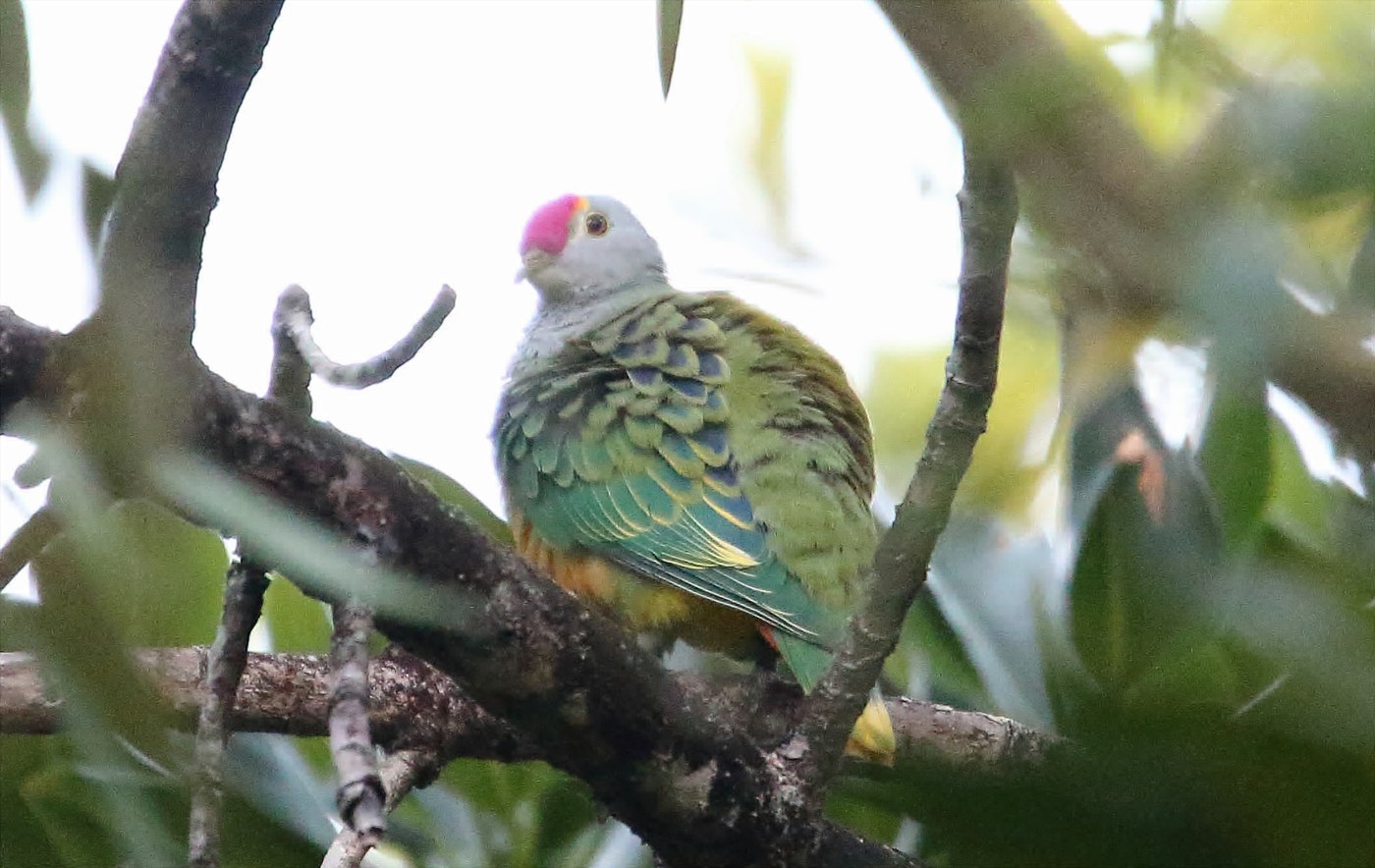
What Rose-crowned Fruit Dove Feathers Look Like
This small rainforest dove is one of the few pigeons with genuinely green plumage, which alone makes a found feather stand out from typical drab pigeon feathers. Back, wing covert, and rump feathers are a rich leaf-green with a soft iridescent sheen, while the head is pale grey capped with a small but vivid rose-pink to purple crown patch bordered by a pale yellow ring. The lower belly carries a warm yellow-orange to apricot patch, and the undertail coverts are bright orange. A grey breast band separates the pale head from the colored belly.
Flight feathers are green above with dull yellowish edges and relatively short and rounded, typical of forest pigeons built for quick bursts through the canopy rather than long-distance flight. Tail feathers are green above, grey below, with a pale grey terminal band visible when the tail is fanned.
Step-by-Step: Is This Feather From a Rose-crowned Fruit Dove?
- Confirm the color first. True green body feathers immediately narrow the field to fruit-doves and a few parrots — no other regional pigeons show this.
- Look for the rose crown patch. A small pinkish-purple feather with a pale yellow border, taken from the head, is close to diagnostic on its own.
- Check the belly for orange-yellow. A green-backed bird with an apricot or orange belly patch fits this species well.
- Note feather shape. Short, broad, rounded flight feathers indicate a canopy-dwelling pigeon rather than a long-distance flier.
- Compare size. Feathers should be modest — this is a small, compact dove, not a large pigeon.
Similar Species & How to Tell Them Apart
The Superb Fruit Dove is similarly green but males show an orange crown patch edged with a lilac-purple band across the nape rather than a rose crown, and a purple breast patch is often present. The Wompoo Fruit Dove is much larger with a deep purple breast and yellow-green belly, and its feathers are noticeably bigger throughout. When the crown patch is missing from a found feather, body size and the specific belly color (apricot-orange vs. yellow-green) are the best separators between these green, canopy-dwelling doves.
Where & When You'll Find Them
Rose-crowned Fruit Doves inhabit rainforest, monsoon forest, and mangrove-adjacent canopy across northern Australia, the Lesser Sunda Islands, and Timor, where they specialize on fruiting trees, especially figs. Feathers are most often found on the rainforest floor beneath fruiting trees, where the birds feed in loose groups and shed contour feathers during preening. Molt follows breeding, which is tied to the wet season, so feather finds increase in the months after wet-season breeding activity when birds are actively molting and feeding in fruiting canopy.
Frequently asked questions
Why is a green feather unusual for a dove?
Most pigeons and doves have muted grey, brown, or iridescent-but-dark plumage; true leaf-green feathers are restricted to a handful of tropical fruit-doves, making green an immediate red flag pointing to this group.
Does every Rose-crowned Fruit Dove feather show the rose crown color?
No, only feathers plucked from the small crown patch show rose-pink; the vast majority of the bird's plumage is plain green, grey, or orange-yellow.
How can I tell this apart from a parrot feather, since both are green?
Fruit-dove feathers are softer-textured and lack the waxy powder-down feel of parrot feathers, and dove flight feathers are more rounded rather than pointed.
Where on the forest floor should I look for these feathers?
Directly beneath fruiting fig or canopy trees, since the doves feed and preen there and drop contour feathers while perched above.
Is there a female-specific feather pattern?
Females are duller overall with a less vivid crown patch, but the green body and orange-yellow belly patch remain useful identifying features on both sexes.