
How to Identify Secretarybird Feathers
How to recognize the long black-tipped tail feathers, pale gray body plumage, and quill-like crest feathers of the Secretarybird.
Read the full Secretarybird encyclopedia entry →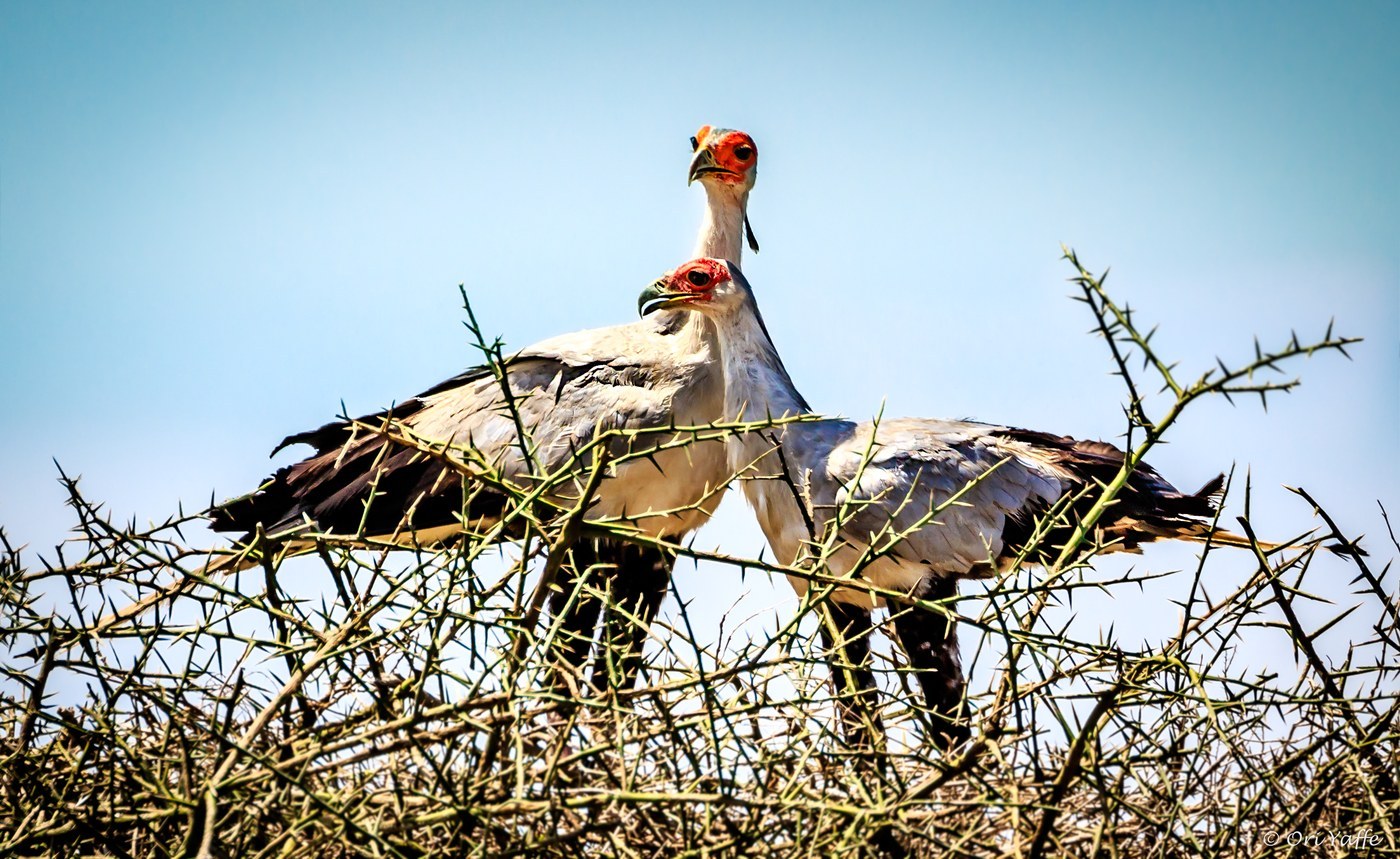
What Secretarybird Feathers Look Like
Secretarybird feathers are unmistakable once you know what to look for, largely because of this bird's unusual size and proportions. Body contour feathers are pale bluish-gray to gray-white, soft and loosely webbed. The flight feathers — primaries, secondaries, and the black "shorts" covering the thighs — are solid black, creating a strong two-tone contrast with the pale body that's visible even in single feathers if you can judge overall coloring against typical raptor plumage. The most diagnostic feathers by far are the elongated black crest plumes from the back of the head, which look like thin quills with a sparse, wispy black vane, and the central tail feathers, which are dramatically elongated (up to 90+ cm on the bird, though usually broken shorter when found loose) with a black band and white tip near the end. Ordinary outer tail feathers are shorter but still show the same black-and-white banded tip pattern on an otherwise gray-brown feather.
Step-by-Step: Is This Feather From a Secretarybird?
- Check for extreme length. Central tail feathers are extraordinarily long for a bird feather — if you have something resembling an elongated quill well over 40–50 cm, Secretarybird should be on your shortlist.
- Look at the tip pattern. A dark black band followed by a crisp white tip on a long tail feather is highly diagnostic.
- Assess body feather color. Plain pale gray with no streaking or barring on contour feathers, contrasting with black wing and thigh feathers.
- Inspect the vane texture. Crest plumes look like sparse, wire-like black quills rather than a full, filled-in feather vane.
- Consider scale. Even ordinary body feathers are large (often 8–15 cm) reflecting this bird's size — one of the largest terrestrial raptors.
- Rule out barring or spotting. Neither body nor flight feathers show barring — coloring is blocked, not patterned.
Similar Species & How to Tell Them Apart
Few birds create real confusion here. Large gray-and-black raptors like harriers or some eagles show barring or streaking on flight feathers that Secretarybird lacks — its black areas are solid, unmarked black. Storks and cranes can share pale gray body tones, but neither has the extraordinarily elongated, banded central tail feathers or the wispy black crest plumes unique to this species. If you find an elongated feather with a black band and white tip in African savanna habitat, the shape and banding pattern alone should be enough to separate it from any crane or stork tail feather, which lack that crisp black-and-white terminal pattern.
Where & When You'll Find Them
Secretarybirds are non-migratory residents of open grassland, savanna, and semi-arid plains across sub-Saharan Africa, spending most of their time walking on the ground hunting rather than flying, so feathers tend to accumulate near favored hunting grounds, roost trees, and nest sites (they build large stick nests in low thorn trees). Molt in resident tropical raptors is less tightly seasonal than in migratory species and tends to be gradual and continuous through the year, so loose feathers can turn up at any time, though nest sites often yield the most concentrated finds during and after the breeding season.
Frequently asked questions
What makes a Secretarybird feather so easy to identify?
The extraordinarily long central tail feathers with a black band and white tip, combined with pale gray body feathers contrasting against solid black flight feathers, are found on no other common African bird.
Are the crest feathers different from ordinary body feathers?
Yes, the crest plumes are thin, wispy, wire-like black quills with sparse vane material, very different from the fuller gray contour feathers on the body.
Could a stork or crane feather be mistaken for a Secretarybird's?
It's unlikely once you check for the black-and-white banded tip, which storks and cranes don't share, even though their body feathers can be similarly pale gray.
Do Secretarybird feathers have any barring?
No, both the pale gray body feathers and the black flight feathers are solid-colored without barring or streaking.
Is there a specific season when Secretarybird feathers are most likely to be found?
Not strongly — as a non-migratory tropical species its molt is fairly continuous, though nest and roost sites can yield more feathers during the breeding season.