
How to Identify Semipalmated Sandpiper Feathers
Identifying the tiny, dark-centered, grayish-brown feathers of the Semipalmated Sandpiper and separating them from other small peeps.
Read the full Semipalmated Sandpiper encyclopedia entry →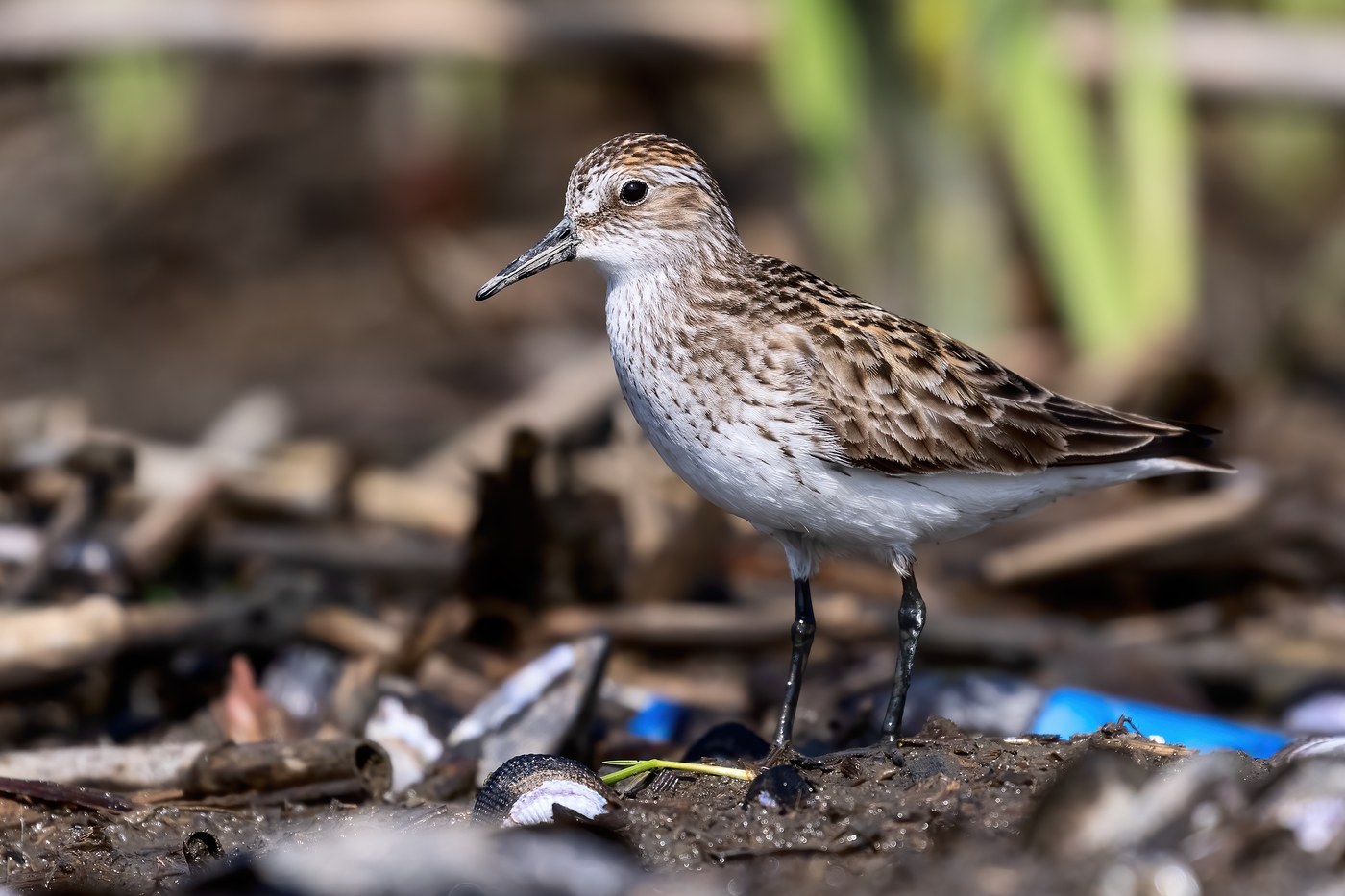
What Semipalmated Sandpiper Feathers Look Like
Semipalmated Sandpiper feathers are small and understated, fitting one of the classic "peeps" — tiny sandpipers that challenge birders precisely because their feathers look so similar across several species. Back and scapular feathers show a dark grayish-brown center with pale grayish-buff to whitish edging, giving a scaled appearance overall rather than bold streaking. Breast feathers are pale gray-buff with fine, indistinct streaking confined mostly to the upper breast, fading to plain white on the belly and flanks. Flight feathers are plain grayish-brown, and the tail shows a dark central pair of feathers with paler gray outer feathers. Overall the palette is muted and grayish rather than warm or rufous-toned, and feather size is diminutive, matching a bird only about 13–15 cm long — primaries typically 5–6 cm.
Step-by-Step: Is This Feather From a Semipalmated Sandpiper?
- Check size first. Everything should be small — this rules out larger shorebirds immediately; body feathers under 2 cm, flight feathers around 5–6 cm.
- Assess overall tone. Muted grayish-brown rather than warm rufous or bright rusty tones is the baseline expectation.
- Look at scapular/back feather pattern. Dark centers with pale gray-buff fringes create a scaled look, not bold black streaking.
- Confirm limited breast streaking. Fine streaking should be restricted to the upper breast, with a clean white belly.
- Rule out rufous tones. A feather with warm rust-colored edges points toward a different peep rather than this species.
- Note bill/leg color context if available. Black legs and a straight, stout black bill (not fine or drooped) support this species if any soft parts are attached.
Similar Species & How to Tell Them Apart
The classic confusion species is Western Sandpiper, which often shows some rufous coloring in scapular feathers (especially in breeding plumage) and a finer, slightly drooped bill — a Semipalmated Sandpiper feather should look grayer and less rufous by comparison. Least Sandpiper is smaller still and noticeably warmer brown overall, with yellowish-green legs (a clue if leg color is visible) rather than black. Baird's Sandpiper is larger with a buffier wash across the breast and longer wings that extend past the tail tip, and its feathers show a scalier, more contrasty buff-and-black pattern than the grayer Semipalmated Sandpiper.
Where & When You'll Find Them
Semipalmated Sandpipers breed on Arctic tundra across northern Canada and Alaska, then undertake long migrations through the interior and along both coasts of North America to winter mainly in South America, making them common transient visitors to mudflats, beaches, and lake margins throughout the continent during migration windows. Molt strategy involves losing worn breeding feathers in late summer, often beginning on the breeding grounds or during early migration stopovers, with a fuller molt into gray non-breeding plumage occurring on or near the wintering grounds — so feathers found at northern latitudes in July and August are more likely to retain worn, browner breeding-plumage traits, while feathers found later in the season trend grayer and plainer.
Frequently asked questions
What is the biggest challenge in identifying a Semipalmated Sandpiper feather?
Separating it from other tiny peeps like Western and Least Sandpiper, since all three overlap in size, habitat, and general coloring.
Does a rufous-edged feather rule out Semipalmated Sandpiper?
A strongly rufous-edged scapular feather points more toward Western Sandpiper, since Semipalmated Sandpiper tends to look grayer and less warm-toned overall.
How small should a Semipalmated Sandpiper feather be?
Very small, with flight feathers around 5–6 cm and contour feathers under 2 cm, reflecting the bird's tiny 13–15 cm body length.
Is breast streaking a useful clue?
Yes, look for fine streaking limited to the upper breast with a clean white belly, rather than streaking extending down the flanks.
When are Semipalmated Sandpiper feathers most common?
During spring and fall migration on mudflats and shorelines across North America, with additional finds on Arctic tundra breeding grounds in summer.