
How to Identify Silver-beaked Tanager Feathers
How to identify the deep maroon-red body feathers of the Silver-beaked Tanager and use bill-base color as a supporting clue.
Read the full Silver-beaked Tanager encyclopedia entry →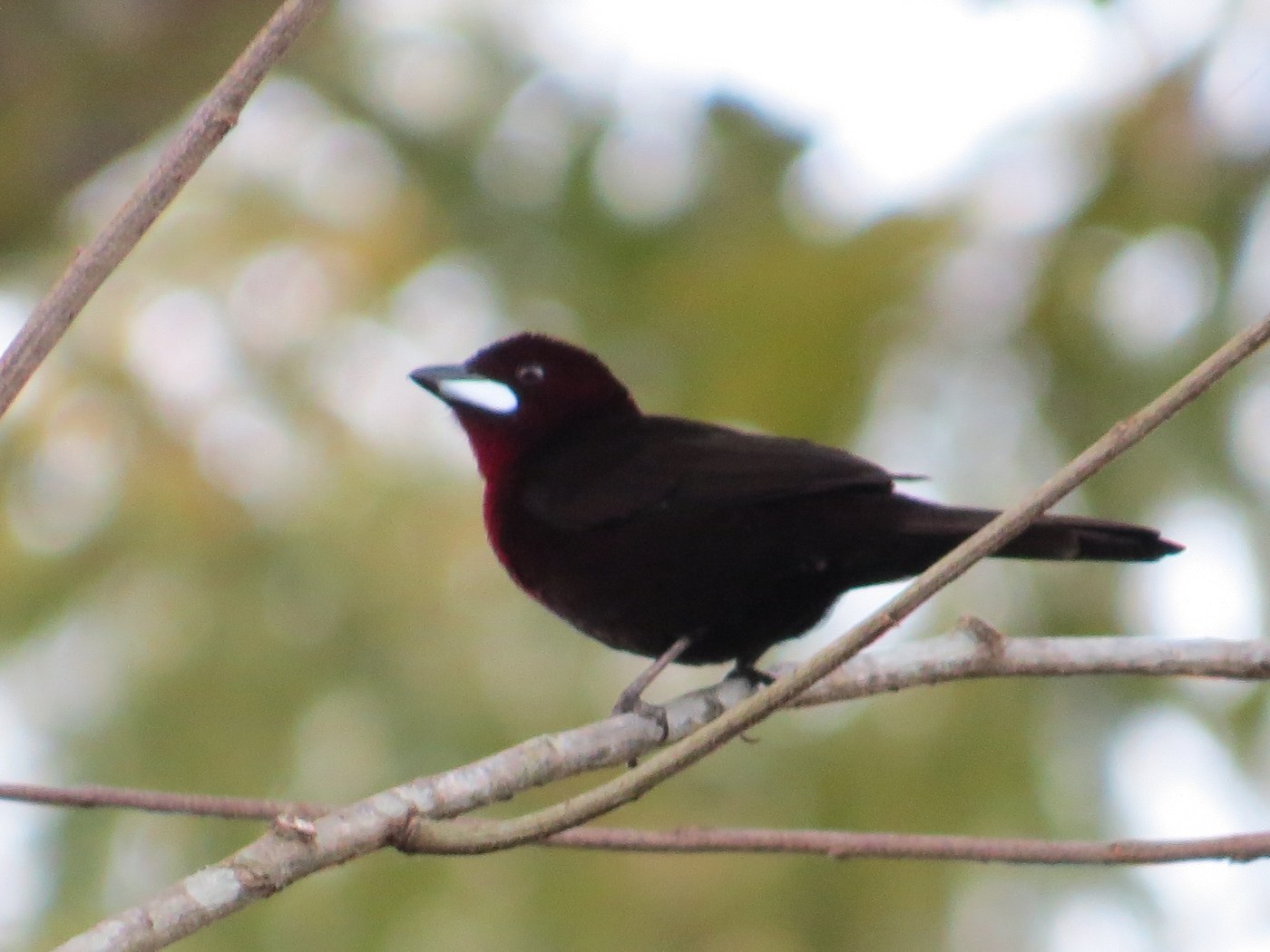
What Silver-beaked Tanager Feathers Look Like
Silver-beaked Tanager feathers show rich, deep coloring typical of a common South American forest-edge tanager. Male body feathers are a deep maroon-red to blackish-red, darkest and almost blackish across the back and wings, with a slightly brighter, more velvety red tone on the throat and breast — an overall dark, rich red rather than the bright scarlet of some other tanagers. Female feathers are noticeably duller, a warm brownish-red to dusky orange-brown, lacking the near-black depth of the male's back and wing feathers. Neither sex shows streaking, spotting, or wing bars — the plumage is essentially a solid color block that shifts from darker on the back to slightly warmer on the underparts. The species' common name references the pale silvery-white base of the lower mandible, visible on the live bird as a small pale patch at the base of an otherwise dark bill; this won't show on a body feather but is worth checking if any bill material is attached. Overall feather size is small-to-medium, matching a compact songbird around 18 cm long.
Step-by-Step: Is This Feather From a Silver-beaked Tanager?
- Assess overall depth of color. A deep maroon-red to blackish-red tone, especially on back and wing feathers, is the core clue for males.
- Check for duller reddish-brown tones if the feather is likely from a female — less blackish, more orange-brown overall.
- Confirm no streaking, spotting, or wing bars anywhere — plumage should be a solid, unpatterned color block.
- Look for a silvery pale patch at the bill base, if any bill material remains attached — a strong species-specific clue when available.
- Consider size. Small-to-medium songbird feathers, consistent with an 18 cm bird.
- Factor in habitat. Forest edge, second growth, and gardens across tropical South America fit this species.
Similar Species & How to Tell Them Apart
Crimson-backed Tanager, sharing overlapping range and a generally reddish plumage, shows a brighter, more solidly crimson-red back contrasting with a blacker head and underparts, a more two-toned pattern than Silver-beaked Tanager's more uniformly dark maroon look. Hepatic Tanager and various other reddish tanagers tend to show a more orange-red or brick-red tone rather than the deep maroon-blackish cast typical of Silver-beaked Tanager, and often show at least subtle shading differences between crown, back, and underparts that Silver-beaked lacks. Female Silver-beaked Tanagers can be confused with various dull female tanagers generally, making the bill-base clue and habitat/range context especially useful when plumage alone isn't conclusive.
Where & When You'll Find Them
Silver-beaked Tanagers are common, non-migratory residents of forest edges, secondary growth, riverside vegetation, and gardens across much of tropical South America east of the Andes, including the Amazon basin, the Guianas, and parts of Brazil, Venezuela, Colombia, and Bolivia, generally favoring semi-open and edge habitats over deep closed-canopy forest. As tropical residents, they don't follow a sharply defined single molt season, with feather replacement occurring more gradually across the year, though it often tracks local breeding activity. Because the species is common and conspicuous around forest edges, gardens, and river margins, feathers are frequently found in these disturbed or semi-open habitats rather than deep forest interior.
Frequently asked questions
What color should I expect from a male Silver-beaked Tanager feather?
A deep maroon-red to blackish-red tone, darkest on the back and wings with a slightly warmer, more velvety red on the throat and breast.
How do female feathers differ from male feathers in this species?
Females are noticeably duller, showing warm brownish-red to dusky orange-brown tones rather than the male's near-black, deep maroon coloring.
What does the species' name refer to, and can it help identify a feather?
It refers to a small silvery-white patch at the base of the lower mandible; this only helps if bill material is still attached to the feather, but it's a strong clue when present.
How is this different from a Crimson-backed Tanager feather?
Crimson-backed Tanager shows a brighter, more solidly crimson back contrasting against a blacker head and underparts, a more two-toned look than the more uniformly dark maroon Silver-beaked Tanager.
Where would a Silver-beaked Tanager feather most likely be found?
Forest edges, secondary growth, riverside vegetation, and gardens across tropical South America east of the Andes, rather than deep closed-canopy forest.