
How to Identify Silvereye Feathers
How to identify the olive-green back, white eye-ring, and pale underparts feathers that distinguish the small, active Silvereye.
Read the full Silvereye encyclopedia entry →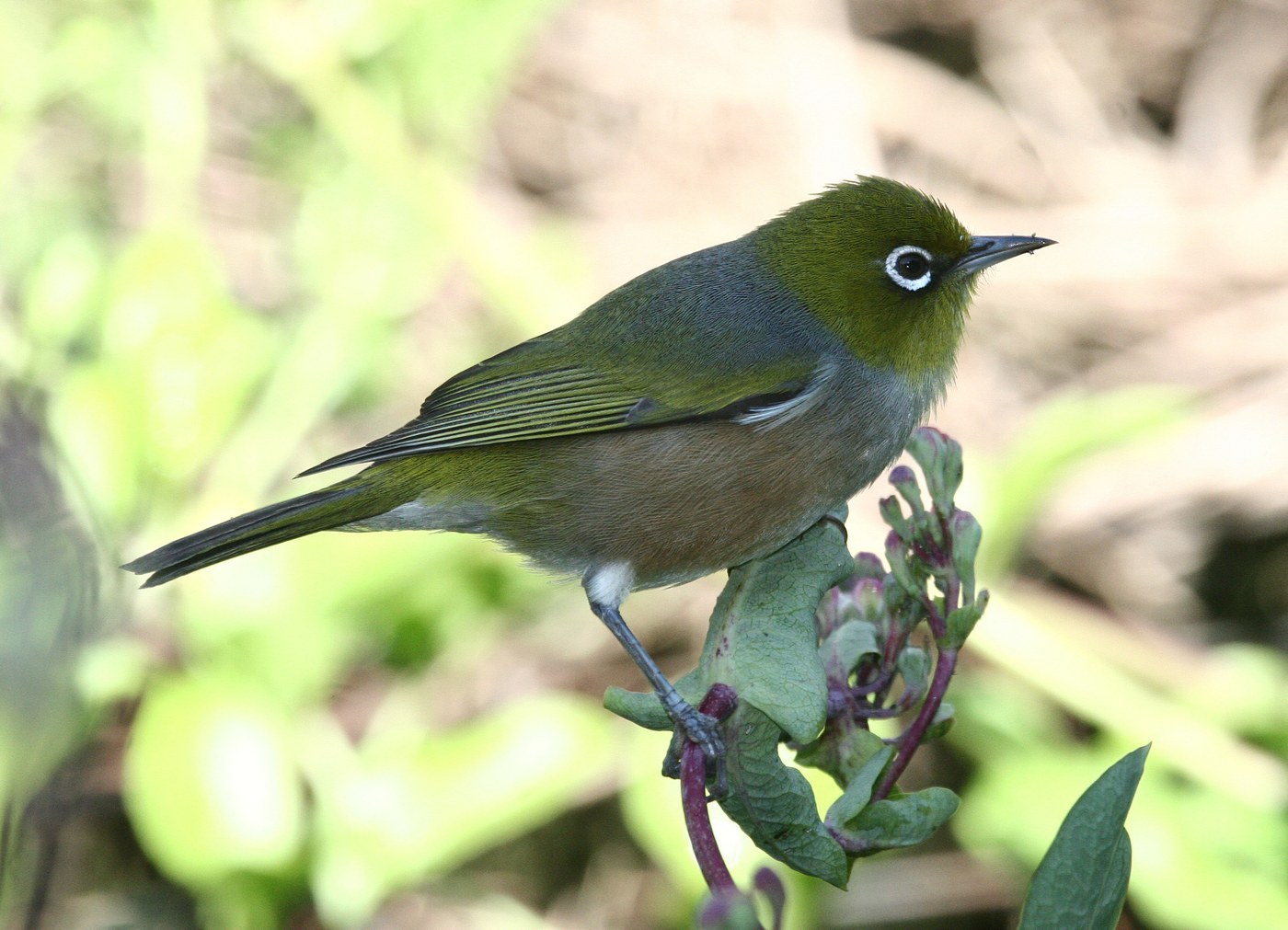
What Silvereye Feathers Look Like
Silvereye feathers are small and understated apart from one very specific facial feature that gives the species its name. Back, crown, and wing feathers are a soft olive-green, fairly uniform without streaking or barring, typical of a small active canopy-foraging bird. Underparts vary somewhat by population but are generally pale gray to buffy-white on the breast and belly, with some populations showing warmer buffy-orange or cinnamon flanks — a variability worth noting since Silvereye has many recognized subspecies across its range with differing underpart tones. The single most diagnostic feature is not really visible on body feathers at all but is worth checking for if any facial feathers or skin are attached: a conspicuous ring of small white feathers encircling the eye, which gives rise to the common name and is one of very few small greenish birds worldwide to show this precise feature so clearly. The bill is small, fine, and slightly downcurved, suited to a mixed diet of insects, nectar, and fruit. Overall feather size is tiny, matching a bird only about 10–13 cm long.
Step-by-Step: Is This Feather From a Silvereye?
- Check for a white eye-ring feather cluster if any facial material is attached — this is the single most diagnostic feature available for this species.
- Assess back and crown color. A soft, uniform olive-green with no streaking fits this species well.
- Consider underpart tone. Pale gray-white breast, possibly with buffy or cinnamon flanks depending on subspecies/population.
- Confirm small overall size. Feathers should be tiny, matching a 10–13 cm bird.
- Look for a small, fine, slightly downcurved bill if bill material is present.
- Factor in regional context. This species is native to Australia and has self-introduced or been introduced to New Zealand and various Pacific islands, so regional occurrence is a helpful supporting clue.
Similar Species & How to Tell Them Apart
Various other small greenish honeyeaters and white-eyes across the Australasian and Pacific region can look superficially similar, but the white eye-ring is the most reliable feature separating true white-eyes (genus Zosterops, which includes Silvereye) from unrelated greenish songbirds like small honeyeaters, which lack this ring entirely. Within the white-eye family itself, other Zosterops species look extremely similar and are best separated by precise geographic range, since many white-eye species replace each other across different islands and regions with only subtle plumage differences. New Zealand populations of Silvereye (sometimes called "Tauhou," a self-established population) tend to show slightly different underpart tones than mainland Australian birds, reflecting subspecies-level variation across its expanding range.
Where & When You'll Find Them
Silvereyes are native to Australia and have expanded — partly through natural colonization and partly through introduction — to New Zealand, Norfolk Island, Lord Howe Island, and other parts of the southwest Pacific, inhabiting a wide range of wooded and shrubby habitats including forests, gardens, and orchards. Many Australian populations are at least partially migratory, moving between breeding and non-breeding ranges seasonally, while some island populations are more sedentary. Molt happens primarily in late summer to autumn after breeding, so feathers are most likely to be found from around February through May (Southern Hemisphere autumn) in gardens, orchards, and woodland edges where this social, often flock-forming species congregates to feed.
Frequently asked questions
What is the most distinctive Silvereye feature to check for?
A conspicuous ring of small white feathers around the eye is the single most diagnostic feature, though it only helps if facial material is attached to the feather.
Does underparts color vary across Silvereye populations?
Yes, different subspecies show varying tones from pale gray-white to warmer buffy-orange or cinnamon on the flanks, reflecting the species' many recognized regional populations.
How do I rule out other small greenish birds in the region?
Check for the white eye-ring; unrelated greenish honeyeaters sharing similar habitat lack this feature entirely, which helps confirm a true white-eye (Zosterops) identification.
Where did Silvereyes originally come from, and where are they found now?
They're native to Australia and have expanded to New Zealand, Norfolk Island, Lord Howe Island, and other parts of the southwest Pacific through both natural colonization and introduction.
When are Silvereye feathers most likely to be found?
Late summer to autumn, roughly February through May in the Southern Hemisphere, following the post-breeding molt.