
How to Identify Southern Lapwing Feathers
How to recognize a Southern Lapwing's bronze-green iridescent back feathers, black chest bib, and black-and-white wing pattern, and separate them from Andean Lapwing and Killdeer.
Read the full Southern Lapwing encyclopedia entry →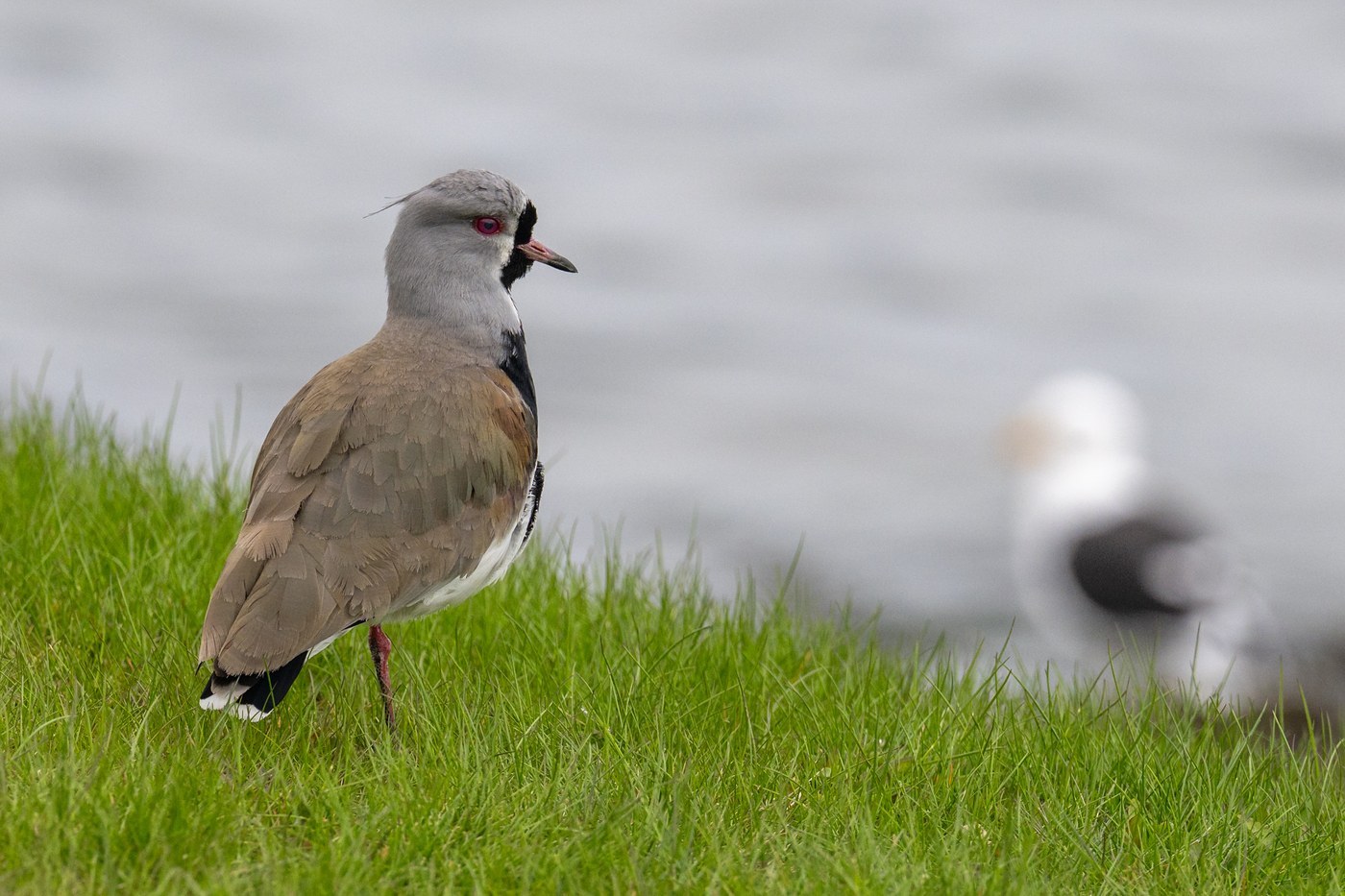
What Southern Lapwing Feathers Look Like
The Southern Lapwing is a common, conspicuous plover relative found across much of South America, and its feathers combine earthy tones with an unexpected flash of iridescence.
- Back and wing covert feathers: Bronze-brown at first glance, but catch the light and they reveal a glossy green-to-purple iridescent sheen, especially on the greater wing coverts — a subtle but diagnostic shimmer rarely seen in other regional shorebirds.
- Breast/throat feathers: Solid black, forming a bold bib that covers the throat, chest, and continues as a thin black stripe up over the crown.
- Belly feathers: Clean white, contrasting sharply with the black chest.
- Flight feathers: In the open wing, primaries and secondaries show a bold black-and-white pattern — a white band crosses the middle of the wing between black flight feathers, very conspicuous in flight and identifiable even from a single flight feather showing the transition from white base to black tip (or vice versa depending on position).
- Neck sides: Soft gray feathering separates the black bib from the bronze-green back.
Step-by-Step: Is This Feather From a Southern Lapwing?
- Check for iridescence. Tilt a brown/bronze back or covert feather in the light — a green-purple sheen is a strong positive sign.
- Look for stark black. A solid, non-iridescent black feather from the chest/throat region fits the bib pattern.
- Inspect flight feathers. Look for a clear black-and-white two-tone pattern rather than uniform coloring or fine barring.
- Measure it. Primaries run a modest 10–14 cm, consistent with a medium-sized plover relative.
- Weigh the location. Found in open grassland, pastures, or wetland edges in South America, this combination of bronze-iridescent back and black-and-white wing strongly favors Southern Lapwing over other regional shorebirds.
Similar Species & How to Tell Them Apart
- Andean Lapwing: Similar overall shape and black-and-white wing pattern, but lacks the strong bronze-green iridescent back sheen and instead shows a more uniform gray-brown back; found at much higher elevations in the Andes rather than lowland grassland.
- Killdeer: Considerably smaller, with two black breast bands rather than one solid bib, warm brown (not iridescent bronze-green) upperparts, and a bright rufous rump patch absent in Southern Lapwing.
- Pied Lapwing: Smaller, with a more strongly patterned black-and-white head and no iridescent back sheen.
- Other South American plovers: Generally lack both the iridescent back feathers and the extensive black bib, showing simpler brown-and-white patterns instead.
Where & When You'll Find Them
Southern Lapwings are widespread and highly adaptable, thriving in pastures, wetland margins, golf courses, airports, and other open grassy habitats across most of South America, and they are notably bold and vocal in defending nests. Because the species breeds over an extended season across its range and is a year-round resident in most areas (not a long-distance migrant), feathers can turn up at any time of year near open grassy or wetland habitats, with a modest increase during the breeding season when adults are most active defending territories and chasing off intruders.
Frequently asked questions
What is the best way to spot the iridescence on a Southern Lapwing feather?
Tilt a bronze-brown back or wing covert feather under good light; a genuine Southern Lapwing feather will flash green to purple, while a feather that stays flat brown from every angle is probably a different species.
How does Killdeer differ from Southern Lapwing in feather pattern?
Killdeer has two black breast bands instead of one solid bib, warm plain brown (non-iridescent) upperparts, and a bright rufous rump, none of which appear on Southern Lapwing.
Is the black chest feather solid black or patterned?
It's solid, unbroken black, forming a clean bib rather than streaks or barring.
Are Southern Lapwings migratory, and does that affect when feathers are found?
Most populations are year-round residents rather than long-distance migrants, so feathers can be found in any season, with a slight increase during the extended breeding period.