
How to Identify Squacco Heron Feathers
A guide to identifying Squacco Heron feathers by their buffy-orange breeding-plumage back, long lanceolate plumes, and dramatically contrasting pure white wings, tail, and rump revealed only in flight, distinguishing them from Cattle Egret and pond herons.
Read the full Squacco Heron encyclopedia entry →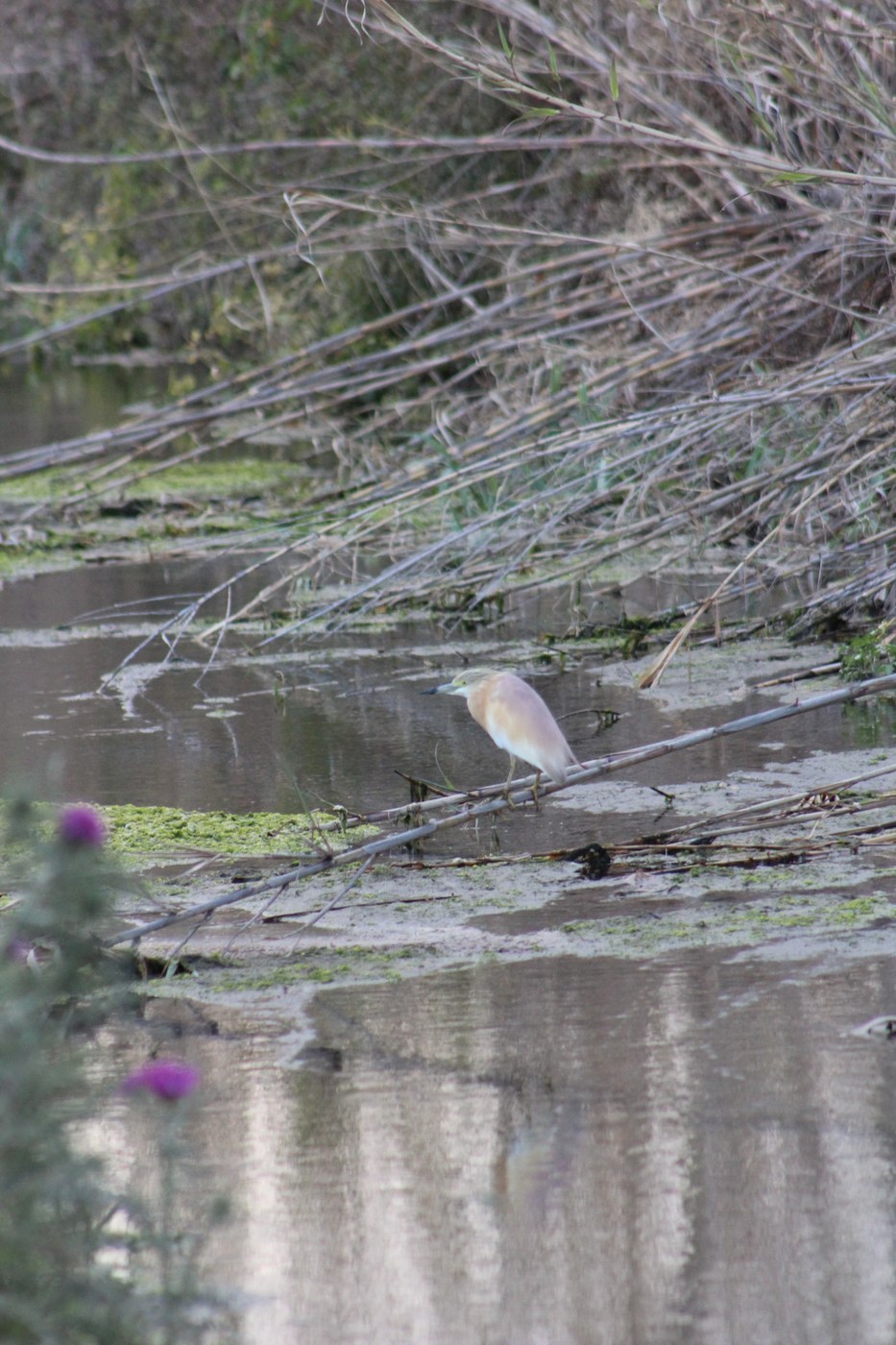
What Squacco Heron's Feathers Look Like
Squacco Heron is a small, stocky heron whose feathers hide a dramatic surprise. At rest, the body — head, neck, and back — is a warm buffy-brown to orange-buff, with breeding adults growing long, fine, lanceolate plumes on the back and crest that drape elegantly over the folded wings, almost entirely concealing them. This buffy, streaky-looking bird at rest gives little hint of what's underneath: the wings, rump, and tail are pure white, a stark contrast that only becomes visible the moment the bird takes flight, when a mostly buff-brown heron suddenly flashes brilliant white.
Head feathers in breeding condition include several long, thin, drooping plumes off the back of the crown, buffy-white streaked with black shaft lines. Nonbreeding and juvenile birds are considerably plainer and more streaked, losing the long plumes and showing a duller, more heavily streaked brown breast and neck, though the hidden white wing/tail pattern remains a reliable trait in birds of any age or season.
Step-by-Step: Is This Feather From a Squacco Heron?
- Check body/back feathers for buffy-orange or buff-brown color. Warm buff tones, especially with long fine plumes in breeding season, are the species' most visible field character at rest.
- Confirm wing, tail, or rump feathers are pure white. This dramatic contrast with the buffy body is highly diagnostic — a small heron with buff body feathers but white wing feathers strongly supports Squacco Heron.
- Look for long, thin lanceolate plumes. Elongated, drooping plume feathers on the back or crown indicate a breeding-plumage adult.
- Assess streaking on nonbreeding/juvenile feathers. Duller, more heavily streaked brown feathers without long plumes can still be this species outside breeding season.
- Consider size. A small, compact heron body size (smaller than most egrets) fits this species.
Similar Species & How to Tell Them Apart
- Indian Pond Heron / Chinese Pond Heron — extremely similar in structure and the same buff-body/white-wing pattern, but these occupy Asian ranges rather than Squacco Heron's African/European/Middle Eastern range, so location is often the deciding factor rather than feather appearance alone.
- Cattle Egret — entirely white body plumage even at rest (with buffy-orange plumes only on the crown, breast, and back in breeding season, not covering the whole body), lacking the strong buff-body/white-wing contrast of Squacco Heron.
- Little Bittern — much smaller, with bold black-and-buff wing panels rather than a solid white wing, and a more secretive, reed-bed habitat preference.
Where & When You'll Find Them
Squacco Herons breed across southern Europe, the Middle East, and Africa, favoring shallow freshwater marshes, reed beds, rice paddies, and pond edges, with European breeders migrating to winter in sub-Saharan Africa. Breeding-plumage feathers with long plumes are most likely found near nesting colonies in spring and early summer, while plainer, unplumed feathers turn up during migration and on African wintering wetlands in fall and winter, when birds have already molted out of their showy breeding dress.
Frequently asked questions
What is the most surprising diagnostic feature of Squacco Heron feathers?
A buffy-orange to buff-brown body feather paired with pure white wing, rump, or tail feathers — a dramatic hidden-white-wing pattern that only becomes visible when the bird takes flight.
How can I recognize a breeding-plumage feather specifically?
Look for long, thin, drooping lanceolate plume feathers on the back or crown, present only during the breeding season and absent in nonbreeding or juvenile birds.
How do I tell this apart from Cattle Egret?
Cattle Egret is entirely white-bodied even at rest, with buffy-orange plumes limited to the crown, breast, and back during breeding rather than covering the whole body as in Squacco Heron.
Does range help distinguish this from the similar Asian pond herons?
Yes, Indian and Chinese Pond Herons look very similar and share the same buff-body/white-wing pattern, but they occupy Asian ranges while Squacco Heron is found in Europe, the Middle East, and Africa, making location a key deciding factor.
When are Squacco Heron feathers most likely to be found?
Plumed breeding feathers appear near nesting colonies in spring and early summer, while plainer feathers without plumes turn up during migration and on African wintering wetlands in fall and winter.