
How to Identify Sun Conure Feathers
A practical guide to identifying the vivid yellow-orange feathers of the Sun Conure, a popular pet parrot, and separating them from similar Aratinga species.
Read the full Sun Conure encyclopedia entry →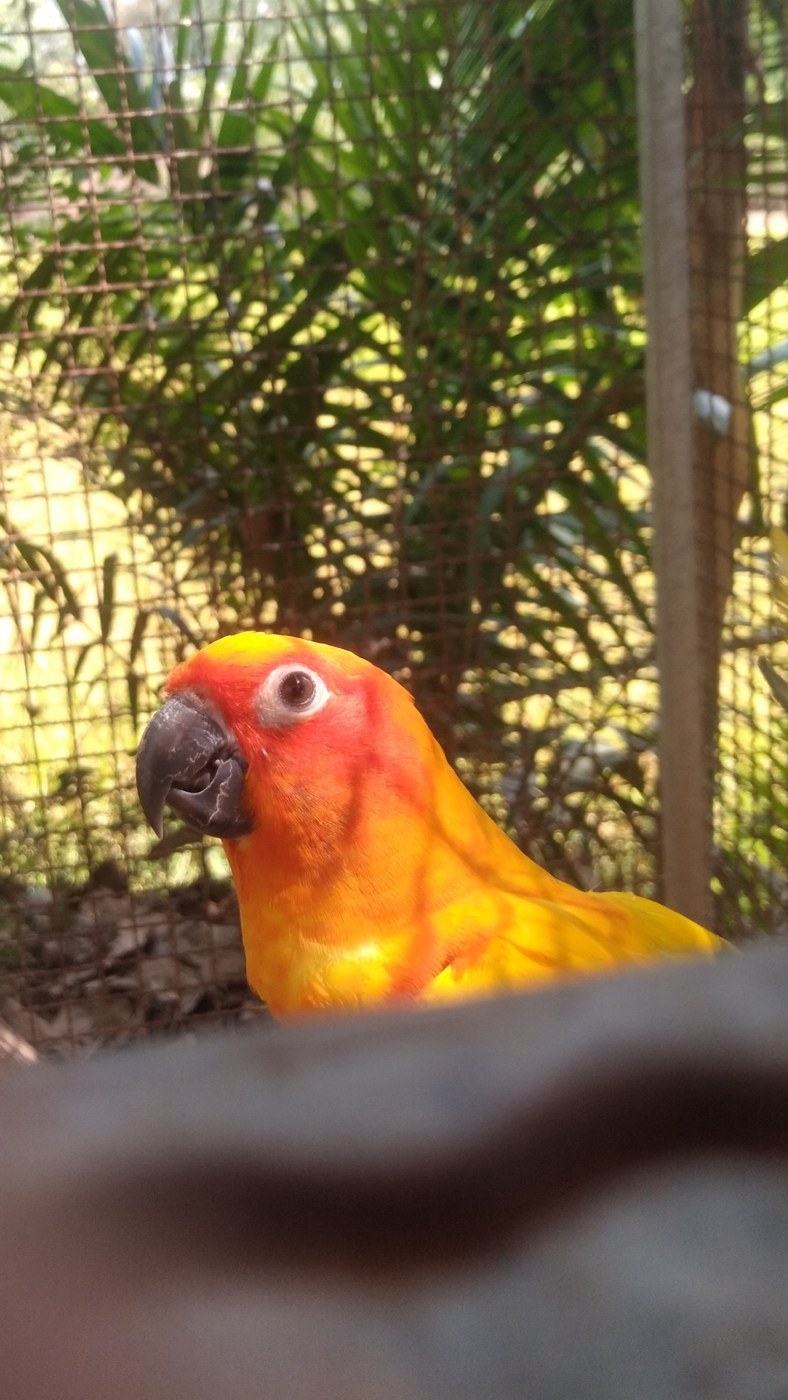
What Sun Conure Feathers Look Like
The Sun Conure is a brilliantly colored South American parrot that is also one of the most widely kept pet parrots in the world, so most feathers found are likely to come from a captive bird rather than a wild one.
- Body feathers: vivid golden-yellow to orange, becoming more deeply orange on the face and head as the bird matures.
- Wing feathers: green with blue tips, providing a clear contrast to the yellow-orange body — a helpful diagnostic since the wings are not solid yellow.
- Tail feathers: green, tipped with blue, tapering to a point.
- Juvenile feathers: noticeably greener overall, with the yellow-orange coloring developing gradually with age; a mostly green feather with just a hint of yellow may be from a young bird.
- Overall size: medium-small parrot feathers, consistent with a bird around 30 cm long including tail.
Step-by-Step: Is This Feather From a Sun Conure?
- Check for yellow-orange body color paired with green-and-blue wings. This combination, rather than solid color throughout, is the core diagnostic.
- Assess age-related color. A greener feather with limited yellow may simply be from a juvenile rather than a different species.
- Consider context. Because this species is a common pet, a feather found near a home, aviary, or urban area is very likely from a captive or escaped bird rather than a wild population.
- Compare to Jenday Conure, which retains more green on the body with orange concentrated mainly on the face — if the feather shows extensive green mixed with the yellow-orange, Jenday Conure is worth considering.
- Rule out solid yellow finish feathers without any green/blue wing contrast, which would be unusual for this species and point elsewhere.
Similar Species & How to Tell Them Apart
- Jenday Conure: shows more retained green on the body, with the orange-red concentrated on the face/head rather than spread across the whole body as in adult Sun Conure.
- Sulphur-breasted/other yellow Aratinga conures: generally show more consistent green body plumage with only patches of yellow, unlike the largely yellow-orange body of an adult Sun Conure.
- Escaped feral conure flocks: in some cities, feral conure populations exist; a Sun Conure-colored feather found in an area with known feral parrot flocks may come from such a population rather than a household pet.
Where & When You'll Find Them
In the wild, Sun Conures inhabit dry savanna, forest edge, and palm groves in northeastern South America (Venezuela, Guyana, and northern Brazil), where molt follows the regional breeding season. However, because this species is so popular in aviculture, most feathers encountered globally are found near homes, aviaries, and pet stores, where captive birds molt more continuously throughout the year without a strict seasonal pattern.
Frequently asked questions
What color combination confirms a Sun Conure feather?
A yellow-orange body feather paired with green wing feathers tipped in blue — solid yellow throughout without green/blue contrast would be unusual.
Why might this feather be found far from South America?
Because Sun Conures are extremely popular pets worldwide, most feathers are found near homes and aviaries rather than in the wild range.
How can I tell a juvenile Sun Conure feather from an adult's?
Juveniles are noticeably greener overall, with the yellow-orange tone developing gradually as the bird matures.
How is this different from a Jenday Conure feather?
Jenday Conure retains more green across the body, with orange-red concentrated on the face, unlike the more uniformly yellow-orange body of an adult Sun Conure.