
How to Identify Tui Feathers
How to recognize the iridescent black-green plumage and curled white throat tufts of a Tui, New Zealand's distinctive honeyeater.
Read the full Tui encyclopedia entry →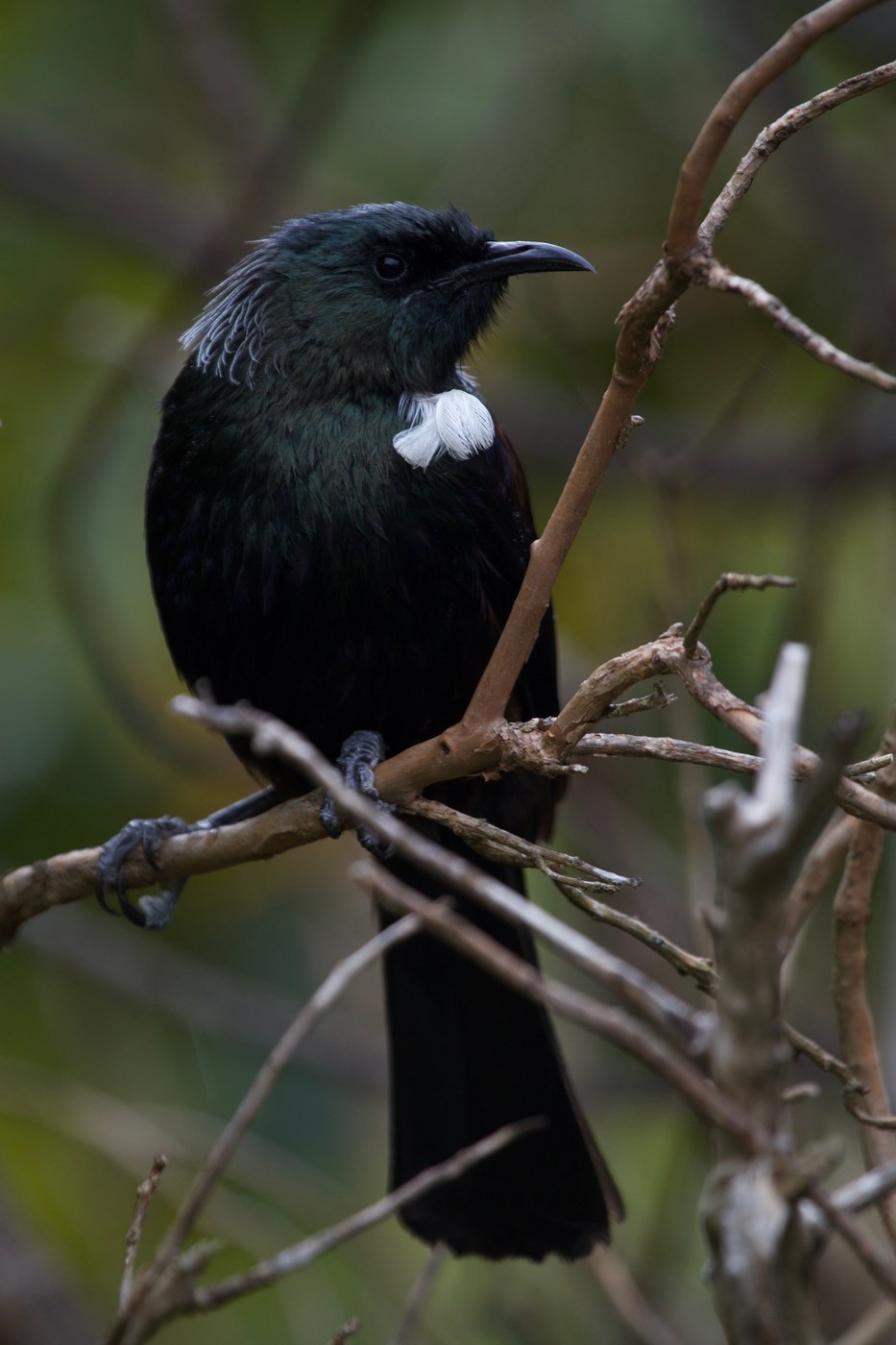
What Tui Feathers Look Like
Tui is a medium-large New Zealand honeyeater whose plumage looks solid black at a glance but reveals brilliant iridescence in good light.
- Body feathers: appear glossy black in shade but flash metallic green, blue, and bronze-purple highlights when caught in sunlight, especially on the head, back, and breast.
- Throat tufts: the single most diagnostic feature — two curled tufts of white, filamentous feathers at the throat (the "poi" tufts), unlike anything else in the New Zealand bush.
- Nape feathers: a thin lacy collar of fine white/silver filoplume-like feathers around the back of the neck, giving a delicate frilled look distinct from the solid feathers elsewhere.
- Wing feathers: broad, strong, dark flight feathers with a faint bronze-green sheen, built for fast, direct flight and aerial chases.
- Tail feathers: long, black, slightly rounded, with the same green-bronze iridescence as the back under direct light.
- Size: flight feathers can reach 10-14 cm and body feathers 3-5 cm, reflecting the Tui's fairly large size (around 30 cm long) compared to most New Zealand forest birds.
Step-by-Step: Is This Feather From a Tui?
- Tilt the feather in light. If a seemingly black feather flashes green, blue, or purple sheen when angled, that's a strong match — flat matte black rules Tui out.
- Look for white filaments. Curled, thread-like white feather tufts (from the throat) or a lacy white neck collar are essentially unique to this species among New Zealand birds.
- Check the size. Feathers over 8-10 cm (flight feathers) or a robust 4-5 cm body feather fit an adult Tui rather than smaller honeyeaters or finches.
- Assess overall shape. Body feathers should look broad and solid, not fine or hair-like, aside from the specialized throat tufts.
- Confirm the setting. Feathers found in native forest, flowering kowhai, flax, or gum trees across New Zealand strongly support a Tui origin.
Similar Species & How to Tell Them Apart
- New Zealand Bellbird (Korimako): overall olive-green rather than black, with no white throat tufts or neck filaments — a much duller, less iridescent feather.
- Saddleback (Tieke): black with a contrasting rufous-orange "saddle" patch on the back, a color combination Tui never shows.
- Common Myna (introduced): brown body with white wing patches and yellow bare skin around the eye, lacking any iridescent green-black sheen.
- Blackbird (introduced): plain matte black or brown with no iridescence and no white throat filaments at all.
Where & When You'll Find Them
Tui are widespread through native forest, scrub, and flowering gardens across mainland New Zealand and offshore islands, feeding heavily on nectar from flax, kowhai, pohutukawa, and rewarewa. Because they aren't strongly migratory, feathers can appear year-round near flowering trees, but the main molt follows breeding, from about February to April (late summer to autumn in New Zealand), so freshly dropped feathers are most common in native bush at that time.
Frequently asked questions
Why does this feather look black in one light and green in another?
That's Tui iridescence — structural feather coloring reflects green, blue, and bronze highlights depending on the angle of light, while looking plain black from other angles.
What are those curly white threads at the base of some feathers?
Those are remnants of the Tui's signature throat tufts, specialized filamentous white feathers unique to this species in New Zealand.
Could this be a Bellbird feather instead?
Unlikely if it's black and iridescent — Bellbird feathers are olive-green and lack both the iridescent sheen and white throat tufts of Tui.
Is a feather like this likely to be from an introduced species like a Blackbird?
No — introduced blackbirds have flat, non-iridescent black feathers with no white filaments, so shine and white tufts point specifically to Tui.
Tui identified by the community
Recent Tui feathers identified with Feather Identifier.
