
How to Identify Varied Bunting Feathers
How to identify the deep purple-blue body and red nape patch of a male Varied Bunting, and separate it from other blue buntings.
Read the full Varied Bunting encyclopedia entry →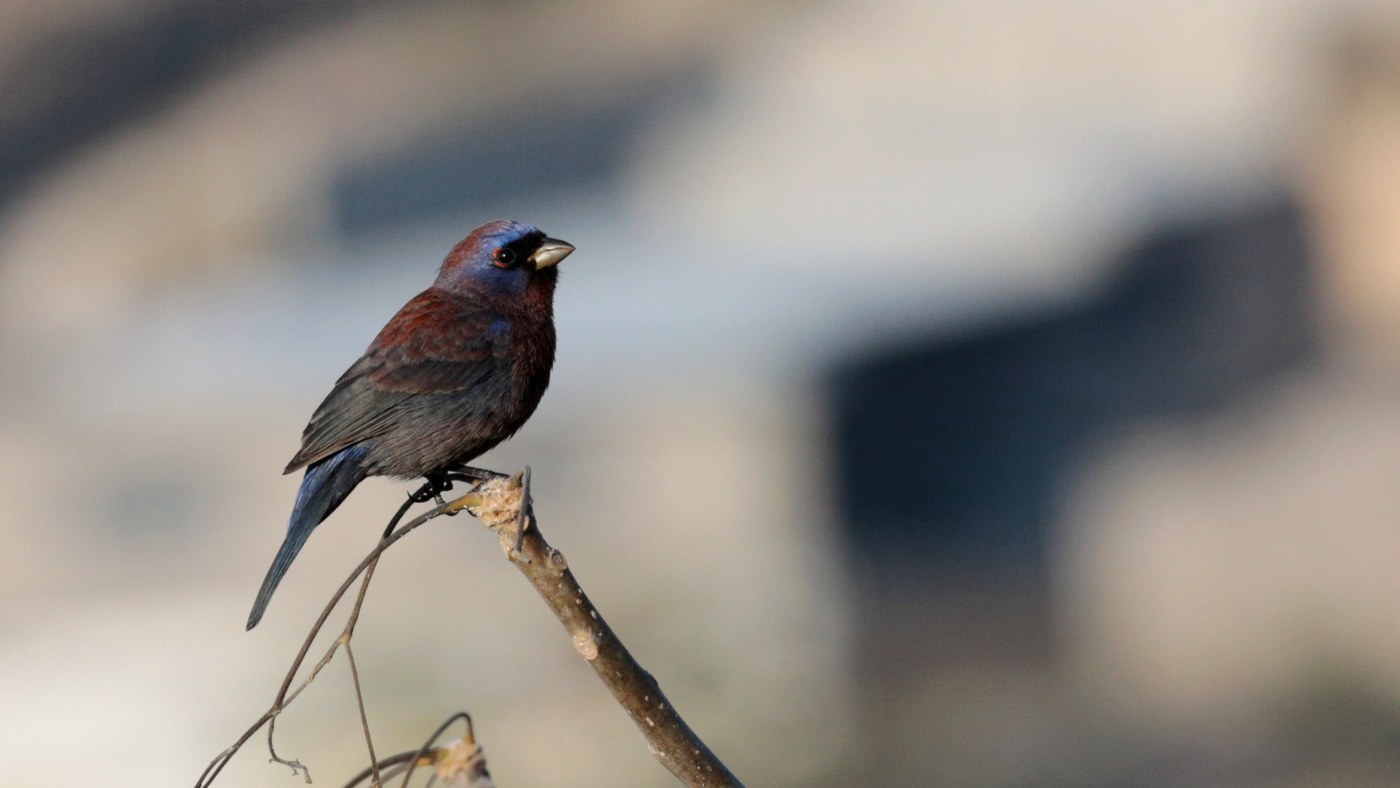
What Varied Bunting's Feathers Look Like
Varied Bunting is a small desert-scrub finch, and adult males carry a subtly rich, multi-toned plumage that's easy to overlook until compared feather by feather with similar species.
- Body/contour feathers (male): deep purplish-blue, appearing almost plum-colored in some light and more blue in direct sun — a richer, more muted tone than the vivid, saturated blue of some related buntings.
- Nape patch feathers: a small but distinctive patch of dark red to maroon feathers on the back of the neck, contrasting with the surrounding purple-blue — this is one of the best diagnostic clues for the species.
- Face feathers: often show a subtly darker, almost blackish-blue tone around the bill and chin, similar to other Passerina buntings.
- Female/juvenile feathers: plain grayish-brown overall, with little to no blue or red, making them much harder to distinguish from other female buntings by feather alone.
- Size: body contour feathers run 1.5-2.5 cm, flight feathers 5-6.5 cm, consistent with a small finch close in size to an Indigo Bunting.
- Texture: fine, soft feathers typical of small seed-eating songbirds, without pronounced barring or bold patterning outside the nape patch.
Step-by-Step: Is This Feather From a Varied Bunting?
- Check for a red/maroon nape patch. A small feather with a dark red or maroon cast found alongside purple-blue feathers is a strong, near-diagnostic clue for male Varied Bunting.
- Assess the blue tone. Deep purplish-blue rather than a bright, saturated sky-blue supports this species over Indigo Bunting.
- Rule out solid black wings. Varied Bunting lacks the black wings of some tanagers, so uniformly purple-blue body and wing feathers together fit this species better.
- Consider female feathers carefully. A plain gray-brown feather could be a female Varied Bunting, but without blue or red markings it's difficult to distinguish from other female buntings by feather alone — weigh location heavily in these cases.
- Factor in habitat. Feathers found in desert wash, thorn scrub, or arid brushland in the southwestern U.S. or Mexico support this species over buntings from wetter habitats.
Similar Species & How to Tell Them Apart
- Indigo Bunting: shows a more uniform, brighter blue overall with no red or maroon nape patch — a cleaner, single-toned blue rather than Varied Bunting's plum-blue with contrasting nape.
- Painted Bunting: dramatically different, with a red body, blue head, and green back — an unmistakably multicolored combination that Varied Bunting doesn't share.
- Blue Grosbeak: larger overall with rufous-brown wing bars, a two-tone wing pattern absent in Varied Bunting's more uniformly colored wings.
- Lazuli Bunting: shows a white belly and rufous breast band contrasting with blue upperparts, quite different from Varied Bunting's overall purple-blue body.
Where & When You'll Find Them
Varied Buntings inhabit dense desert scrub, thorn thickets, and arid washes in the southwestern United States (notably Arizona, Texas) and much of Mexico. They are migratory in the northern part of their range, moving south for winter, while more southern populations may be resident. Molt occurs mainly after breeding, in late summer (roughly August-September), so feathers are most likely to be found in desert scrub habitat from late summer through early fall, before birds depart on migration.
Frequently asked questions
What's the single best clue for a male Varied Bunting feather?
A small red or maroon patch of feathers from the nape, paired with deep purplish-blue body feathers — that specific color combination is close to diagnostic.
How do I tell this apart from an Indigo Bunting feather?
Indigo Bunting is a more uniform, brighter blue throughout with no red or maroon nape patch, while Varied Bunting shows a plum-blue tone plus that contrasting nape color.
I found a plain brown feather in bunting habitat — could it be this species?
Possibly a female Varied Bunting, but plain brown feathers are hard to tell apart from other female buntings without additional context like location and other feathers nearby.
Would I find this feather in a wet forest?
Unlikely — Varied Buntings favor dry desert scrub and thorn thickets, so feathers are far more likely in arid brushland than humid forest.